
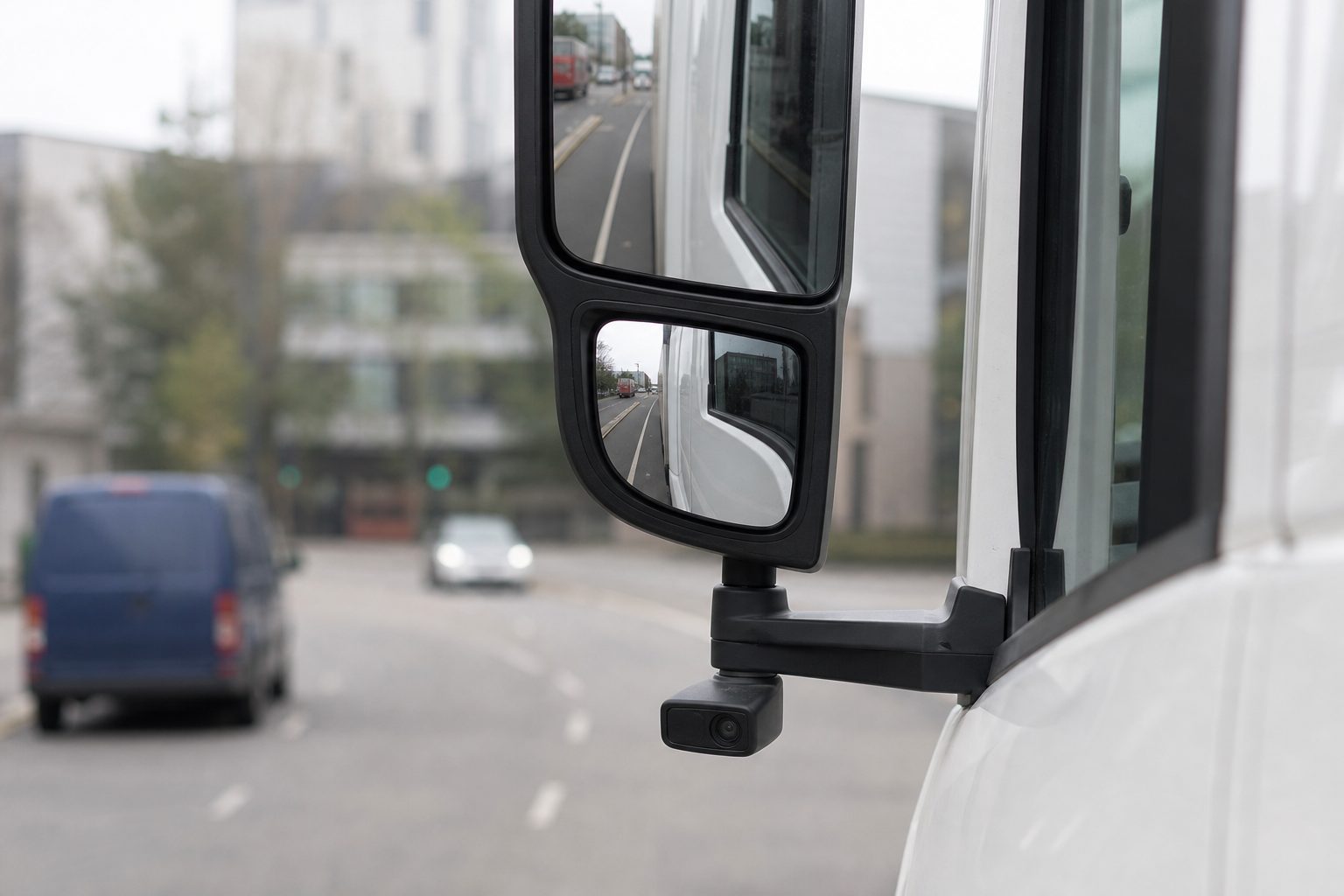
A contested insurance claim without camera footage is a claim that often settles at 50:50 liability regardless of what actually happened. This is a well-documented reality in commercial fleet claims: when a third party disputes fault and no objective evidence exists, insurers frequently split liability to avoid the cost and uncertainty of litigation. For fleet operators, this means paying excess, losing no-claims discount, and absorbing the indirect costs of a claim that was not your driver’s fault. Camera systems change this dynamic — but only if the footage is preserved correctly, retrieved quickly, and submitted in a usable format.
Fleet managers who review their first full year of near-miss data after installing a camera system consistently report the same surprise: the number of events they thought were their fleet’s fault, which the footage showed were not. Before camera systems, a third party calling an incident a 50:50 had a reasonable chance of success. After a camera system, the footage is either conclusive or it isn’t — and conclusive footage in your favour closes a dispute within days rather than months.
The financial case is straightforward. A disputed claim that settles at 50:50 may cost the fleet operator 50% of the third party’s repair costs plus excess plus premium impact. A claim resolved conclusively in your favour — because footage shows the third party pulled out without warning — costs the excess only, or nothing if you can recover it. Across a fleet of twenty vehicles over five years, the difference in claims cost between evidenced and un-evidenced incidents is substantial.
UK commercial fleet insurers typically require the following documentation for a claim submission. The weight each element carries depends on whether the claim is disputed:
Not all camera footage is equally useful in a claim. Insurers and solicitors assess footage on several criteria:
Camera footage records what was visible. Telematics data records what the vehicle was doing. The combination is stronger than either alone:
The most common evidence failure in fleet claims is not the absence of a camera system — it is the footage being overwritten before it is retrieved. A system that records on a loop will overwrite older footage as new footage is created. If the incident is not flagged and the footage not extracted within the overwrite window, it is gone.
Fleet managers consistently raise this as a gap in their process: the incident happens on a Tuesday, the driver mentions it on Thursday, the fleet manager requests the footage on Friday — and the MDVR has already overwritten it. The practical solutions:
Camera footage from a commercial vehicle is subject to GDPR where it captures identifiable individuals. Fleet operators who use in-cab or external cameras are data controllers and must have a compliant data retention policy, a legitimate interest basis for the recording, and a process for responding to subject access requests. This does not prevent the footage being used in insurance claims — legitimate interest and legal claims are recognised bases for processing. It does mean that footage should be retained only as long as operationally necessary and that the existence of the camera system should be disclosed to drivers.
For submission to insurers, footage showing third parties and pedestrians is routinely provided in claims. Insurers are familiar with handling this type of data. The key requirement is that you can demonstrate the footage was obtained lawfully — which means the recording system was disclosed (signage on the vehicle), data is handled according to your privacy policy, and the footage has not been altered.
Within hours, not days. MDVR systems recording on a loop may overwrite footage within 24–72 hours depending on storage capacity and recording resolution. Even systems with event-based clip locking should have footage manually verified and backed up as soon as the incident is reported. If your system has cloud connectivity, the automatic upload triggered by g-force events provides the safest baseline.
Not always. Footage that shows your driver was at fault — following too close, failing to observe a junction, phone in hand — can work against you. Insurers have a duty of cooperation obligation, which means you may be required to submit footage even if it is unhelpful. The correct response is not to avoid cameras but to use the footage proactively: near-miss events captured by the system are training opportunities that reduce future incidents.
Yes — a third party who appears in your footage can submit a subject access request. In practice, this right is limited by the rules on exemptions for legal claims: footage relevant to a current or anticipated claim can be withheld pending legal proceedings. Your insurer and solicitor will advise on what to release and when during active litigation.
Yes. Telematics data from a GPS and vehicle data unit is admissible as documentary evidence in civil proceedings in the UK. The key requirements are that the system was functioning correctly, the data has not been altered, and it can be authenticated by the provider. MDVR footage with embedded GPS data meets these requirements when the system is properly configured.
If the system was not recording — due to a power fault, full storage, or a system failure — the claim proceeds without camera evidence. Document why the system was not recording and what corrective action has been taken. Insurers may ask about the operational status of the camera system as part of the claim. A pattern of non-operational cameras could affect how your insurer views your risk management.
A scene documentation checklist for drivers and fleet managers — covers photography, third-party details, camera footage extraction, driver statement, and insurer notification within 2 hours of any incident.
Tell us what vehicles you run and what you need — we will come back with a recommendation and a price. Prefer to talk? Call 01656 721871.
Related guides: Direct Vision Standard (DVS) Explained for Fleet Managers · How to Complete a Fleet Safety Risk Assessment
4 August 2026
Monday to Friday:
8.30am-5.30pm