The Direct Vision Standard’s Progressive Safe System is a statutory permit condition for any HGV over 12 tonnes operating in Greater London. Vehicles with a 0–2 star DVS rating — which covers the majority of construction tippers, refuse collection vehicles, and rigid logistics HGVs — cannot enter the controlled zone without a valid HGV Safety Permit, and the permit requires a full PSS installation: CMS, BSIS, and MOIS, each meeting its specific UNECE regulation.
Backwatch supplies and installs PSS components specified to UNECE Regulation 151 (BSIS) and Regulation 159 (MOIS) requirements, with the CMS camera fitted alongside the existing Class V and VI mirrors. The installation is documented to the format TfL expects when issuing or renewing an HGV Safety Permit, and engineers fit on-site at your depot to minimise vehicle downtime.
TfL uses Automatic Number Plate Recognition to identify vehicles entering Greater London without valid permits. The penalty is up to £550 per vehicle per contravention, with the driver personally fined £130. For a fleet of 20 HGVs running London routes, sustained non-compliance is material daily financial exposure — and a single ANPR-detected entry on a non-compliant vehicle is the start of an enforcement record.
The DVS programme has reduced HGV-related serious injuries and fatalities in London by approximately 50% since enforcement began in 2019. The PSS components address the specific incident patterns the data identified: nearside cyclist collisions (resolved by CMS + BSIS), and pedestrian moving-off fatalities (resolved by MOIS). The regulation is consequence-driven; the equipment specification reflects the actual risks vehicles need to mitigate.
| Component | Standard | Function | Activation |
|---|---|---|---|
| CMS (Camera Monitoring System) | Fitted alongside Class V & VI mirrors | Nearside camera with live in-cab feed showing the kerb-side blind zone | Continuous when ignition on; left-indicator boost |
| BSIS (Blind Spot Information System) | UNECE Regulation 151 | Radar sensor detecting cyclists and pedestrians in the left blind zone with audible/visual in-cab alert | Active during left turns and below 30 km/h |
| MOIS (Moving Off Information System) | UNECE Regulation 159 | AI-based pedestrian detection ahead of the vehicle, alerting before the vehicle moves off | Active when vehicle is stationary, alerts before move-off |
| Class V & VI mirrors | OR replaced by CMS | Direct visibility kerb-side and immediate front | Always |
| External left-turn warning | UK best practice (FORS Silver+) | Audible warning to road users on left turns | Indicator-activated |
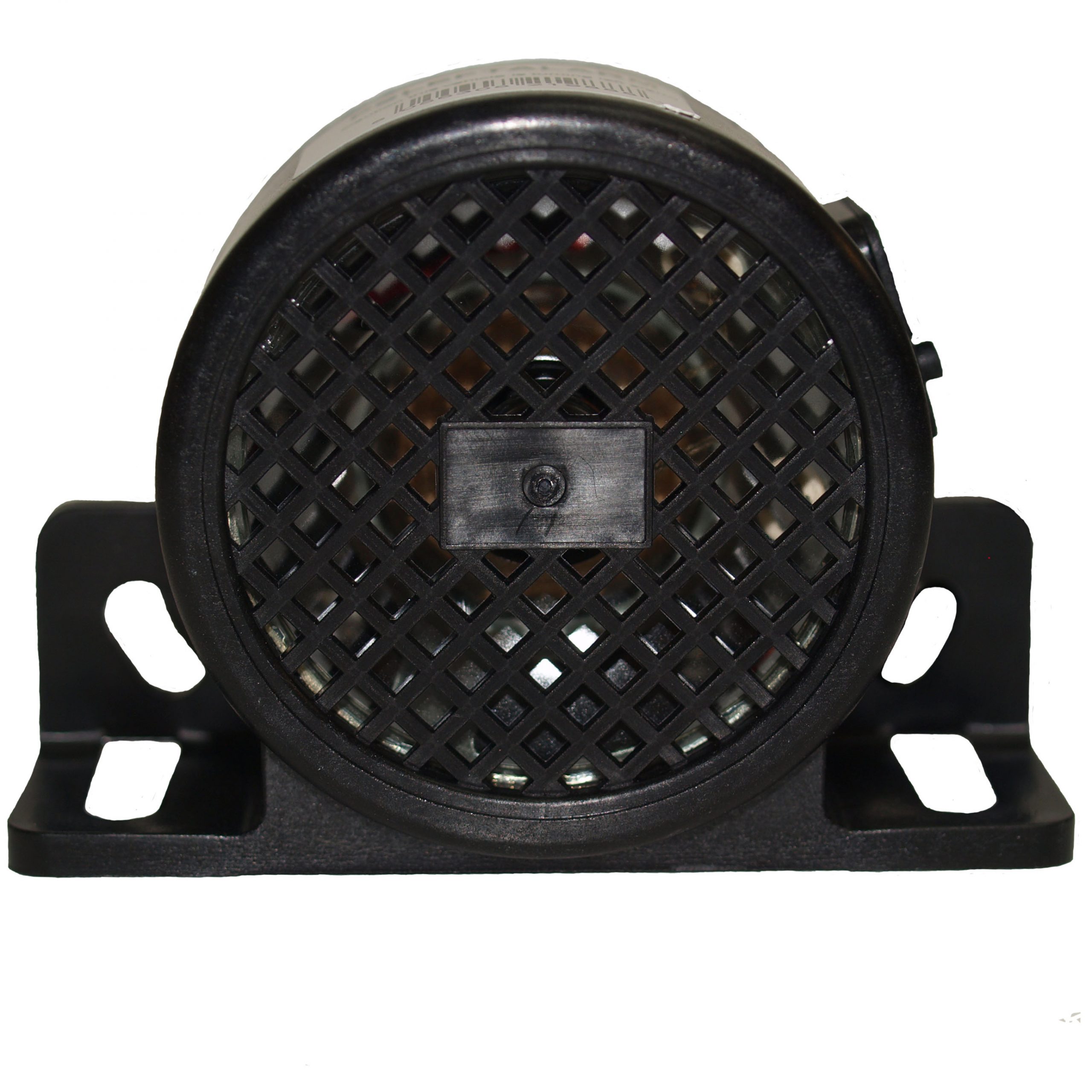
| Reversing alarm | UK best practice | Audible warning during reverse | Reverse gear |
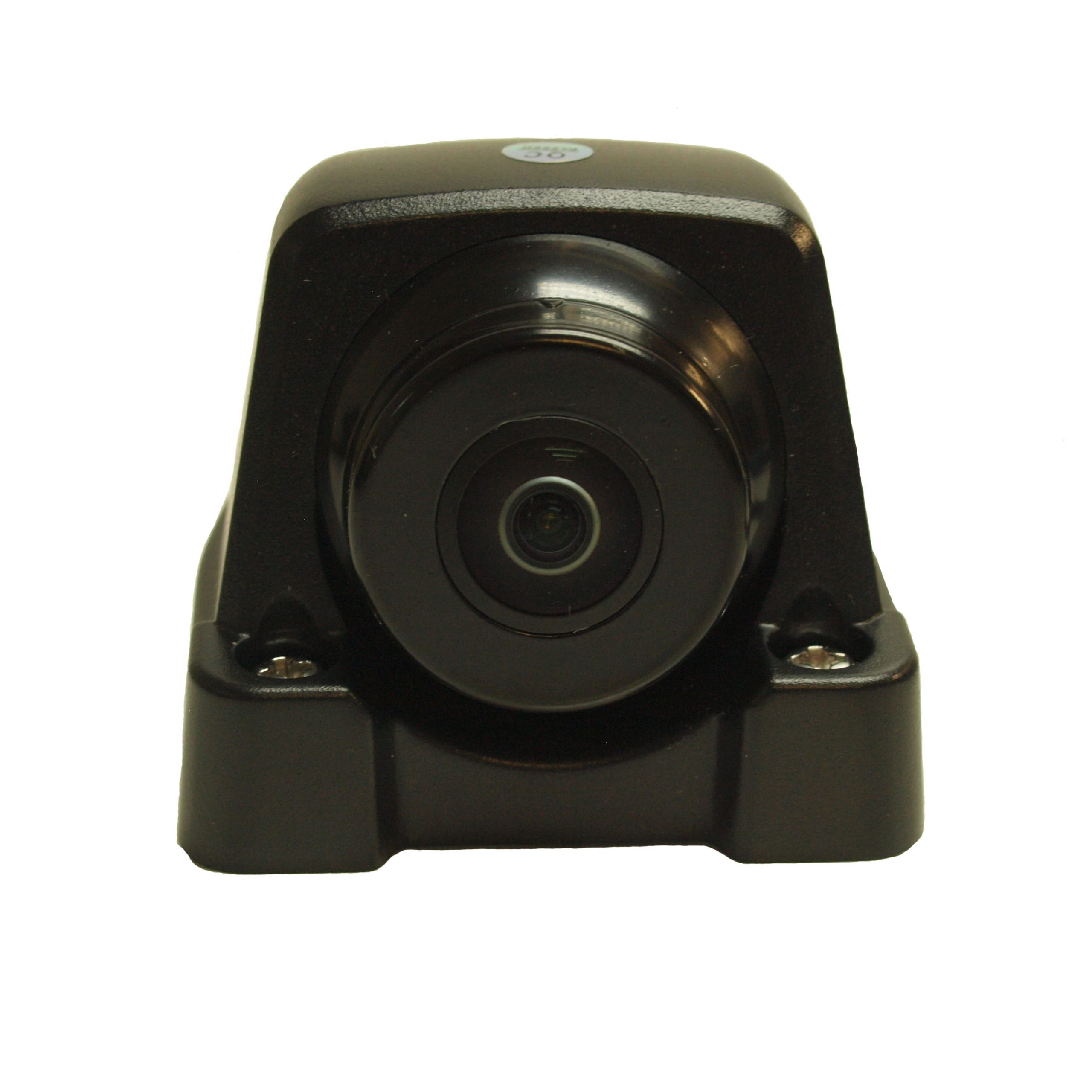
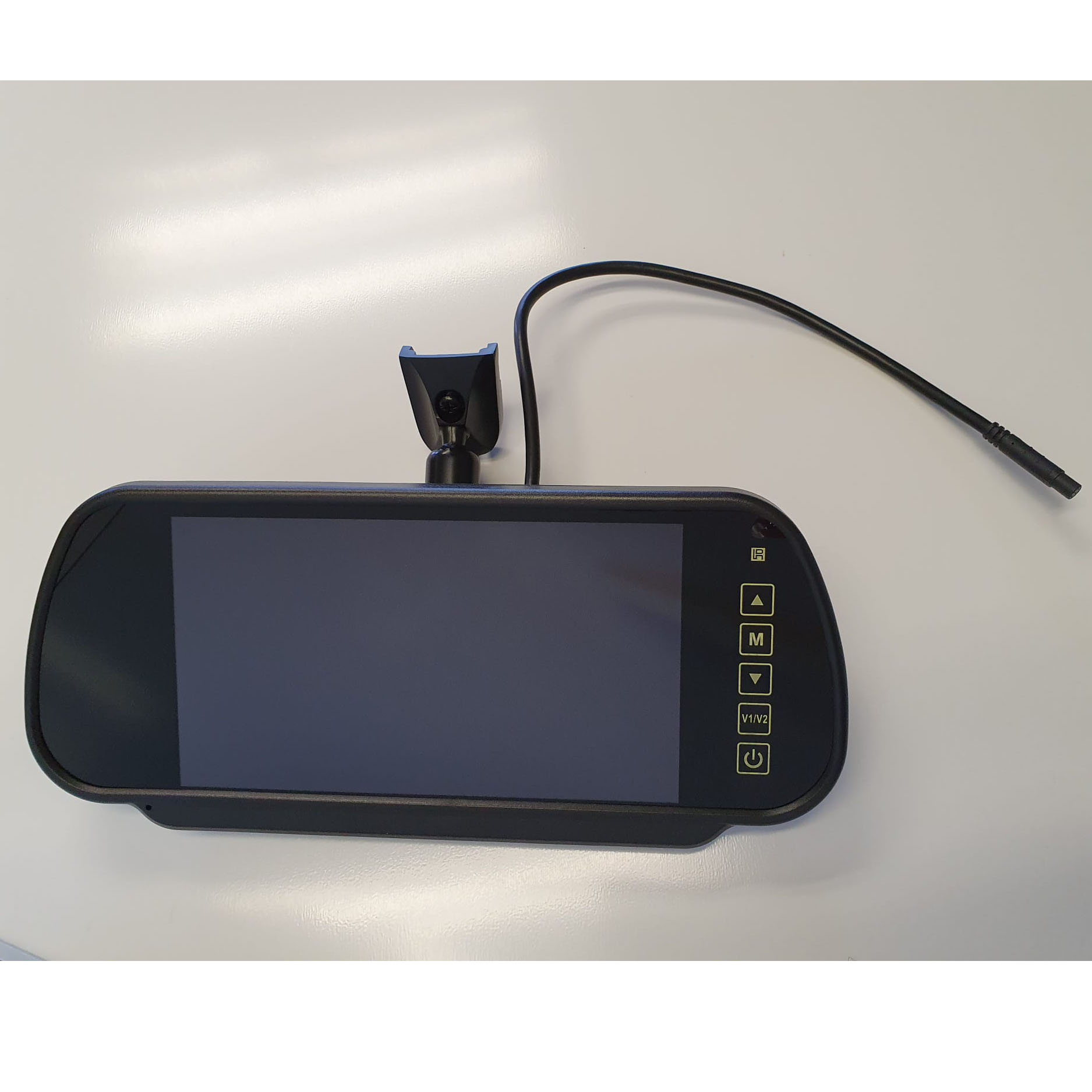
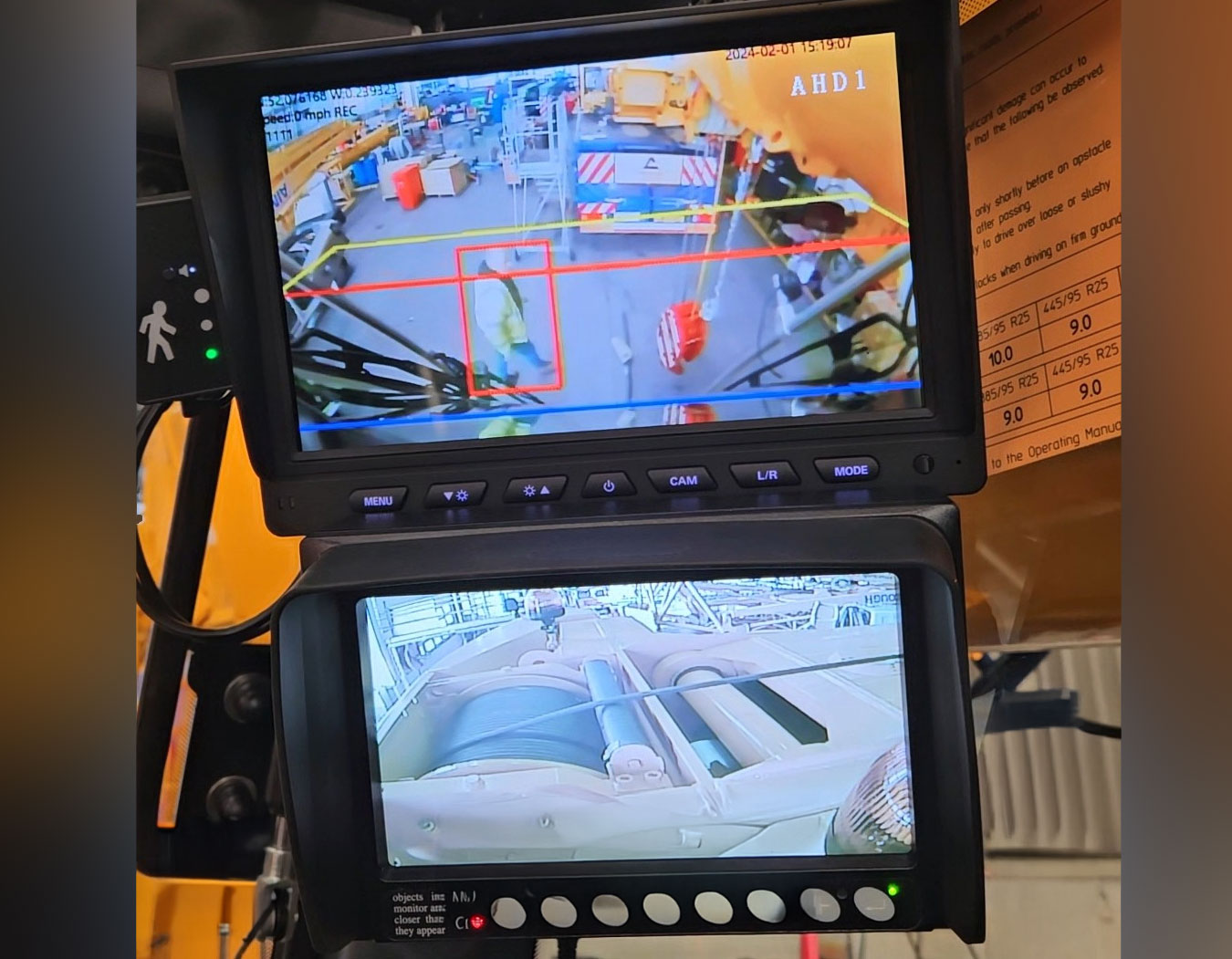
The CMS camera supplements Class V (nearside short-range) and Class VI (front close-proximity) mirrors — the mirrors remain fitted. Backwatch supplies the BW690 Side Camera — IP69K rated, 1080p HD, wide-angle, with a feed displayed on a 7″ or 9″ in-cab monitor positioned in the driver’s natural sightline. The camera is indicator-activated (priority view on left turn) but can run continuously for fleets that prefer always-on visibility.
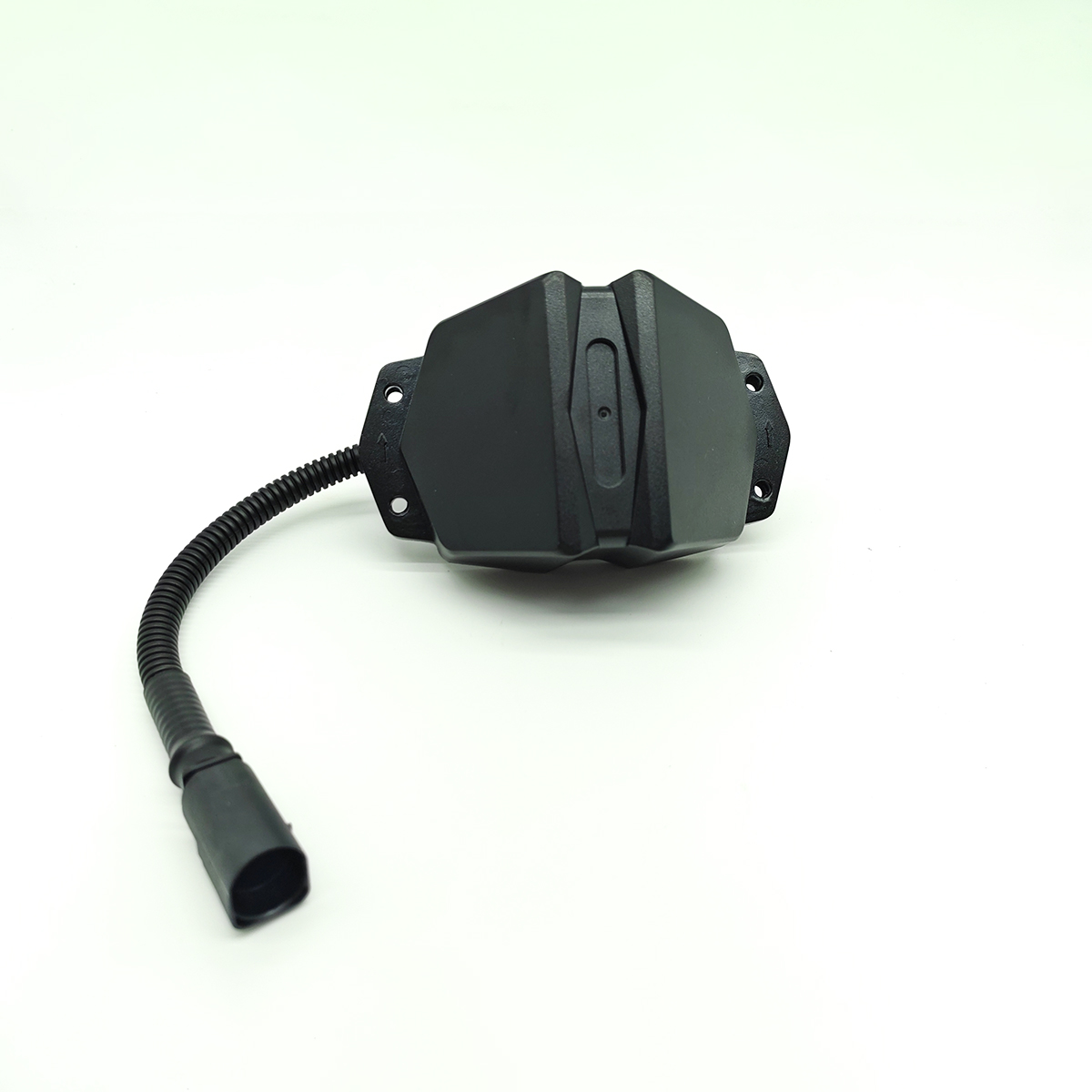
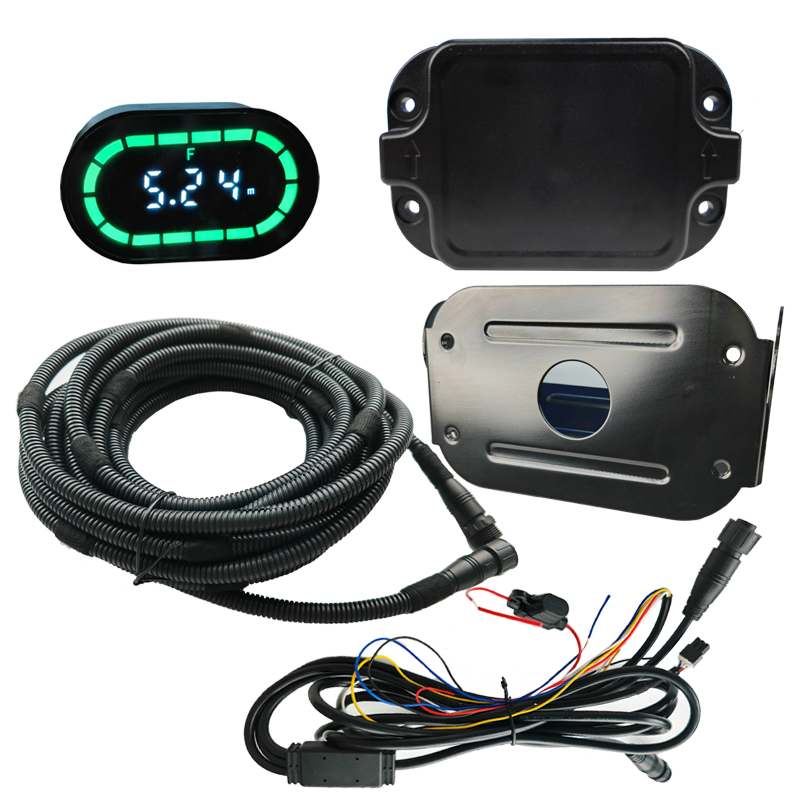
The BSIS sensor — UNECE Regulation 151 compliant — uses radar to detect persons (pedestrians and cyclists) in the left-side blind zone. Backwatch supplies the BWBSIS Sensor with programmable two-zone detection: warning zone (0–5m) and alert zone (0–2m). The system activates on left indicator and below 30 km/h, generating an audible/visual in-cab alert when a person is detected. Configuration excludes the vehicle’s own bodywork from the detection zone to prevent false alerts on tippers and articulated configurations.
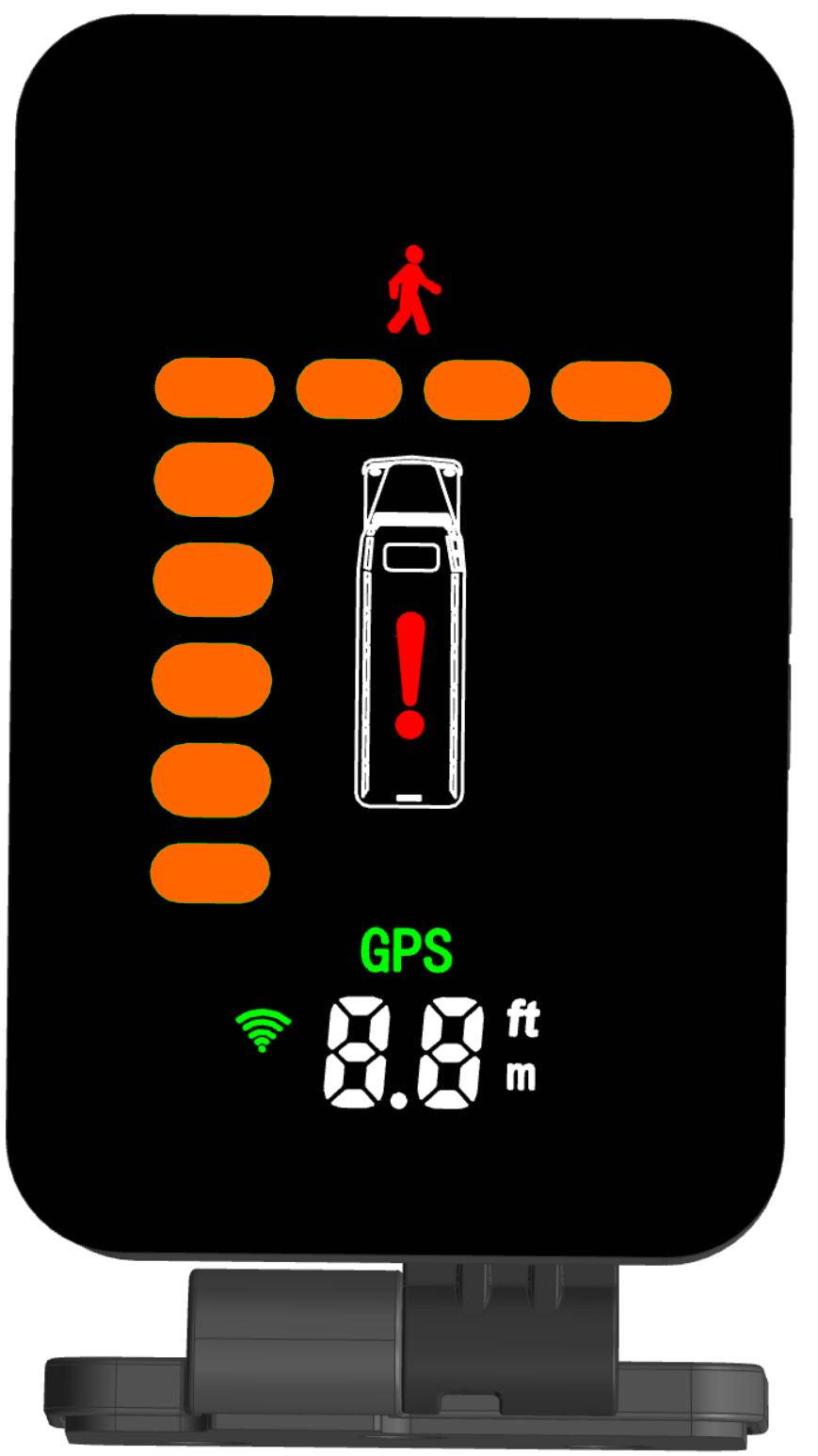
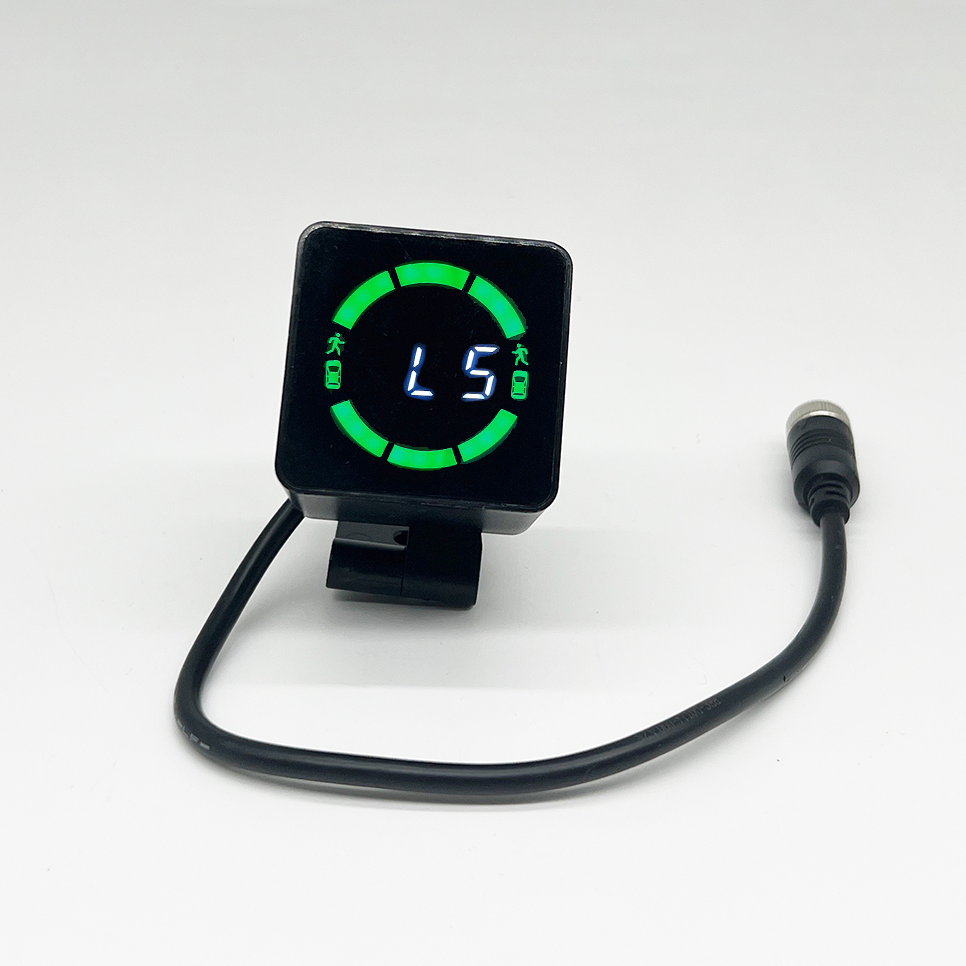
The MOIS system addresses moving-off pedestrian fatalities — the specific incident pattern of a vehicle starting to move while a pedestrian is in its immediate forward path. UNECE Regulation 159 requires AI-based pedestrian detection covering the area directly ahead of the vehicle at ground level. Backwatch supplies three MOIS-compliant options:
For fleets requiring a single-box solution, the BWBSISMOISCOM combines BSIS and MOIS in one unit — useful for retrofitting older vehicles with limited mounting space.
DVS PSS applies to any HGV over 12 tonnes operating in Greater London. Fitment specifics vary by vehicle:
The PSS installation must be documented to TfL’s specification when applying for or renewing an HGV Safety Permit. Backwatch installations include:
Yes. DVS PSS is required for every entry into Greater London, not just for fleets based in or running regular London routes. An occasional tour coach, an annual delivery to a London site, or a one-off concrete pour all require a valid HGV Safety Permit if the vehicle is over 12 tonnes. TfL enforcement uses ANPR; it does not distinguish between regular and occasional operators. Each non-compliant entry generates its own penalty charge.
The Direct Vision Standard rates HGVs from 0 (poor direct visibility) to 5 (excellent direct visibility) based on the driver’s ability to see vulnerable road users directly through the windscreen and side windows. Vehicles with 0, 1, or 2 stars require a full PSS installation to obtain a permit. You can check your vehicle’s DVS rating by entering the registration on TfL’s vehicle look-up tool. Most older construction HGVs (DAF, Volvo, Scania pre-2020) receive 0–1 stars; some newer cabs achieve 3+ stars and may be exempt from PSS.
No. The permit requires the full PSS specification: CMS (or working Class V/VI mirrors), BSIS, MOIS, plus side underrun protection and external warning signage. Missing any component means the permit application will be rejected, or an existing permit will not be renewed. There are limited exemptions for vehicles with high DVS star ratings (3+) and for specialist vehicles where physical fitment is not possible — these are evaluated case-by-case by TfL.
The original Safe System (2020) required a different specification: side-scan sensor, cyclist warning sticker, audible left-turn alarm, and a Class VI mirror. The Progressive Safe System (effective October 2024) replaced Safe System with a more rigorous specification: a CMS camera requirement, BSIS to UNECE R151 (replacing the older side-scan), MOIS as a new requirement, and updated underrun protection. Vehicles permitted under Safe System needed to upgrade to PSS for permits issued or renewed from October 2024.
The PSS specification itself doesn’t differ between rigid and articulated HGVs — CMS, BSIS, and MOIS apply to the tractor unit. However, FORS Version 7 (January 2025) introduced updated sensor positioning rules for articulated configurations: BSIS sensors must be positioned to prevent false alerts from trailer articulation movements during turns. Fleets using pre-V7 sensor configurations on articulated vehicles should verify compliance during their next audit cycle. Trailer-mounted cameras (rear of trailer) are not part of PSS but are FORS Gold and CLOCS best practice.
TfL requires evidence that PSS components are installed and meet the specified UNECE regulations. Backwatch provides a PSS installation certificate per vehicle identifying the CMS camera model, the BSIS sensor (with UNECE R151 reference), the MOIS system (with UNECE R159 reference), and the installation date. This certificate is the document you submit with the permit application. Keep certificates for the duration of the vehicle’s operation in London — TfL may request evidence at any point during the permit term.
Yes, with caveats. CMS cameras and BSIS sensors can typically be moved between vehicles by a competent installer, but the BSIS sensor must be recalibrated for the new vehicle’s body profile and the exclusion zones reconfigured. MOIS systems with AI processors need re-training on the new vehicle’s bonnet/bumper profile. Re-fitment is not a DIY job — the recalibration is what determines whether the system performs to UNECE specification. Backwatch can transfer components and recommission as part of a fleet remix or vehicle disposal cycle.
Tell us what vehicles you run and what you need — we will come back with a recommendation and a price. Prefer to talk? Call 01656 721871.
17 July 2026
Monday to Friday:
8.30am-5.30pm