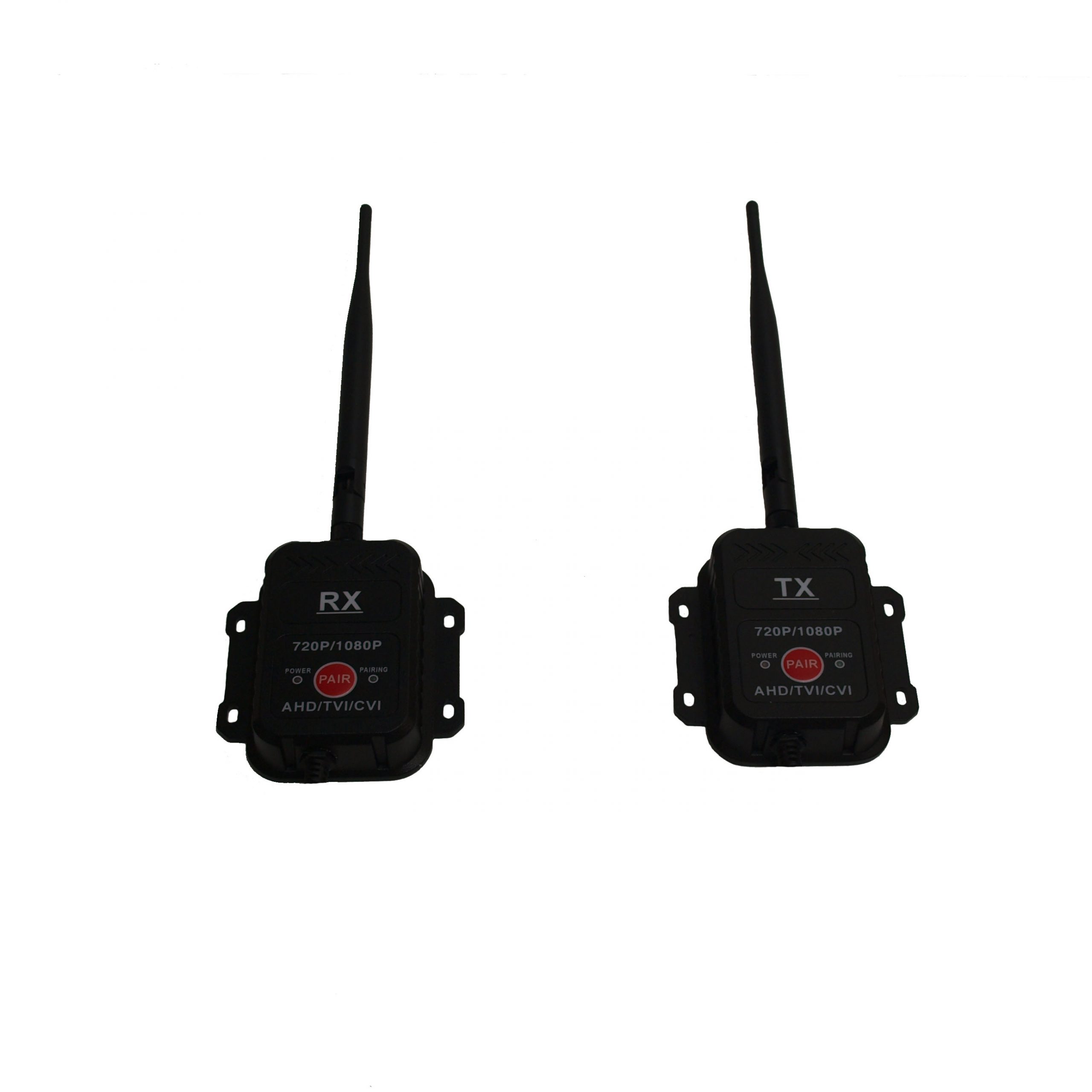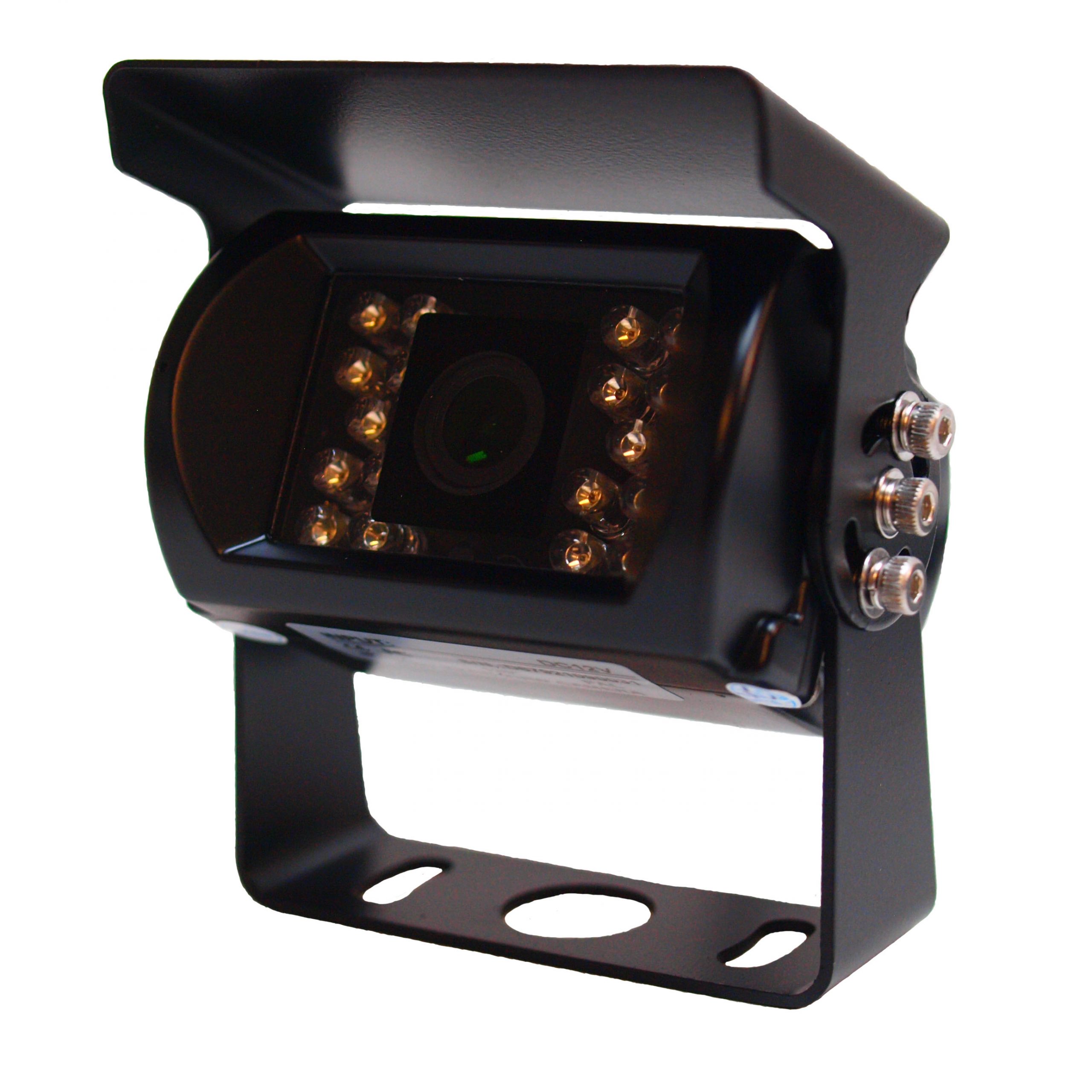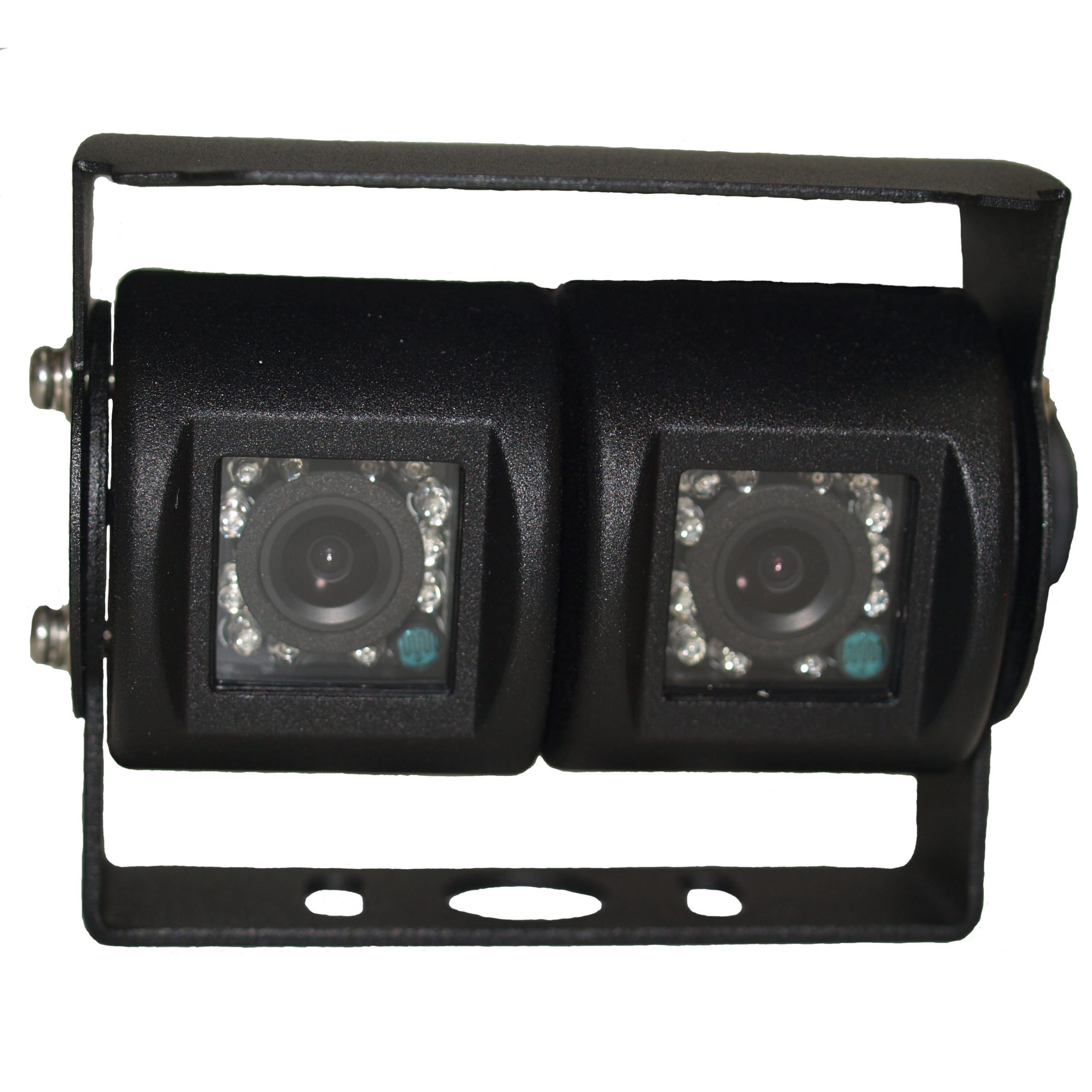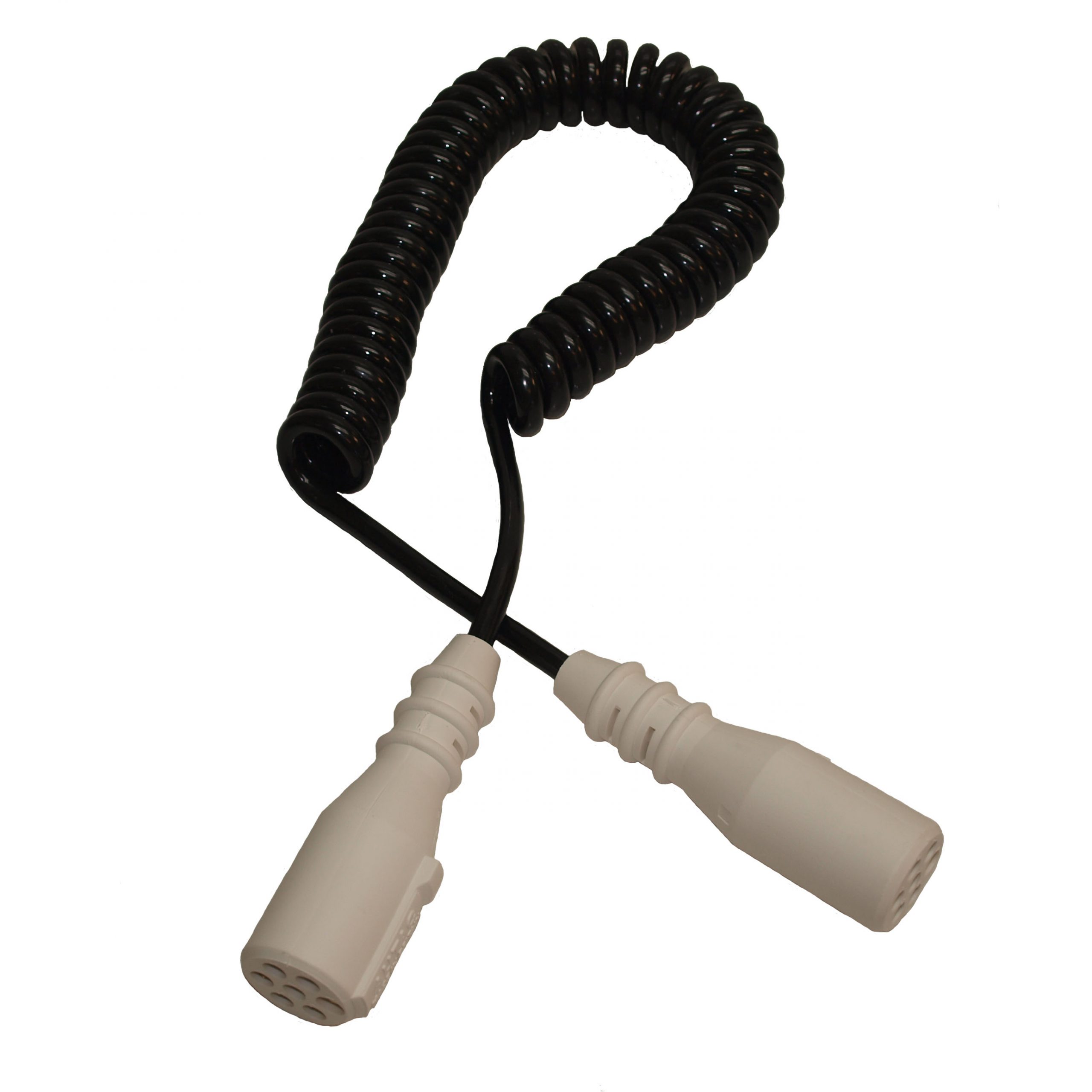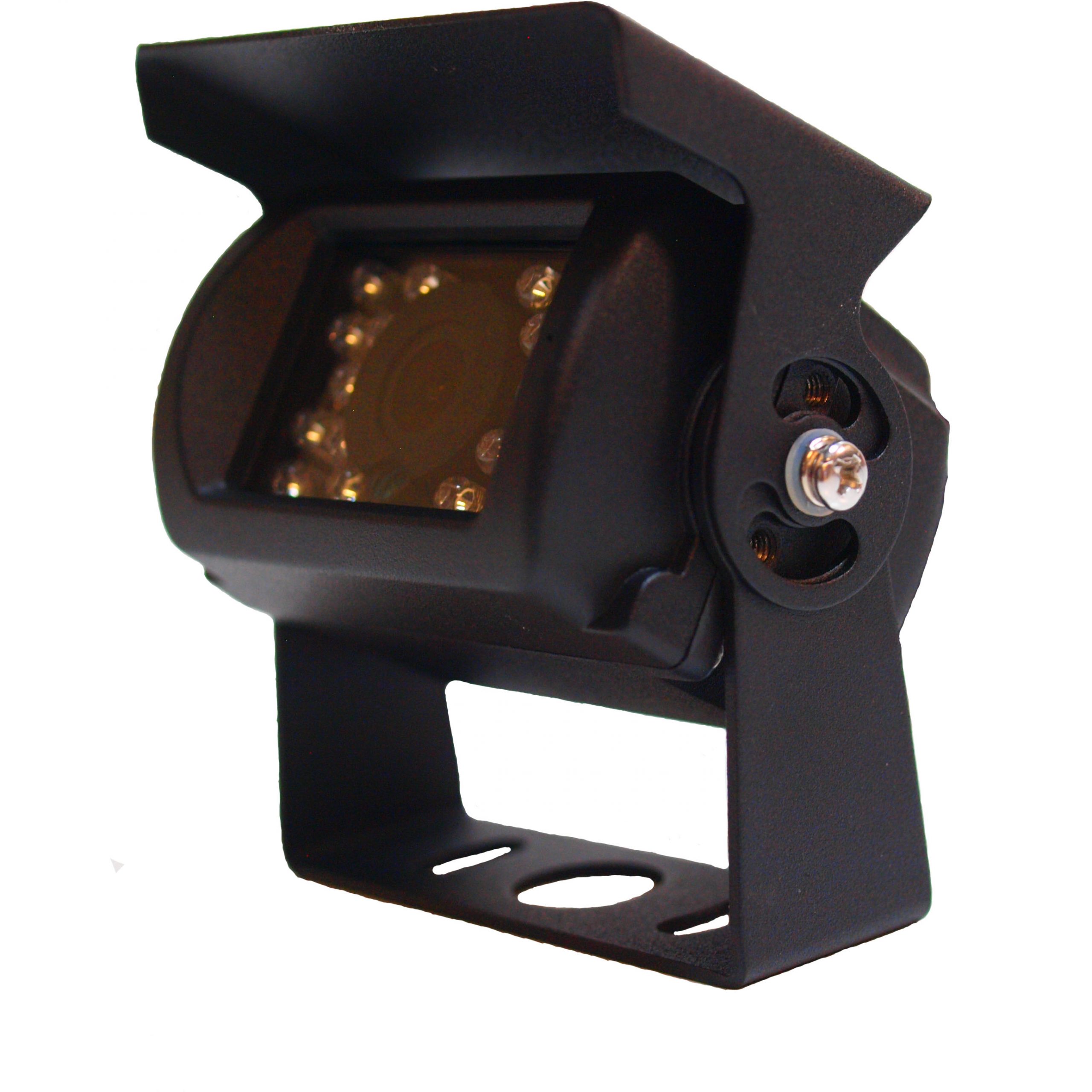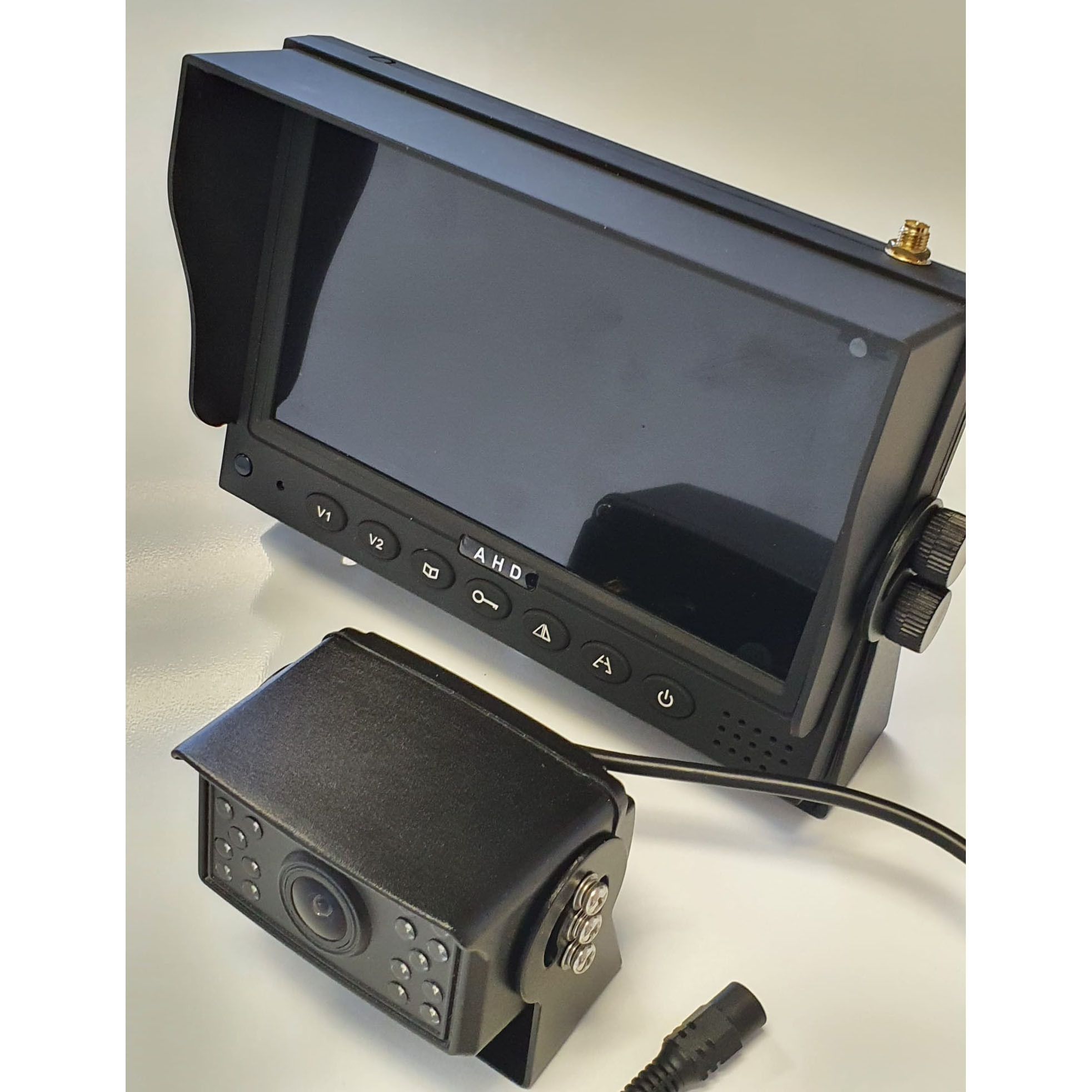
An articulated HGV with cameras on the tractor unit but nothing on the trailer has its highest-risk operational zone — the rear of the trailer during reversing — entirely uncovered. The driver reversing a 13.6m articulated combination cannot see the trailer’s rear from any mirror; the trailer end is between 10 and 20 metres behind the cab depending on configuration. A camera mounted on the trailer feeds the cab monitor either wirelessly via the BWTX/RX system or through a dedicated Susie line, providing the same rear-zone view that a rigid HGV gets from a body-mounted rear camera.
Backwatch supplies trailer camera systems in both wired (Susie line) and wireless (BWTX/RX) configurations, specified to how the fleet actually runs its trailers — the right connection method depends on whether tractor and trailer stay paired or trailers are swapped between units.
The core problem is simple: the trailer rear blind zone is not covered by tractor-mounted cameras. A rear camera mounted on the tractor cab’s rear face shows the gap between tractor and trailer, not what’s behind the trailer. The trailer end is the actual reversing risk zone.
Getting that camera feed into the cab means crossing the tractor-trailer coupling, and there are two ways to do it. The most reliable is a dedicated Susie line: the connection between the lorry and the trailer is made automatically when the trailer is plugged in at coupling. A wireless link, by contrast, has to be connected manually — the transmitter and receiver are coded to each other. In practice that makes the Susie line the better choice where trailers are changed often, and wireless the better fit for tractor-trailer units that always stay together.
| Component | Function | Position |
|---|---|---|
| Trailer rear camera | Live feed of trailer rear during reversing | Trailer rear, mounted low |
| BWTX/RX Wireless | Wireless signal transmission trailer → tractor cab | Tractor cab + trailer junction |
| BW706 Wireless 7″ Monitor | In-cab display of trailer camera feed (single channel) | Driver sightline |
| Susie Connector | Dedicated wired camera line through the tractor-trailer coupling | Tractor-trailer coupling |
| Trailer-mounted side cameras (optional) | Additional coverage for long trailers | Trailer side-mounts |
The rear camera is normally mounted low down on the trailer rear, not on the top frame — a low mount looks straight back at obstacle level when reversing, and doesn’t strike branches and other overhead hazards the way a top-mounted camera does.
Single rear-mounted camera on the trailer, fed to the cab by Susie line or BWTX/RX wireless. Used by general distribution fleets where the primary risk is reversing-related.
Trailer rear + nearside camera with FORS Silver-compliant tractor unit. Required for CLOCS contracts and most major construction project access.
For trailers longer than 13.6m or drawbar trailer combinations where the trailer end is significantly distant from the cab. Side cameras can be added on the trailer for blind-zone coverage along the trailer length — the in-cab display is single channel, showing one camera feed at a time.
For refuse trailers and waste-handling articulated configurations where the trailer carries the loading/tipping equipment.
The Susie connector is the standard articulated vehicle pneumatic and electrical connector at the tractor-trailer coupling point. A dedicated Susie line carries the trailer camera feed into the cab:
Wired connections are generally preferable to wireless. The exceptions are noteboom (low-loader) trailers, where the low ground clearance leaves no practical route for the wiring, and extending trailers, where the cable run can’t accommodate the extended length — in both cases wireless is the right choice.
Where the trailer camera runs wirelessly instead of over a Susie line, the BWTX/RX link must address several technical factors:
Wired is generally preferable. A dedicated Susie line connects automatically when the trailer is coupled, needs no coding or driver setup, and carries none of the radio factors (interference, loss of coding) that a wireless link does. Wireless earns its place where a wired run isn’t practical: noteboom trailers, where the low ground clearance leaves nowhere to route the cable, and extending trailers, where the change in length defeats a fixed cable run. It also suits tractor-trailer units that permanently stay together, where the manual coding is done once and left alone.
Not automatically. The wireless transmitter and receiver are manually coded to each other — the link doesn’t re-pair itself when a different trailer is coupled, so a trailer swap means re-coding the connection. Fleets that change trailers regularly are better served by the Susie-line connection, which is established automatically at coupling: standardise the Susie-line camera fit across the trailer fleet and any tractor-trailer combination works immediately.
The in-cab monitor displays a “no signal” or “pairing” warning on the trailer camera channel. The driver should revert to standard reversing procedures (banksman, mirrors) and report the fault for repair. Most wireless link failures are caused by loss of the coded connection between transmitter and receiver — re-coding restores the link — with interference (rare) and transmitter failure (covered by warranty) the less common causes.
Compatibility depends on the existing camera’s signal format. Cameras with standard CVBS or AHD output integrate with BWTX/RX; cameras with proprietary digital outputs require a signal converter or replacement. Backwatch installation engineers assess existing cameras during the site survey — those that integrate cleanly are kept; those with format mismatches are replaced with Backwatch units of equivalent or better specification.
The cameras are IP69K rated — the standard for high-pressure, high-temperature water jets at close range, which trailers see regularly in fleet wash cycles. The wireless send/receive units are IP67: sealed against dust and immersion, but not rated for sustained close-range jets, so they are positioned and shielded as much as possible from extremes of water and dirt ingress during installation.
Yes. Image definition is the same whether the feed reaches the cab over a Susie line or the wireless link — the connection method doesn’t degrade the camera’s output, so a trailer camera produces the same quality of footage as an equivalent tractor-mounted unit.
Tell us what vehicles you run and what you need — we will come back with a recommendation and a price. Prefer to talk? Call 01656 721871.
17 July 2026
Monday to Friday:
8.30am-5.30pm