
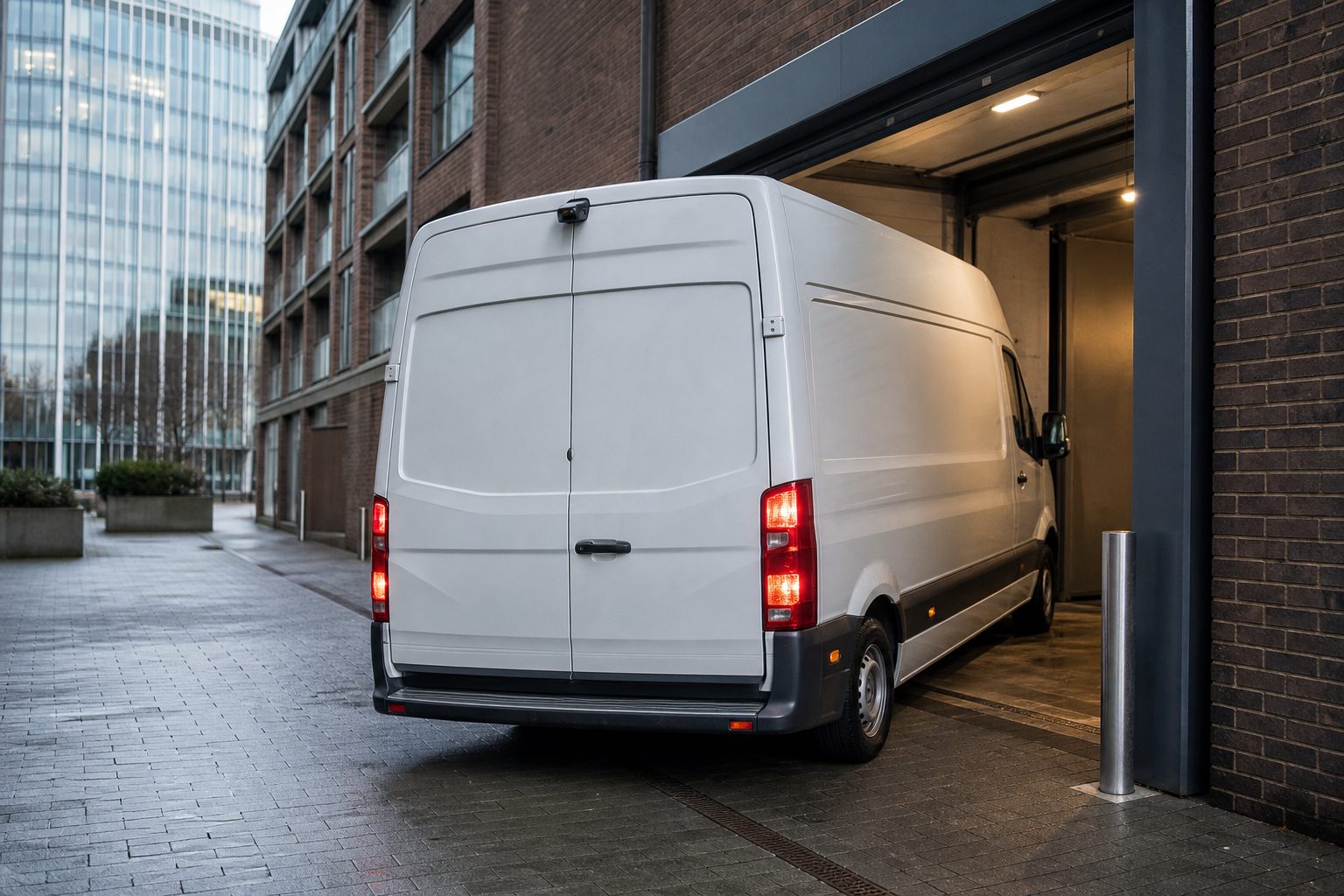
Last-mile delivery is the most hazardous phase of the logistics chain, measured by incident frequency. A long-haul driver covering 500 motorway miles encounters fewer collision risks than a multi-drop driver covering 80 miles and stopping 60 times in urban and suburban environments. Each stop is a reversing manoeuvre, a door opening into traffic, a return to a vehicle parked briefly in a cycle lane, an interaction with pedestrians approaching the vehicle from multiple directions.
The safety challenge in last-mile delivery is not highway driving — it is the accumulated risk of repeated identical operations in varied and unpredictable environments, performed by drivers who may be covering the same routes for months without a meaningful safety review.
The incident types that dominate last-mile delivery loss records are specific and predictable:
Cyclist and pedestrian conflicts at stops. A delivery vehicle parked on a yellow line in a narrow street occupies a position that cyclists must pass. When the driver or a passenger opens a door, the risk of a collision with a passing cyclist is high. “Dooring” incidents — where a cyclist strikes an opened vehicle door — generate injury claims that are almost always attributable to the vehicle operator. Camera footage of the driver’s door side before opening resolves disputes about whether an adequate check was made.
Reversing in residential and commercial streets. Multi-drop delivery requires reversing at addresses where access is from a cul-de-sac, a shared surface, or a narrow courtyard. The driver cannot see the full reversing zone from the cab. A rear camera with proximity sensor and audible alert addresses the detection problem; a driver coaching programme using footage of recorded reversing events addresses the behaviour pattern that creates the risk.
Fatigue on long multi-drop rounds. A driver who has completed 40 stops by mid-afternoon is operating in a different cognitive state from the same driver at stop five. DSM (driver-state monitoring) cameras with AI drowsiness and distraction detection store clips of the late-round fatigue signatures — extended eye closure, head nods, phone interaction — that precede many late-shift incidents. The data allows fleet managers to restructure routes that consistently produce fatigue signals in the late stages.
Time pressure and harsh driving events. Multi-drop delivery schedules create time pressure that produces measurable driving behaviour changes. Harsh braking, excessive speed in residential areas, and aggressive acceleration between stops are correlated with delivery schedule pressure. Event data from the MDVR, combined with route timing data, identifies where schedule pressure is producing dangerous driving rather than just fast driving.
Camera footage in last-mile delivery serves two functions: real-time prevention through AI detection and driver alerts, and retrospective coaching through event data review.
For the real-time prevention function: a front-facing camera with AI person-detection alerts the driver before moving off — catching pedestrians and cyclists who have moved into the vehicle’s path during the stop. A nearside camera activated by the indicator provides the cyclist-awareness feed during left turns and overtaking. A rear camera with proximity sensor provides the reversing detection that prevents the most common stop-related incident type.
For the coaching function: harsh event data from the MDVR — filtered to exclude road surface events that generate false g-sensor triggers — provides a ranked list of driver events for review. A driver coaching programme that reviews the top five events per driver per week, using the actual footage as the coaching material rather than a verbal debrief, consistently reduces event frequency. The research pattern in fleet coaching shows that drivers who see their own footage respond differently from drivers who receive a verbal incident report. The footage removes the ambiguity that allows a driver to attribute an event to external factors.
A delivery fleet driver safety programme that uses camera data effectively has five components:
The insurance claim frequency for last-mile delivery fleets is higher than for most other commercial vehicle categories, for structural reasons that cameras directly address. A camera system with documented coaching programme and evidenced event reduction achieves premium reductions that typically exceed the system’s cost within the first renewal cycle. The mechanism is a claims experience record showing both fewer incidents and faster resolution of the incidents that do occur.
Fraudulent claims against delivery fleets — staged pedestrian incidents, fabricated dooring claims, false property damage allegations — are particularly amenable to footage-based defence. The vehicle is branded, the route is known, and the stop duration and location are GPS-logged. A fraudulent claim that cannot be placed in the timeline of the vehicle’s actual recorded activity collapses quickly on disclosure of footage and GPS data.
The rear camera, combined with a proximity sensor and audible alert. Reversing at every delivery stop is the highest-frequency hazard in multi-drop delivery, and the rear camera directly addresses the primary cause of reversing incidents — the driver’s inability to see the full zone behind the vehicle from the cab. The combination of visual awareness (camera) and automatic alert (proximity sensor) addresses both the detection and the reaction components of the reversing risk.
It depends on the camera type. A driver-facing camera records continuously to the rolling storage cycle. A DSM (driver-state monitoring) camera works differently: it stores clips only when a distraction event is detected — smoking, yawning, phone use, extended eye closure — rather than keeping a continuous record. UK GDPR requires that monitoring be proportionate to the purpose — event-triggered DSM clips are easier to justify than routine review of continuous footage. The policy document that covers driver camera use should specify which type is fitted, the trigger conditions, and access controls clearly, and drivers should be informed of these in writing before the system is activated.
A behaviour-based safety score aggregates event frequency data — harsh braking rate, speeding, harsh acceleration, distraction events — into a single metric that allows fair comparison across drivers covering different routes and stop counts. Normalised by miles or stops, it identifies genuine outliers while controlling for the variation in delivery environment. Drivers who understand their score and how it is calculated are more likely to engage with coaching conversations than drivers who receive raw event counts without context.
AI-equipped DSM cameras can detect eye closure duration, head position, and gaze direction patterns associated with microsleep and distraction. These are not perfect fatigue detectors — some drivers show fatigue signatures that the algorithm flags incorrectly, and camera angle is important for consistent detection. But as a trigger for managerial review — “this driver showed three distraction alerts in the last hour of their round” — the detection capability is operationally useful for route scheduling and welfare interventions.
All camera channels for the 5 minutes before, during, and after the incident. GPS speed and position data for the same period. Any event-triggered clips from the same vehicle on the same day. The driver’s journey log from the fleet management system. All of this should be flagged and preserved immediately — before the rolling retention cycle reaches the relevant timeframe — and documented with the date of preservation and the name of the person responsible.
Download this free checklist to apply the guidance in this article to your fleet.
Tell us what vehicles you run and what you need — we will come back with a recommendation and a price. Prefer to talk? Call 01656 721871.
Related guides: Best Camera Systems for Delivery Fleets · Reducing Insurance Risk in Delivery Fleets
4 August 2026
Monday to Friday:
8.30am-5.30pm