
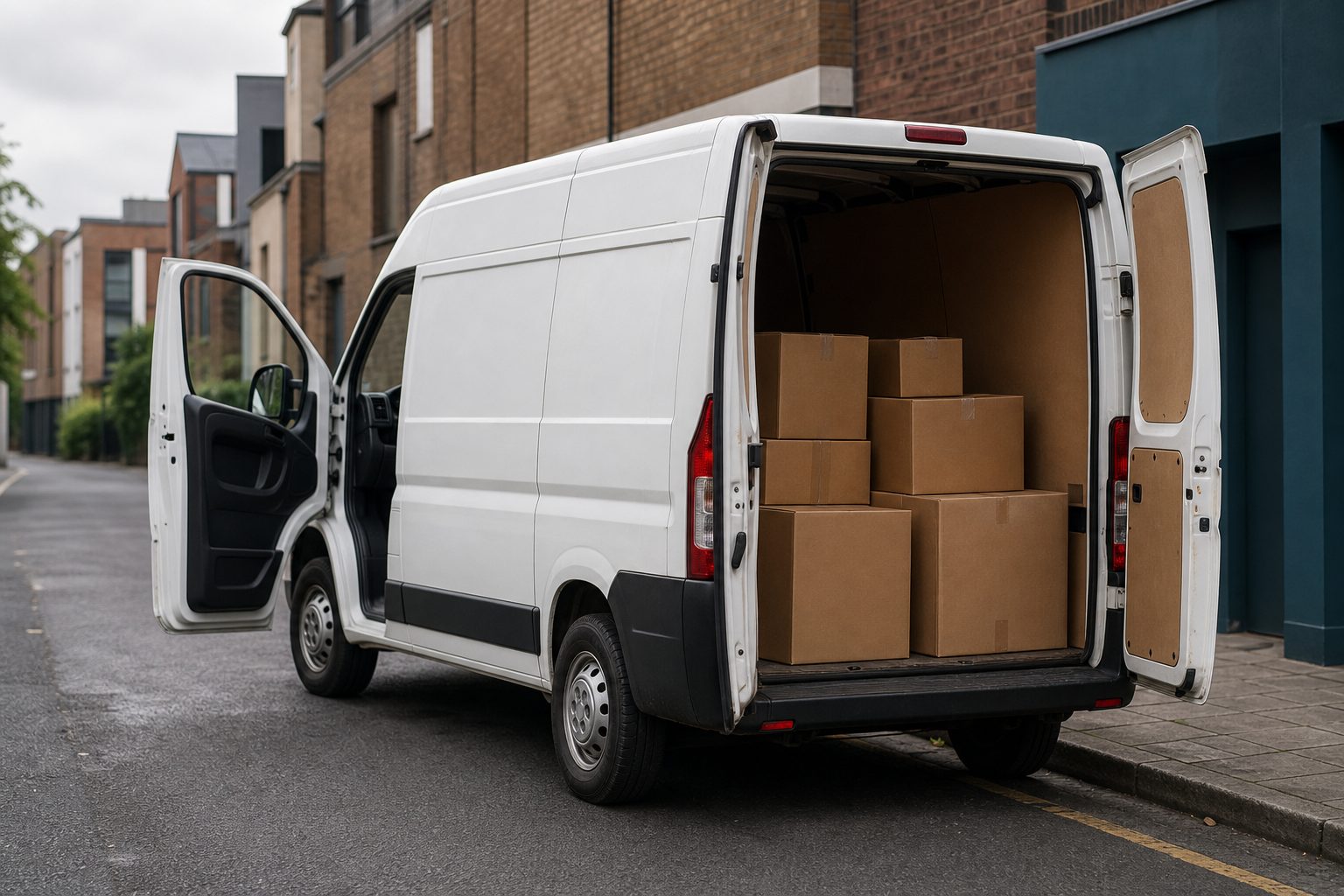
A delivery fleet camera specification is not the same as an HGV construction fleet specification. The vehicles are different, the risk profile is different, and the compliance framework is different — particularly for van fleets under 3.5 tonnes, which fall outside the scope of DVS and FORS but carry a distinct set of operational risks that make camera systems equally necessary.
This guide covers the camera specification for both van fleets and LGV/HGV delivery operations, the specific hazards that each vehicle type encounters, and what a camera system actually needs to do in a delivery context beyond satisfying a compliance audit.
Delivery operations divide into two vehicle categories with meaningfully different requirements. Van fleets operating vehicles under 3.5 tonnes GVW are not subject to DVS or FORS requirements. For larger delivery vehicles the thresholds differ and are worth keeping distinct: FORS sensor-system requirements apply to HGVs over 3.5 tonnes, while DVS and the Progressive Safe System apply to HGVs over 12 tonnes operating in Greater London.
Van fleets are not exempt from camera systems because they fall below compliance thresholds. They are simply in a position where the business case for cameras rests on operational and insurance grounds rather than regulatory grounds. The insurance claim profile of a multi-drop delivery van operating in urban environments is high — repeated stops, reversing in tight streets, interaction with cyclists and pedestrians throughout the day — and the fraudulent claim profile is significant. Staged accident claims against identifiable delivery vans carrying known operator branding are a documented and growing problem.
For HGV delivery, the compliance baseline is FORS Silver for fleet operators seeking accreditation (and for those supplying to accredited clients) — its sensor-system requirements apply to vehicles over 3.5 tonnes. The nearside camera, 7-inch in-cab monitor, side sensor system, audible left-turn warning, and reversing alarm of FORS Silver are the minimum specification. For HGVs over 12 tonnes operating in London, DVS PSS adds BSIS and MOIS requirements.
Multi-drop delivery in urban environments creates camera requirements that rural or motorway HGV operation does not. The specific hazards that repeat across urban delivery incident records are:
Cyclist left-hook scenarios. A delivery van or LGV turning left at a junction or pulling away from a delivery stop interacts with cyclists in the nearside zone. A nearside camera with indicator-triggered activation and a BSIS-type alert provides the driver with awareness they cannot get from mirrors alone in this scenario. For van fleets this is not mandated but is directly relevant to the most common fatal incident type in urban delivery.
Reversing in residential and commercial streets. Multi-drop delivery requires reversing at nearly every stop, in streets with varying visibility, pedestrian traffic, and parked vehicles reducing the available width. A rear camera combined with a proximity sensor and audible alert is the standard combination for this scenario. For van fleets, a rear camera with a sensor-triggered alarm addresses the primary reversing risk; for HGVs over 3.5 tonnes, the reversing alarm is a FORS requirement.
Property damage during tight manoeuvres. Delivery vehicles navigating narrow access roads, shared surfaces, and restricted residential streets regularly make contact with property — walls, gateposts, parked vehicles. A 360° surround view or at minimum nearside and rear cameras with proximity sensors provide the driver with coverage of the vehicle’s footprint that mirrors cannot give in confined spaces.
Fraudulent claims. Delivery vans are disproportionately targeted for staged accidents — particularly third-party pedestrian and cyclist claims. The vehicle is identifiable, the operator is known, and the route is consistent. Multi-angle footage from the moment of the alleged incident, with GPS speed and position data embedded, is the evidence that terminates these claims before they reach settlement.
Van fleet (under 3.5t):
HGV delivery (FORS Silver sensor requirements apply over 3.5 tonnes):
A multi-drop delivery vehicle stops dozens of times per shift. Each stop is a potential incident point. The camera system needs sufficient storage to retain footage from every stop across a full working day, plus enough margin to retain footage from a full week of operation in case an incident is reported late.
The relevant specifications for a delivery MDVR: minimum 512GB to 1TB storage providing 7–14 days of rolling retention at standard quality across 4–6 camera channels; cloud-connected for remote clip retrieval without requiring the vehicle to return to depot; GPS-embedded in recordings so that any address can be used to retrieve the relevant footage. A fleet manager receiving a missed delivery complaint or a third-party claim should be able to retrieve the footage from that specific address within seconds, not hours.
No mandatory camera requirement applies to vans under 3.5t. However, the insurance claim profile of an urban multi-drop delivery van makes cameras a commercial necessity rather than a compliance requirement. Fraudulent pedestrian and cyclist claims against identifiable delivery vans are increasingly common, and footage is the primary means of defending them. Insurance providers increasingly offer premium reductions for van fleets with documented camera systems and rapid footage retrieval capability.
FORS Silver — whose sensor-system requirements apply to HGVs over 3.5 tonnes — requires a nearside camera with in-cab display, a side sensor system covering the nearside blind spot, an audible left-turn warning, and a reversing alarm. A rear camera is not explicitly mandated by FORS Silver but is standard practice and will be present on any MDVR-equipped vehicle. FORS Gold requires the same camera specification as Silver — the additional Gold requirement is a published case study, not extra camera hardware.
Yes. Modern MDVRs combine incident recording, live GPS tracking, driver behaviour event monitoring (harsh braking, acceleration, cornering), and remote portal access in a single system. The footage that records a near-miss also provides the data for driver coaching. The GPS that tracks delivery route compliance also enables rapid footage retrieval by address. Treating the camera system as a fleet management tool rather than a compliance checkbox extracts significantly more value from the same hardware.
If a claimant’s solicitor requests footage and it has been overwritten on a rolling retention cycle, the absence of footage can itself become an adverse fact in litigation — it implies evidence management failure even if the incident was entirely the claimant’s fault. The procedurally correct response to any incident report — whether from a driver, a third party, or a complaints system — is immediate footage preservation. The clip should be flagged and backed up before it reaches the rolling retention window for deletion.
Yes, subject to UK GDPR requirements. Drivers must be informed in writing that driver-facing cameras are fitted, the conditions under which footage is accessed, and how footage is used. The lawful basis is typically legitimate interests for safety and incident investigation purposes. Routine monitoring of driver-facing footage without a specific trigger (a harsh event, an incident report) is harder to justify under proportionality than event-triggered access. The legal framework supports driver-facing cameras provided the policy and driver notification are in place.
Download this free checklist to apply the guidance in this article to your fleet.
Tell us what vehicles you run and what you need — we will come back with a recommendation and a price. Prefer to talk? Call 01656 721871.
Related guides: Evidence Packs for Delivery-Related Incidents · Improving Driver Safety in Last-Mile Delivery
4 August 2026
Monday to Friday:
8.30am-5.30pm