
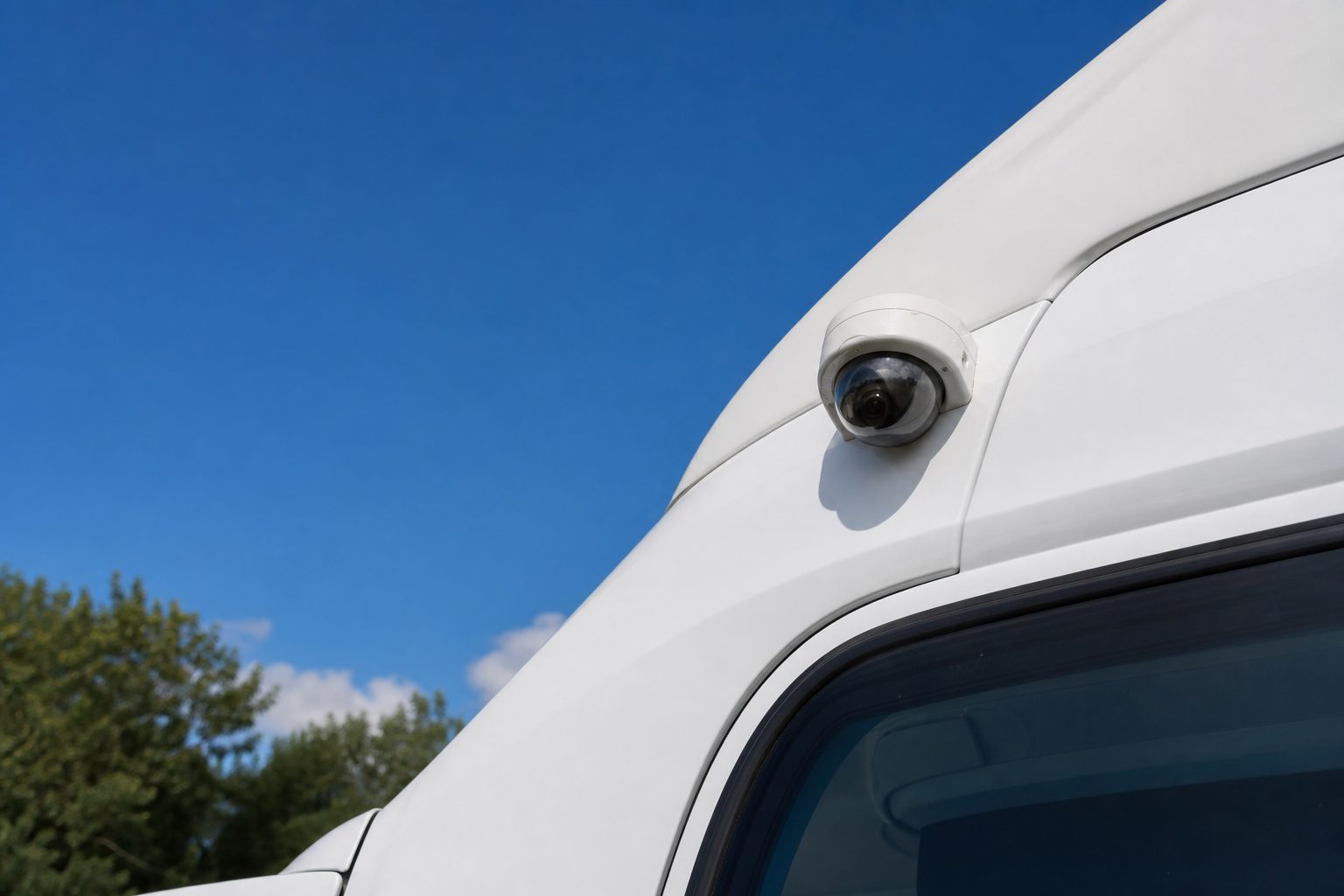
Camera footage does not only record what happened to a fleet vehicle — it records what the driver did, and what other road users did. These are two different problems requiring different responses. Footage that shows a third party performing a dangerous manoeuvre before an impact gives the fleet operator evidence to defend against a liability claim. Footage that shows the fleet driver performing a dangerous manoeuvre is evidence that the fleet operator has a legal obligation to act on — as an employer, as an operator licence holder, and in some cases as a witness to a criminal offence. The process of identifying dangerous driving with video evidence begins with understanding which category of footage is in front of you and what the correct response to each category is.
The legal threshold matters because it determines the appropriate response. Under Section 2 of the Road Traffic Act 1988, dangerous driving is driving that falls far below the standard expected of a competent and careful driver and where it would be obvious to such a driver that driving in that way would be dangerous. The standard is objective — not whether the driver intended to drive dangerously, but whether their driving obviously fell far below the standard.
Careless driving (Section 3, Road Traffic Act 1988) is a lower threshold: driving without due care and attention, or without reasonable consideration for other road users. The practical distinction is significant because the police disposal options differ. Dangerous driving is an endorsable offence with a mandatory disqualification on conviction and carries custodial sentences in serious cases. Careless driving is typically disposed of by fixed penalty, driver education course, or, in the worst cases, a court summons.
For fleet managers reviewing footage, the distinction guides the response. Footage of an own driver cutting across a roundabout without signalling is careless. Footage of an own driver overtaking on a blind bend at speed is dangerous. Both require a response, but the appropriate response and the escalation path differ significantly.
Modern MDVR systems with AI detection flag a range of event types in real time. Fleet managers reviewing footage encounter several distinct categories:
When footage captures dangerous driving by another road user — the vehicle that pulled out without signalling, the car that cut across the fleet vehicle’s path — the fleet operator has a choice: submit the footage to police or retain it for insurance purposes only.
The National Dash Cam Safety Portal (NDSP) is the national platform through which footage of road traffic offences can be submitted directly to the police force covering the area where the incident occurred. Submissions require original, unedited footage (not a copy or a re-encoded clip), a completed online witness statement, and the registration number of the offending vehicle. The submission window matters: most road traffic offences have a six-month prosecution deadline from the date of the offence.
Fleet operators who submit footage via the NDSP must be prepared for the possibility that the submitting driver will be required to provide a witness statement to police and, in some cases, give evidence in court. This is an operational consideration: the driver must be available, the footage must be preserved in its original format, and the chain of custody from the vehicle to the submission must be documented. A submission where the original footage cannot be produced, or where the timestamps are inaccurate, may result in no further action by police even where the driving was clearly dangerous.
A question that arises consistently is whether fleet operators have a legal obligation to report third-party dangerous driving to police. There is no general legal obligation to report in these circumstances — reporting is a choice. However, where a fleet operator’s vehicle is involved in a collision and their footage shows that the third party was driving dangerously, withholding that footage from a police investigation they know is underway is a different matter entirely.
When footage shows that a fleet operator’s own driver was driving dangerously, the response requires immediate decisions across three separate domains: road safety, employment law, and operator licensing.
The road safety response is the most urgent. If the dangerous driving is revealed by footage from a previous journey and the driver is still on the road, the fleet operator must assess whether the driver should be stood down pending investigation. Continuing to allow a driver to operate when footage exists of dangerous conduct — and then a further incident occurs — is a position that no employer can defend.
The employment law response requires a documented investigation process: the driver is given the opportunity to view the footage and respond, the investigation is documented, and the outcome — whether coaching, formal disciplinary action, or dismissal — is evidenced. Where the driving is clearly dangerous and the evidence is unambiguous, summary dismissal may be justified. Employment tribunal claims arising from footage-based dismissals are rare where the footage is unedited, the driver was shown it during the investigation, and the process followed the employer’s disciplinary procedure.
The operator licensing response involves the transport manager. Where footage shows a pattern of dangerous driving by a driver associated with the O-licence, the transport manager has an obligation to act. A Traffic Commissioner who reviews a case where dangerous driving footage existed but no action was taken will examine what the transport manager did and when they did it. The O-licence system’s continuous and effective responsibility standard applies to exactly this type of situation.
Reviewing footage one event at a time misses the information that footage libraries contain at scale. A driver who generates one mobile phone event in a month is a coaching conversation. A driver who generates four mobile phone events in a week across different routes is a documented pattern of high-risk behaviour that requires a more urgent response than coaching.
AI event detection systems that automatically flag and categorise events make pattern analysis possible without manual frame-by-frame review. A fleet management platform that shows event type, frequency, and driver attribution over a rolling 30-day period gives the fleet manager a risk picture that manual review cannot produce at the same speed. The specific value for identifying dangerous driving is that the AI flags the event, the footage provides the context, and the pattern across multiple events confirms whether the individual event was an anomaly or a behaviour.
The DVSA has an intelligence reporting function — the DVSA reporting form for lorry and bus driver safety concerns — where third parties and fleet operators can report concerns about HGV driver conduct. Where footage shows persistent dangerous driving by a driver employed by another operator, submission to the DVSA’s reporting function contributes to the OCRS risk intelligence picture for that operator.
Dangerous driving (Section 2, Road Traffic Act 1988) is driving that falls far below the expected standard and where that would be obvious to a competent driver. Careless driving (Section 3) is a lower threshold — without due care and attention. For fleet managers, the distinction determines the appropriate response to footage of an own driver: careless driving warrants coaching and a documented review; dangerous driving warrants a more urgent investigation and may warrant standing the driver down pending the outcome. Both types of footage are reportable to police, but dangerous driving footage generates a different disposal range — up to and including disqualification and custody on conviction.
Use the National Dash Cam Safety Portal (operated by Nextbase with all police forces in England). You will need the registration number of the offending vehicle, original unedited footage (not a re-encoded copy), and to complete a witness statement online. Submit as quickly as possible — most road traffic offences have a six-month prosecution window from the date of the incident. Preserve the original footage file in its original format after submission, as you may need to produce it if the case proceeds. Your driver may also need to provide a supplementary statement or give evidence in court.
Yes. Where footage clearly shows dangerous driving — unedited, timestamped, and verifiable as originating from the fleet vehicle — it provides the factual basis for a disciplinary process that may lead to dismissal. The employment law requirements are procedural: the driver must be informed of the allegation, shown the footage, given the opportunity to respond, and the outcome must be documented. Where the driving was clearly dangerous and the process was followed, footage-based dismissals are defensible at employment tribunal. Dismissing a driver without following the disciplinary procedure — even where the footage is unambiguous — risks an unfair dismissal finding on procedural grounds.
There is no general legal obligation to self-report a driver’s dangerous driving to police. However, where a serious incident has occurred and police are investigating, there is a duty to cooperate with that investigation — including providing relevant footage. Where a fleet operator is aware that footage exists showing dangerous driving and conceals it from a known police investigation, that is obstruction. The practical guidance is to take immediate internal action, document the process, and cooperate fully with any police inquiry. Where the dangerous driving is captured on footage but no incident occurred, the decision to report is at the fleet operator’s discretion.
Footage that is relevant to an insurance claim should be retained for up to six years (the Limitation Act 1980 civil limitation period). Footage relevant to a personal injury claim should be retained for at least three years. Where footage has been submitted to police, it should be retained in its original format until the case is fully concluded, including any appeals. Where footage shows dangerous driving but is not linked to a specific claim or investigation, the fleet’s documented retention policy determines the retention period — extended retention beyond the routine period must be documented with the reason.
A printable checklist covering five areas: capturing adequate evidence, NDSP third-party submission (with the six-month window), own-driver response process, pattern recognition, and footage retention for legal proceedings.
Tell us what vehicles you run and what you need — we will come back with a recommendation and a price. Prefer to talk? Call 01656 721871.
Related guides: How Camera Systems Improve Driver Behaviour · Reducing High-Risk Manoeuvres Using Camera Data
4 August 2026
Monday to Friday:
8.30am-5.30pm