
Heavy goods vehicles make up approximately 3.6% of non-motorway traffic in the UK. Between 2012 and 2016, they were involved in 17.5% of all cyclist fatalities. In London, the disparity is even sharper: HGVs account for less than 4% of miles driven in the city but were responsible for 78% of cyclist fatalities during the same period. The vehicles are not faster or more aggressive. The problem is geometry — where the driver cannot see, and what happens in those unseen zones when a cyclist or pedestrian is present.
Cyclist safety systems on commercial vehicles exist to address this specific problem. They do not change the physical blind spots created by cab design. They extend the driver’s awareness into zones that mirrors and direct vision cannot reach, and they provide warnings at the moments of highest risk — moving off from stationary, turning left at a junction, reversing in a confined space. This article explains who is at risk, where the risk concentrates, and how the technology that addresses it actually works.
Vulnerable road users (VRUs) is the term used in road safety legislation and DVS compliance documentation to describe people on the road without the structural protection of a vehicle. In the context of HGV cyclist safety systems, VRUs includes:
The term matters in a compliance context because DVS 2024 documentation, BSIS specifications, and MOIS requirements all use “VRU detection” to define what the system must be capable of finding and alerting the driver to. A system that alerts only to vehicles but not to pedestrians does not satisfy the VRU detection requirement.
Cyclist and pedestrian fatalities involving HGVs do not occur evenly across all driving situations. Research from 2009 to 2014 in London found that 61% of cyclist fatalities in HGV collisions were potentially influenced by the vehicle’s blind spots. The risk concentrates in three scenarios:
The left turn — the most consistently documented fatal scenario. The HGV signals left and begins to turn at a junction. A cyclist alongside in the nearside blind spot continues forward. The front-left of the vehicle sweeps across the cyclist’s path as the turn begins. The driver has no line of sight to the cyclist’s position and no way of knowing they are there without a detection system covering the nearside blind spot.
Moving off from stationary — at traffic lights, junctions, and bus stops, pedestrians and cyclists who have moved to the front of the vehicle during the stationary period are in a blind zone that begins roughly 2 metres ahead of the cab. As the vehicle moves off, anyone in that zone is at immediate risk. MOIS (Moving Off Information Systems) exist specifically to address this scenario.
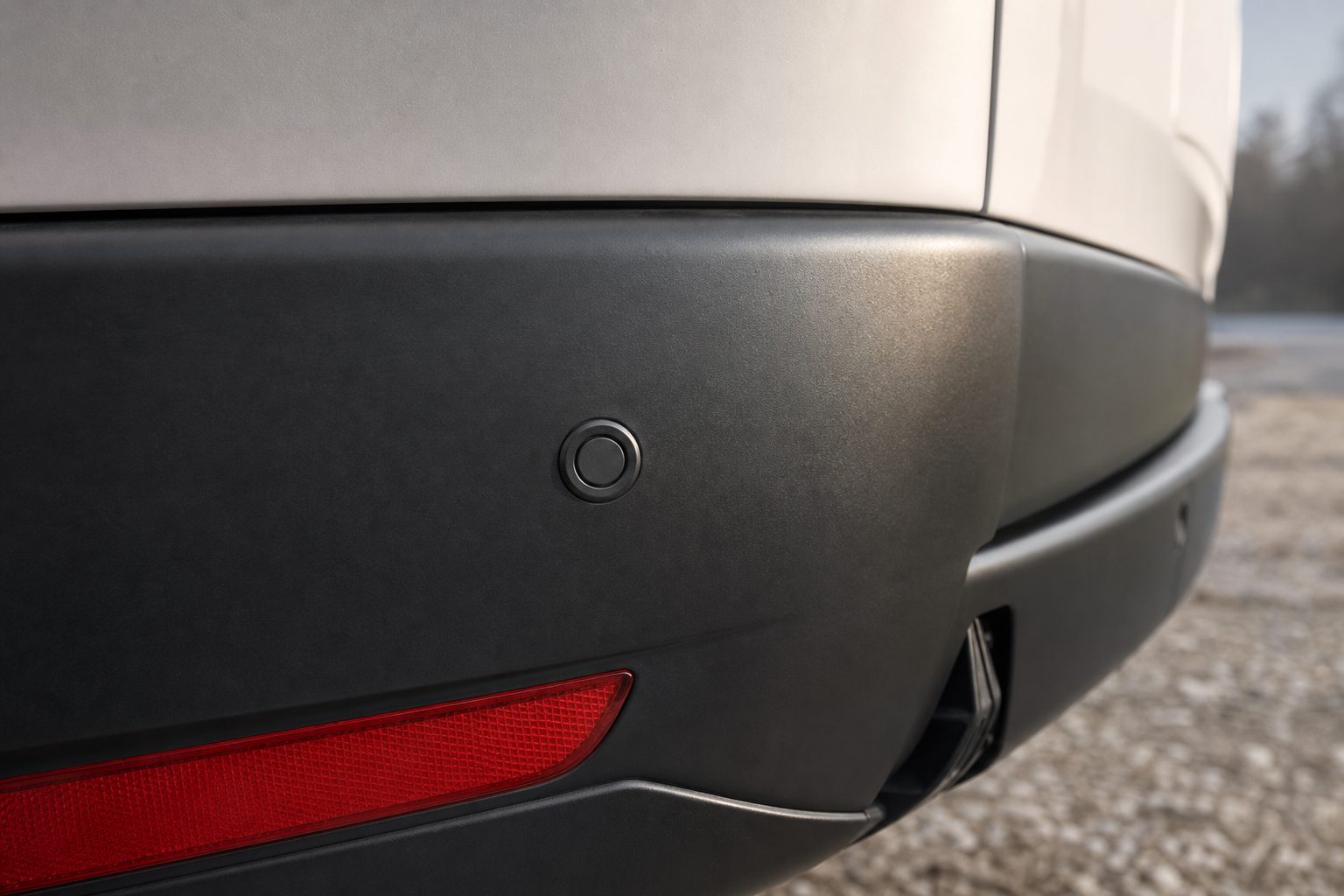
Reversing in loading environments — yard reversing incidents account for a significant proportion of HGV fatalities outside the public road network. The rear blind zone extends up to 3 metres behind the trailer. Proximity sensors and reversing cameras cover this zone, which driver mirrors cannot reach.
Understanding which scenario a specific system is designed to address is essential when specifying cyclist safety equipment. A system that only covers the nearside at low forward speed does not address reversing incidents. A system that only covers the rear does not address the left turn.
The Blind Spot Information System (BSIS) is the technology category that specifically addresses the nearside cyclist risk during forward low-speed driving. Under DVS 2024, BSIS is a mandatory component of the Progressive Safe System for HGVs over 12 tonnes operating in Greater London that do not achieve a three-star direct vision rating.
BSIS works by monitoring the nearside of the vehicle — typically using radar sensors or AI cameras — and alerting the driver when a VRU is detected in the nearside blind zone. The critical capability that the DVS 2024 specification introduces is that BSIS must distinguish between moving VRUs and stationary objects. The system must not alert to kerbs, road furniture, parked vehicles, or stationary bollards — only to moving pedestrians, cyclists, and motorcyclists. This requirement addresses the false alert problem that made older ultrasonic-only nearside systems unreliable in practice.
The detection zone is specified by TfL: 2.2 metres to the nearside, 9 metres to the rear of the cab, 2 metres in height. The system must operate between 0 and 30 km/h and must issue warnings regardless of whether the driver’s indicator is on. A system that only activates when the left signal is engaged does not satisfy the specification, because the left turn risk is present even before the driver signals.
The Moving Off Information System addresses the front blind zone at the moment the vehicle pulls away from stationary. This is the scenario where pedestrians at a crossing or cyclists who have moved to the front of the vehicle at traffic lights are most vulnerable.
MOIS activates when the vehicle is stationary and monitors the area up to 2 metres ahead of the cab. When the vehicle prepares to move — the driver selects a gear or releases the handbrake — the system issues a visual and audible alert if any VRU is detected in the monitored zone. The alert is escalated: an initial information alert notifies the driver a VRU is present; an urgent alert fires if the vehicle begins to move with a VRU still in the zone.
Like BSIS, MOIS must be active regardless of indicator status. It must not alert to stationary road furniture. And it must operate using technology capable of distinguishing a person from a post — which is why radar and AI camera systems are the standard technologies for both MOIS and BSIS compliance.
Detection systems alert the driver that something is in the blind zone. Camera monitoring systems show the driver what is there. The combination of both — an alert and a visual feed — is more effective than either alone, because it reduces the cognitive demand on the driver: they do not have to decide whether to act on an alert they cannot verify; the camera shows them the VRU directly.
For the nearside specifically, a camera mounted at an angle to show the full length of the vehicle’s left side from cab to trailer gives the driver the view that mirrors cannot provide. When the BSIS alert fires, the relevant camera feed can be automatically displayed on the in-cab monitor, giving the driver immediate visual confirmation before they complete the manoeuvre.
Camera systems used for BSIS compliance must meet DVS 2024 specifications: they must be capable of detecting and classifying VRUs (not just detecting objects), and the in-cab display must show the monitored zone clearly enough for the driver to identify a person. CCTV cameras without AI classification do not satisfy the VRU detection requirement on their own.
One layer of cyclist safety that addresses the VRU directly rather than the driver is the audible turning warning. When an HGV signals left or begins to turn, an external speaker on the nearside of the vehicle plays an audible warning — most commonly a spoken message (“Danger, this vehicle is turning left”) or a distinctive alarm tone.
Audible warning systems do not replace BSIS or MOIS — they are supplementary. Their value is in situations where a cyclist or pedestrian is alongside the vehicle but has not seen the signal or is not looking. A clearly audible warning that the vehicle is turning gives a VRU who is in the right position to hear it the information they need to stop or move clear.
DVS 2024 does not mandate audible turning warnings as a standalone requirement, but they are part of comprehensive VRU protection setups and are increasingly specified by fleet operators independently of the minimum compliance requirement.
For fleet operators running HGVs over 12 tonnes in Greater London, the DVS 2024 requirement is the compliance baseline. Three-star or above vehicles operate without additional equipment; below three stars requires BSIS, MOIS, and camera monitoring as specified. Outside London, FORS Silver and Gold requirements create a similar incentive structure — Siliver requires documented driver monitoring; Gold requires systematic evidence of a safety management process.
Beyond compliance, the case for comprehensive VRU protection equipment is straightforward: the collision scenarios that kill cyclists are known, the technology that addresses them exists, and the cost of fitting it is substantially lower than the cost of a single serious incident — in insurance terms, legal terms, and in human terms. Fleet managers who have completed the process consistently report that the discipline required to fit and maintain VRU protection equipment changes how drivers think about low-speed urban manoeuvring, not just what the vehicle detects.
What does VRU stand for in the context of HGV safety? VRU stands for Vulnerable Road User — anyone on the road without the structural protection of a vehicle. In HGV safety specifications, this includes cyclists, pedestrians, motorcyclists, and mobility aid users. DVS 2024 compliance documentation uses “VRU detection” to define the capability requirement for BSIS and MOIS systems.
What is the left turn and why is it so dangerous? The left turn is the collision scenario where an HGV turns left at a junction while a cyclist is alongside in the nearside blind spot. As the vehicle turns, the front-left corner sweeps across the cyclist’s path. The driver cannot see the cyclist without a nearside detection system. The left turn accounts for a significant proportion of HGV-cyclist fatalities in London and other urban environments.
Is BSIS required on all commercial vehicles or only in London? Under DVS 2024, BSIS is required for HGVs over 12 tonnes operating in Greater London that do not achieve a three-star direct vision rating. Outside London, BSIS is not legally mandated but is increasingly specified under FORS, CLOCS, and client requirements on construction and infrastructure contracts. New HGVs registered in the UK from July 2024 must be equipped with BSIS under UN Regulation R151.
Can a cyclist trigger a BSIS alert if they are moving alongside the vehicle? Yes — this is the core function of a compliant BSIS system. The system must detect moving VRUs in the nearside zone and alert the driver when they are present. The specification requires the system to distinguish between a moving cyclist and a stationary object — so a kerb does not trigger an alert, but a moving person does.
How far ahead does MOIS detect VRUs? MOIS monitors the area up to 2 metres ahead of the cab at the moment of moving off. This covers the zone where pedestrians and cyclists most commonly position themselves at the front of a stationary HGV — typically at traffic lights or pedestrian crossings.
Do audible left-turn warnings actually deter cyclists from the danger zone? Audible warnings are most effective for VRUs who are in a position to hear them and have time to react. They are less effective in high-traffic-noise urban environments and for VRUs who are already in the danger zone as the turn begins. They are a supplementary measure — not a replacement for nearside detection systems that alert the driver before the manoeuvre starts.
What should I do if my HGV fleet currently has ultrasonic nearside sensors? Ultrasonic sensors do not meet the DVS 2024 BSIS specification because they cannot distinguish moving VRUs from stationary objects. If your vehicles operate in Greater London, you need to upgrade to radar or AI camera systems that meet the BSIS specification. If you operate outside London, ultrasonic sensors remain useful for proximity alerting but you should plan for the specification requirement to spread via client and contract requirements.
How do I prove VRU protection compliance during a FORS audit? FORS Silver auditors look for evidence that the monitoring process is working — not just that equipment is fitted. Useful evidence includes: a current DVS Safe System permit (if London-operating), a written vehicle safety policy covering VRU risk, driver briefing records showing awareness training, and coaching conversation logs showing that sensor alerts are being reviewed and acted on.
A five-section checklist covering vehicle risk assessment, BSIS nearside detection verification, MOIS moving-off system checks, camera integration, and DVS compliance documentation — for fleet managers fitting or auditing VRU protection systems.
Tell us what vehicles you run and what you need — we will come back with a recommendation and a price. Prefer to talk? Call 01656 721871.
Related guides: Blind-Spot Detection Systems Explained · Reversing Alarms for HGVs: What You Need to Know
4 August 2026
Monday to Friday:
8.30am-5.30pm