A council fleet operates under a set of constraints that no private fleet shares. The vehicles are publicly owned, operated by council staff, managed under public procurement rules, and subject to FOI requests whenever an incident attracts attention. When a refuse vehicle clips a parked car or a street maintenance vehicle is involved in a pedestrian incident, the political and reputational consequences run well beyond the cost of the claim. Camera systems for council fleets are not just a safety and compliance investment — they are the evidence infrastructure that protects the council from unfounded claims and demonstrates transparent operation to the public.
This guide covers what camera systems council fleets actually need across their different vehicle types, what the overlapping compliance frameworks require, and how to approach the GDPR obligations that apply specifically to public authorities.
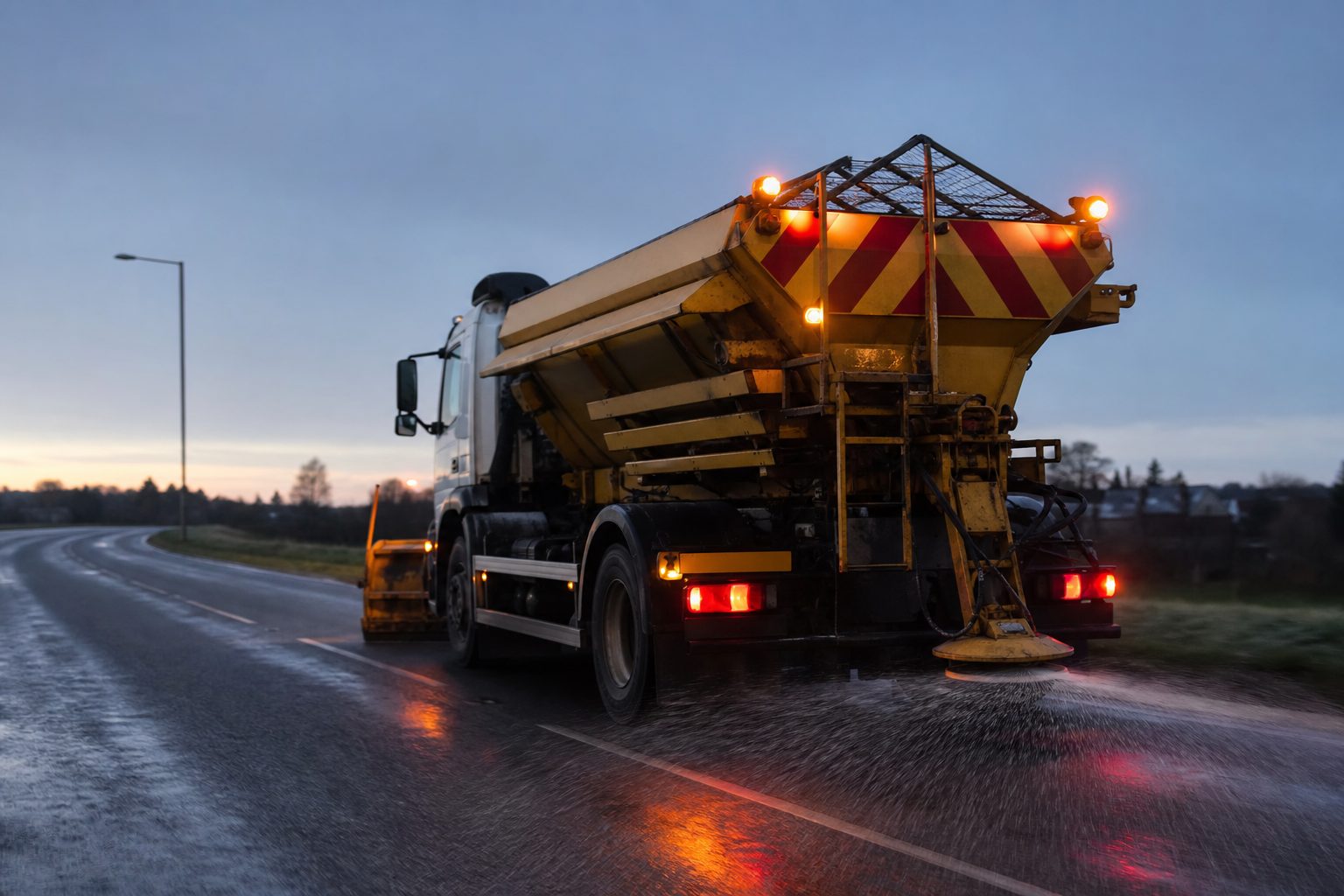
Most councils operate a more varied vehicle mix than private fleet operators. A typical mid-size council fleet includes refuse collection vehicles, street cleansing vehicles, grounds maintenance vehicles, road gritters and spreaders, street maintenance vans, fleet management support vehicles, and occasional specialist vehicles (CCTV enforcement vans, community transport). Each vehicle category has different camera requirements:
Any in-scope council vehicle over 12 tonnes operating in Greater London requires a valid HGV Safety Permit under the Direct Vision Standard. Several council vehicle types are fully exempt: gritters, snow ploughs and mobile cranes do not require a permit; road sweepers and gully suckers are exempt only from the side under-run protection requirement. For London boroughs, the requirement effectively covers every RCV in the fleet. DVS PSS fitment (CMS nearside camera, BSIS sensor, MOIS front detection) is mandatory for the permit on low-rated in-scope vehicles.
Outer London boroughs with vehicles that operate in Central London — for example, council vehicles serving joint facilities or supporting events — must also hold valid permits for those vehicles. A borough’s fleet manager cannot assume that vehicles that primarily operate outside TfL’s enforcement zone are exempt from DVS requirements for occasional London routes.
Many councils hold or seek FORS accreditation as a demonstration of fleet management standards — independently of contract requirements. For council fleets, FORS Gold is the most defensible accreditation position: it uses the same camera specification as FORS Silver, adds a published case study demonstrating safety practice in use, and provides the evidential baseline for any HSE or court investigation following an incident.
FORS Version 7 (January 2025) updated sensor positioning requirements for articulated vehicles. Council fleets using articulated road gritters or sweepers with pre-V7 sensor configurations should review compliance with the updated standard.
Councils are public authorities under UK GDPR. This creates specific obligations for camera systems on fleet vehicles:
Council vehicle incidents attract a level of public and media scrutiny that private fleet incidents do not. A refuse vehicle incident in a residential street, a gritter in a collision during a snowstorm, a grounds maintenance vehicle involved in an injury — all of these can generate media coverage, council questions, and public complaints alongside any formal claim or investigation.
Camera footage that clearly demonstrates the vehicle’s operation — that the driver was following correct procedures, that safety systems were active, that the third party’s account is inconsistent with the footage — is the council’s primary tool for managing reputational as well as legal exposure. Footage that is overwritten before the public accountability process runs its course is as damaging in reputational terms as in legal ones.
DVS PSS applies to HGVs over 12 tonnes operating in Greater London — but not to every council vehicle type. Gritters, snow ploughs and mobile cranes are fully exempt and do not require a safety permit (mobile cranes enter London under special permission instead); road sweepers and gully suckers are exempt only from the side under-run protection requirement. For in-scope vehicles, the weight and operational route of each vehicle type in the fleet should be assessed against the DVS threshold. Vehicles under 12 tonnes (vans, light grounds maintenance vehicles) are outside DVS scope but may still benefit from camera and sensor fitment under FORS or the council’s own risk assessment requirements.
A private operator typically relies on legitimate interests as the lawful basis for fleet camera processing. A public authority cannot use legitimate interests as a lawful basis — the appropriate basis for a council is Article 6(1)(e) (public task) for cameras on vehicles operated in the public interest, or Article 6(1)(c) (legal obligation) where specific regulations require the camera system. The practical implications are similar — retention policies, privacy notices, and SAR response — but the lawful basis documentation and the council’s DPIA must reflect the public authority position, not a private operator’s framework.
Yes. Driver-facing cameras on council vehicles record employees in the course of their employment. UK GDPR requires transparency — employees must be informed of what is recorded, for what purpose, and how footage may be used. This information should be provided in the employment contract, the council’s CCTV policy, and at the point of deployment if cameras are added to existing vehicles. Using footage for disciplinary purposes must be disclosed in advance as a possible use. Councils that add driver-facing monitoring without employee notification face employment tribunal and data protection exposure.
Camera footage from council vehicles is generally exempt from FOI disclosure where it contains personal data of identifiable third parties — the exemption at Section 40 FOIA applies. The council’s own operational data (GPS routes, driver behaviour event logs) is not personal data of third parties and may be disclosable, depending on the specific request. Footage of a specific incident may be disclosable with third-party faces blurred if the requester has a legitimate public interest argument. Legal advice should be sought for any FOI request for footage from a vehicle incident that is the subject of ongoing investigation or litigation.
Camera and sensor systems should be included in every daily walkaround check (required under FORS Silver) and at every scheduled maintenance interval. A formal compliance audit — checking that all systems specified in the fleet’s safety documentation are installed, functional, and correctly configured — should be conducted annually at minimum, and after any major fleet change (new vehicles, new routes, new compliance standard adoption). FORS audits assess camera and sensor records, not just hardware; a council’s FORS preparation should include review of walkaround check records to confirm that camera status has been consistently recorded.
Download this free checklist to apply the guidance in this article to your fleet.
Tell us what vehicles you run and what you need — we will come back with a recommendation and a price. Prefer to talk? Call 01656 721871.
Related guides: Improving Operative Safety With Monitoring Systems · Safety Systems Required for Public Sector Vehicles
4 August 2026
Monday to Friday:
8.30am-5.30pm