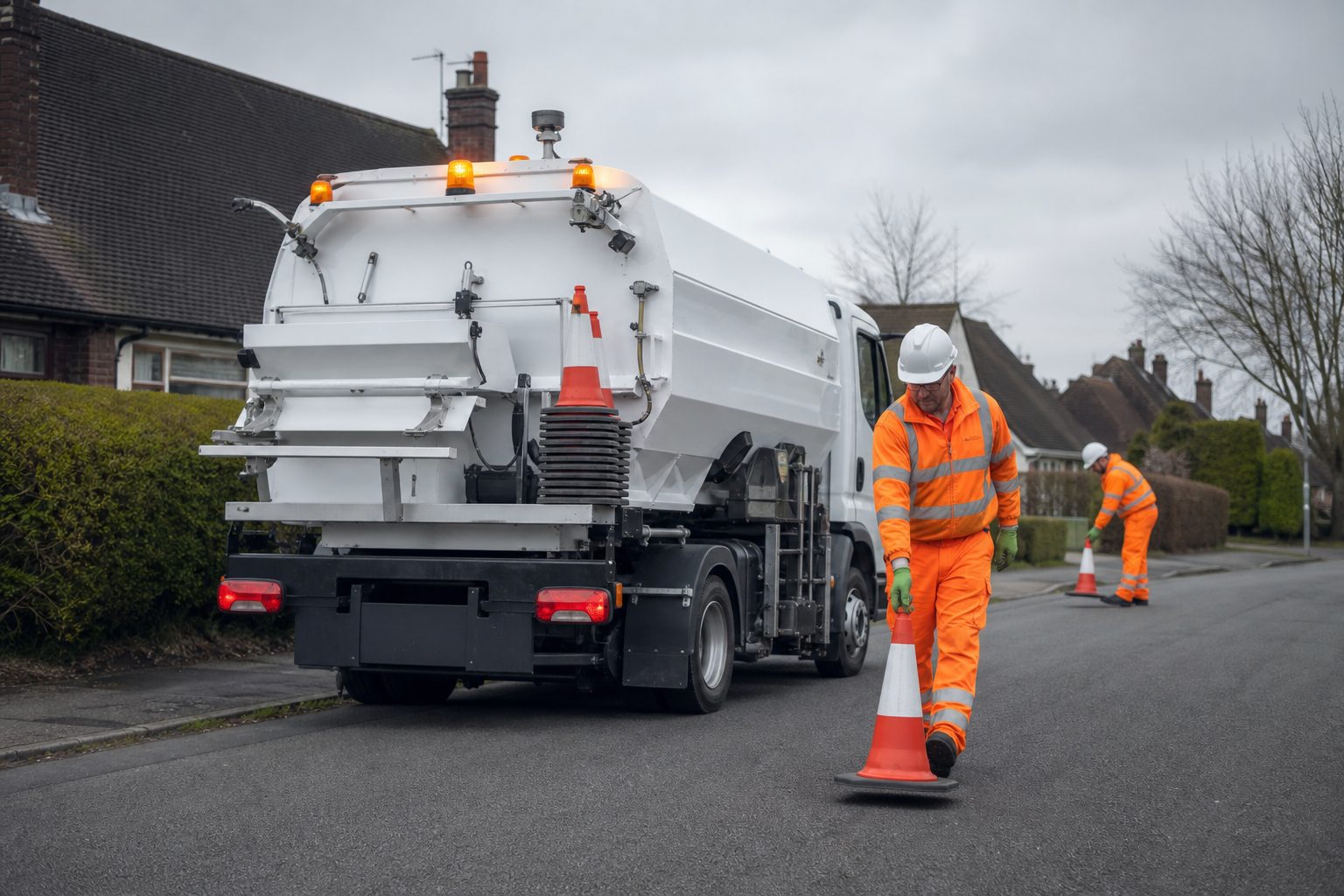
Public sector vehicle operators — councils, NHS trusts, universities, housing associations — face the same safety system compliance requirements as private fleet operators, with the addition of public accountability obligations that private operators do not carry. A non-compliant vehicle in a private fleet creates financial and safety risk. The same vehicle in a public sector fleet creates those risks plus the additional exposure of public scrutiny, FOI requests, and elected member accountability.
This guide maps the safety system requirements that apply to public sector vehicles across the principal compliance frameworks, identifies where different frameworks interact, and explains what the public accountability dimension adds to the compliance picture.
Public sector fleet operators are subject to the same statutory health and safety framework as any other employer. The Health and Safety at Work Act 1974 imposes a duty to ensure the health and safety of employees and others affected by the organisation’s activities. For a vehicle fleet, “others” includes pedestrians, cyclists, and motorists who share road space with the fleet’s vehicles, as well as workers who are on foot around the vehicles in operational areas.
The DVSA operator licence conditions — which apply to vehicles over 3.5 tonnes — require that vehicles are maintained in a roadworthy condition. Camera and sensor systems that form part of a vehicle’s specified safety equipment are within the scope of this maintenance obligation. A public sector operator whose safety-specified cameras are not maintained and functional is in breach of operator licence conditions, regardless of whether the vehicles are council-owned or operated by a contractor.
The Direct Vision Standard is a statutory TfL permit condition for HGVs over 12 tonnes in Greater London. Most public sector HGVs — council refuse vehicles, NHS medical waste trucks, university grounds vehicles over the weight threshold — receive 0–2 star DVS ratings and require a full Progressive Safe System.
PSS requirements for public sector vehicles operating in London:
Operating without a valid HGV Safety Permit: up to £550 per vehicle, £130 driver personal fine. For a public sector fleet, the penalty charge is a financial cost and a public accountability question — why were council vehicles operating in breach of statutory permit conditions?
FORS (Fleet Operator Recognition Scheme) applies to all vehicles over 3.5 tonnes. Many public sector organisations hold FORS accreditation — either self-accredited for directly operated fleets or required as a contract condition for contracted fleet operators.
Public sector FORS requirements by level:
FORS Version 7 (January 2025) updated sensor positioning for articulated vehicles. Public sector fleets with articulated refuse vehicles or specialist vehicles should verify that pre-V7 sensor configurations meet the updated standard.
The Waste Industry Safety and Health guidance WASTE-04 applies specifically to refuse collection and waste handling vehicles. For public sector councils operating refuse fleets, WISH WASTE-04 is quasi-legally binding — it represents the industry standard of practice that the HSE and courts will apply when assessing whether a duty of care was met following an incident.
WISH WASTE-04 safety system requirements relevant to cameras and sensors: cameras and/or sensors for blind spot monitoring explicitly recommended (not just mirrors); in-cab monitors must not “blank out in sunlight” (requiring high-brightness displays or shrouded monitors); specific identification of the blind spot “behind the rave rail” as a hazard zone requiring engineering controls; formal reversing procedures supplemented by cameras.
Lifting Operations and Lifting Equipment Regulations apply to any vehicle with a lifting mechanism — refuse vehicles (bin lifts), maintenance vehicles with crane arms, grounds maintenance vehicles with tipping mechanisms. LOLER requires that lifting operations are planned, supervised, and carried out safely.
For public sector vehicles, LOLER compliance for lifting operations means: proximity sensors detecting objects in the lift zone; emergency stop mechanisms accessible from the working position; camera coverage of the hopper zone supporting the supervision requirement; and periodic thorough examination of the lift mechanism by a competent person. A LOLER investigation following a bin lift incident will assess whether these controls were in place.
Public authorities cannot rely on legitimate interests as a lawful basis for data processing. Public sector fleet camera systems must be documented under Article 6(1)(e) (public task) or Article 6(1)(c) (legal obligation). This distinction has practical consequences:
FOI requests for operational data (routes, event logs, driver behaviour statistics) are handled separately from GDPR. The Section 40 FOIA exemption protects third-party personal data from FOI disclosure; operational data about the fleet’s systems is potentially disclosable if it does not contain personal data.
NHS vehicles over 12 tonnes operating in Greater London require a valid HGV Safety Permit under DVS. NHS medical waste collection vehicles, large supply lorries, and specialist vehicles above the weight threshold are in scope. NHS estates and facilities vehicles that regularly operate in London — particularly at London hospital sites — should be assessed for DVS compliance. NHS vehicles under 12 tonnes (ambulances, patient transport vans, most clinical vehicles) are below the DVS threshold and do not require PSS fitment, though FORS accreditation may still be appropriate for the larger vehicle fleet.
Not directly. FORS Silver satisfies the nearside camera and sensor requirements that overlap with DVS PSS CMS and BSIS elements. But DVS PSS additionally requires MOIS (front AI pedestrian detection), which is not in the FORS Silver specification. And DVS PSS is a statutory TfL requirement independent of FORS accreditation — FORS status does not confer a TfL HGV Safety Permit. A vehicle with FORS Silver and no MOIS still requires MOIS fitment to be PSS-compliant for London operations.
The contract for fleet services should specify the FORS accreditation level required and make it a condition of the contract. A contractor who cannot demonstrate FORS Silver — the typical minimum for large public sector contracts — is in breach of the contract condition. The council as contracting authority has the right to enforce the contract condition, including by requiring corrective action, withholding payments pending compliance, or terminating the contract if non-compliance persists. The council also carries reputational and liability exposure if a non-compliant contracted vehicle is involved in an incident — the contracting relationship should clearly allocate this risk.
A subject access request (SAR) for footage from a public sector fleet vehicle is handled under UK GDPR. The response must be provided within one month (extendable by two further months for complex requests). The footage should be provided in a format the requester can access; third-party individuals in the footage who are not the requester should be redacted or blurred. The SAR response should document the search conducted, the footage provided, and any redactions made and the reason. Footage that has been overwritten by the time the SAR is received — because it was not preserved following the relevant incident — cannot be produced, and the absence is a factual issue the response must address.
WISH WASTE-04 is not a statutory regulation — it is industry guidance. However, it is used in HSE investigations and court proceedings as evidence of what constitutes the standard of care expected in the waste industry. An HSE investigation following a refuse vehicle fatality will ask whether WISH guidance was followed. A departure from WISH guidance that contributed to an incident — for example, an in-cab monitor that blanked out in sunlight, which WISH specifically warns against — will be treated as a failure to implement known best practice, with the same evidential weight as a regulatory breach in establishing whether the operator’s duty of care was met.
Download this free checklist to apply the guidance in this article to your fleet.
Tell us what vehicles you run and what you need — we will come back with a recommendation and a price. Prefer to talk? Call 01656 721871.
Related guides: Camera Systems for Council Fleets · Reducing Council Insurance Costs With Evidence Footage
4 August 2026
Monday to Friday:
8.30am-5.30pm