You have data. You have cameras. You probably have a telematics system telling you someone in the fleet is speeding. What you may not have is a clear picture of which driver, how often, and whether last week’s coaching conversation made any difference.
Managing driver performance with live monitoring is not the same as installing a dashcam and hoping for the best. Done properly, it gives transport managers something that manual checks and end-of-month reports cannot: a real-time view of behaviour as it happens, and a structured way to act on it before an incident occurs rather than after one already has.
This guide covers what live monitoring actually delivers for driver performance management, which metrics matter most, and how to build a process that improves behaviour without destroying driver trust.
Driver performance management has traditionally relied on two inputs: what drivers report about themselves, and what post-incident investigation reveals. Both are backward-looking. By the time you know a driver has a pattern of harsh braking or late-night speeding, you may have already dealt with the consequences — a near-miss, a complaint, or a claim.
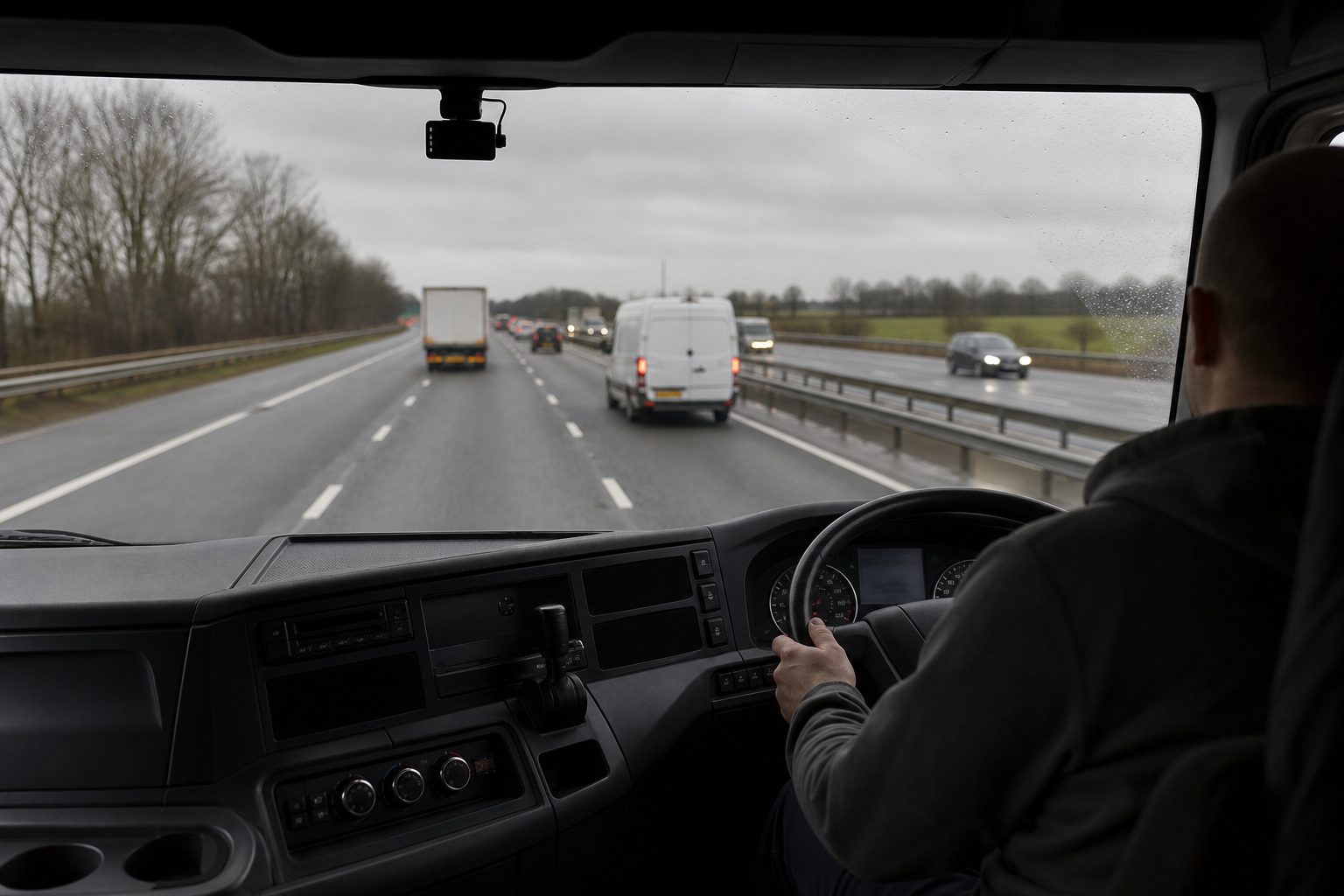
Live monitoring changes the timeline. A fleet camera system with real-time data transmission lets a transport manager see, right now, whether a vehicle is being driven within acceptable parameters. Used alongside telematics data, this makes it possible to pick out the exception — the driver or the journey that falls outside the norm — without anyone needing to watch 40 live feeds simultaneously.
The key capabilities that make this useful in practice:
On-demand live access means fleet managers are not wading through irrelevant footage. A vehicle can be checked when there is a reason to look.
A recurring argument in fleet management circles is whether technology is a substitute for proper driver training, or whether the emphasis on telematics and cameras actually crowds out the investment in people that produces better drivers long term.
The honest answer, and the one that experienced fleet managers consistently arrive at, is that the two are not in competition. Training builds habits and safety culture. Data shows which drivers need which training, and whether the training is working. Without data, you are coaching based on gut feeling and incident reports. Without training, the data just tells you something is wrong without giving drivers a path to improve.
A fleet manager on r/FleetManagement put it well: “The key is to make drivers part of the process — explain how the data helps them drive safer and more efficiently, and reward improvements. That way, technology enhances training rather than replacing it.”
The same thread raised a point worth taking seriously: “In order to know which drivers are the top offenders and what they are doing wrong, you need the telematics.” Targeted coaching requires knowing who to target. That is what live monitoring delivers.
A common mistake when deploying a driver monitoring system is trying to track everything simultaneously. The result is alert fatigue — managers receiving hundreds of notifications daily, most of which go unread. Research in the industry suggests that in poorly configured systems, up to 90% of alerts are never acted on. That is not monitoring; it is noise.
The behaviours with the clearest link to collision risk and fleet costs are:
Start with these five. Once you have a baseline across the fleet, you will quickly identify which drivers are outliers and which are performing consistently well. That comparison drives the coaching conversation.
Recorded footage tells you what happened. Live view lets you see what is happening now. The practical difference matters most in two situations.
The first is when a telematics alert fires and you are not sure whether it represents a genuine concern or a calibration artefact. Opening the live feed for that vehicle immediately gives context: is the driver responding to a genuine hazard, or are they driving in a way that is likely to cause one?
The second is where you have a driver with a flagged history and you want to check in without waiting for the next event report. Live view on a current journey, combined with the GPS track and speed data, tells you whether coaching has had any effect — and whether the issue was situational or persistent.
This is not about surveillance. It is about having the information to have a specific conversation, rather than a general one. “We’ve noticed your harsh braking score this week was three times the fleet average” is a more productive coaching intervention than “we need to talk about your driving.”
Driver resistance to monitoring is real. The roll-out of AI-powered driver-facing cameras at several large UK and US fleet operators has led to experienced drivers leaving rather than accepting the technology. That outcome represents a failure of implementation, not evidence that the technology is wrong.
The difference between a monitoring system that improves performance and one that causes attrition comes down to three things: transparency about what is captured and why, fairness in how data is used, and genuine recognition when performance improves.
Practical steps that make the difference:
Be specific about what is monitored. Drivers should know exactly which behaviours trigger alerts and what the threshold is. Vague “the system flags issues” language breeds distrust. “We flag harsh braking events above 0.4g and speeding above 5mph over limit” does not.
Use data to coach, not punish. The first time an alert comes up in conversation with a driver, it should be a coaching conversation, not a disciplinary one. Monitoring is only useful as a performance tool if drivers believe the intent is to help them improve.
Show the fleet-wide picture. Driver league tables — anonymised performance comparisons across the team — let drivers benchmark themselves against colleagues without being singled out. Scores going up, not just down, should be visible and celebrated.
Include GDPR-compliant policies. Under UK employment law, drivers should be informed that cameras are fitted, what is recorded, and who can access footage. This is not optional. A documented data use policy, included in the employment contract or vehicle use agreement, is a legal requirement for fleet camera systems monitoring driver behaviour.
The goal of live monitoring for driver performance is not zero incidents. It is a measurable shift in behaviour that reduces incident likelihood over time. The metrics that matter:
What is the difference between live monitoring and standard dashcam recording? A standard dashcam records to a local SD card and requires physical retrieval of the card to review footage. Live monitoring gives remote, on-demand access to footage and live feeds over 4G. For driver performance management, the real-time transmission is what enables timely coaching rather than retrospective reviews.
Do I need driver-facing cameras to manage driver performance effectively? Front-facing cameras capture road conditions and events. Driver-facing cameras add visibility of driver behaviour — phone use, fatigue, seatbelt compliance. Both have value. Many fleet operators start with front-facing only and add driver-facing cameras once the monitoring programme is established and drivers understand how the data is used.
How do I handle driver concerns about privacy? Under UK GDPR and the ICO’s guidance on employee monitoring, you must inform drivers that cameras are fitted, what data is collected, how long it is retained, and who can access it. This should be in their employment terms and a separate vehicle use policy. Footage should be used only for the purposes stated — performance management and incident investigation — not general surveillance.
How long before we see measurable improvement in driver behaviour? Most fleet operators report visible improvement within 6–8 weeks of introducing a structured coaching programme backed by live monitoring data. The speed of improvement depends on how consistently performance data is reviewed and how promptly coaching conversations happen after alert events.
Can live monitoring data be used in disciplinary proceedings? Yes. Driver performance data from a fleet camera system can be used as evidence in disciplinary processes, provided the monitoring policy has been communicated to drivers in advance. Footage from the relevant window, combined with GPS and telemetry data, provides an objective record of the driving behaviour in question.
What happens if a driver disputes what the footage shows? The strength of live monitoring evidence is the corroborating data. Footage combined with GPS speed data, timestamp, and telemetry makes disputed events very difficult to argue against. A complete data export from the system, showing the footage source and chain of custody, carries significant weight in any formal process.
Is live monitoring worthwhile for smaller fleets of 5–15 vehicles? Yes — and arguably more so than for larger fleets, where the performance of any one driver has proportionally greater impact on insurance costs and operational reputation. Smaller fleets often have less formal driver review processes, which means live monitoring data can introduce a level of performance visibility that previously didn’t exist.
How does live monitoring help with insurance costs? Insurers increasingly recognise structured driver monitoring programmes as a risk reduction measure. Fleets that can demonstrate a programme of active performance management — monitoring data, coaching records, and measurable score improvement — are better positioned at renewal. Some specialist commercial vehicle insurers offer premium reductions for fleets with verified telematics and camera systems in place.
A step-by-step checklist for configuring your live monitoring system, communicating with drivers, identifying key behaviours to track, and building a sustainable review process.
Tell us what vehicles you run and what you need — we will come back with a recommendation and a price. Prefer to talk? Call 01656 721871.
Related guides: Creating Evidence Packs From Live Monitoring Footage · How Live View Integrates With MDVR Systems
4 August 2026
Monday to Friday:
8.30am-5.30pm