
In 2019, 203 accidents involving HGVs and cyclists were recorded on UK roads. Twelve cyclists died. Sixty-five were seriously injured. HGVs make up approximately 4% of London’s traffic — but were involved in 70% of cyclist deaths in the capital between 2016 and 2019. The common factor in these collisions is not speed. It is position: the cyclist or pedestrian was in a part of the vehicle’s surroundings the driver could not see. Sensor systems do not make drivers more alert. They close the gap between what the driver can see and what is actually in the vehicle’s path.
The term “blind spot” is used loosely. Understanding specifically where the dangerous blind spots sit on a commercial vehicle determines which sensor configurations actually reduce risk and which do not.
For an HGV, the highest-risk zones are:
Mirrors show the driver what is visible in a static angle. They require the driver to be looking at them. They cannot detect what is outside their field of view, and they cannot alert the driver when an object appears in their coverage area — the driver must notice it.
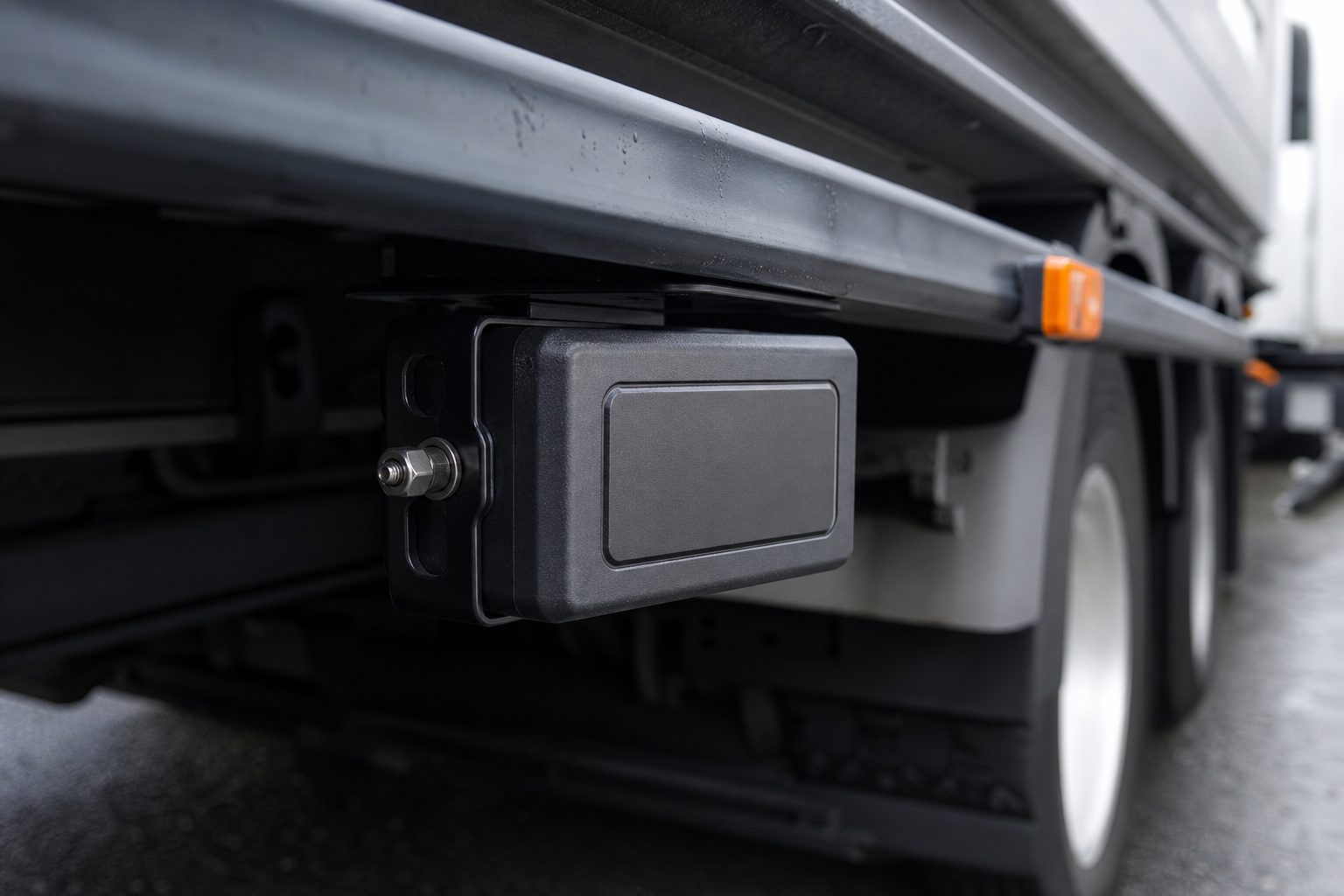
Proximity sensors address the detection gap, not the visibility gap. A nearside sensor mounted along the vehicle body detects an object within its zone and alerts the driver regardless of whether the driver is watching the nearside mirror. The alert happens automatically; the driver does not need to initiate a scan. This distinction matters in urban delivery operations where a driver managing a route plan, a delivery app, and a tight schedule may not be monitoring all mirror angles continuously.
The failure mode of mirrors is attention — the driver is looking elsewhere. The failure mode of sensors is calibration and configuration — a poorly calibrated sensor triggers incorrectly and the driver learns to ignore it. Both failure modes are real. The solution is a system where both are functioning correctly as a layer, not treating either as the sole control.
Fleet safety research consistently supports a layered approach to blind spot incident reduction. No single technology eliminates the risk. Each layer addresses a different failure mode:
This layered structure is exactly what DVS’s Progressive Safe System mandates for lower-rated HGVs in London: a BSIS (Blind Spot Information System) sensor component, a Camera Monitoring System, and an audible left-turn warning. The three-layer model is not a regulatory coincidence — it reflects the evidence on what actually reduces incidents.
Transport for London published analysis of accident data showing that the majority of fatal and serious collisions between HGVs and vulnerable road users in London occurred in situations where improved direct vision and sensor systems would have been relevant. This data formed the basis for the DVS star rating system and the subsequent mandate for the Progressive Safe System on lower-rated vehicles.
The October 2024 update — requiring PSS on vehicles rated below three stars — was the most significant escalation of the UK’s evidence-based approach to blind spot reduction. The mandate reflects TfL’s assessment that voluntary compliance had not moved fast enough and that the incident data justified a statutory requirement.
For fleet operators outside London, the FORS Silver requirement for nearside proximity sensors operates on the same evidence base: that the nearside blind spot during urban operation is the highest-risk zone for vehicle-pedestrian and vehicle-cyclist interaction, and that sensor systems with audible alerts are a practical and effective control measure.
A question that fleet safety managers consistently raise is: do sensor systems actually reduce incidents, or do they shift driver behaviour in ways that offset the safety benefit? The evidence from early adopter fleets and academic research suggests that well-implemented systems do reduce incidents. Poorly implemented ones — where false alarms are frequent and drivers learn to ignore alerts — do not.
The distinction between effective and ineffective implementation comes down to two factors. First, system quality: sensors that are correctly specified for the vehicle type and correctly calibrated generate accurate alerts at the right time. Sensors that generate nuisance alarms from towbars, ground surfaces, or vehicle bodywork train drivers to treat the alert as background noise. Second, driver engagement: drivers who understand what the system detects, how to read the cab display, and what action to take when an alert sounds respond correctly. Drivers who were given a vehicle with a beeper fitted and no briefing on the system treat the beeper as an annoyance.
The data on near-miss reporting in fleets that have implemented structured sensor systems tells its own story. Fleet managers who start reviewing near-miss event logs generated by sensor-triggered camera clips often find that the number of events they record jumps significantly — not because incidents increased, but because near-misses that previously went unreported are now automatically captured. This is a safety improvement, not a deterioration: the incidents were happening before the sensors were fitted, they were just invisible to fleet management.
The sensor configurations that most directly address the statistical risk profile of UK urban freight collisions are:
No technology eliminates the risk — but correctly specified and maintained sensor systems significantly reduce it. The reduction is greatest when sensors are part of a layered system (sensor + camera + external warning) and when drivers are trained on how the system works and what to do when it alerts. A sensor system that generates frequent false alarms or that drivers have never been briefed on provides limited risk reduction.
Articulated HGVs and rigid vehicles over 7.5 tonnes in urban environments are the highest priority — they generate the longest continuous nearside blind spot and operate in the traffic conditions where pedestrian and cyclist risk is highest. LCVs in urban delivery operations are the next priority: their nearside blind spot is smaller but they operate at higher frequency in residential areas where pedestrian exposure is significant.
Yes — retrofitting sensors after an incident is a common and appropriate response. For insurance purposes and any subsequent legal proceedings, the fitment date and walk test record are relevant. The key for post-incident fitment is to ensure the system is correctly calibrated and that the driver training step is completed — post-incident fitment that is not accompanied by briefing can create a documented control measure that is practically ineffective.
DVS compliance means the vehicle meets the minimum Progressive Safe System requirements for operating in London. The PSS covers the nearside BSIS, front MOIS, nearside camera, and audible left-turn warning. This is a substantial baseline, but operators running beyond London, or those who want to reduce risk beyond the regulatory minimum, should consider whether the PSS configuration addresses all the specific operating conditions of their routes.
The direct cost case includes: reduction in collision-related repair costs, reduction in third-party injury claims, potential insurance premium reduction, and FORS Silver accreditation enabling access to contracts that require it. The indirect case includes: near-miss data that identifies training needs, driver behaviour change from alert awareness, and protection from regulatory enforcement action where the fleet is operating in DVS zones.
A six-section checklist covering blind-spot zone assessment, proximity sensors, camera monitoring, external warning, driver training, and compliance documentation — for fleet managers specifying three-layer blind-spot sensor systems.
Tell us what vehicles you run and what you need — we will come back with a recommendation and a price. Prefer to talk? Call 01656 721871.
Related guides: How to Calibrate Vehicle Safety Sensors · What Are Ultrasonic Sensors and How Do They Work?
4 August 2026
Monday to Friday:
8.30am-5.30pm