
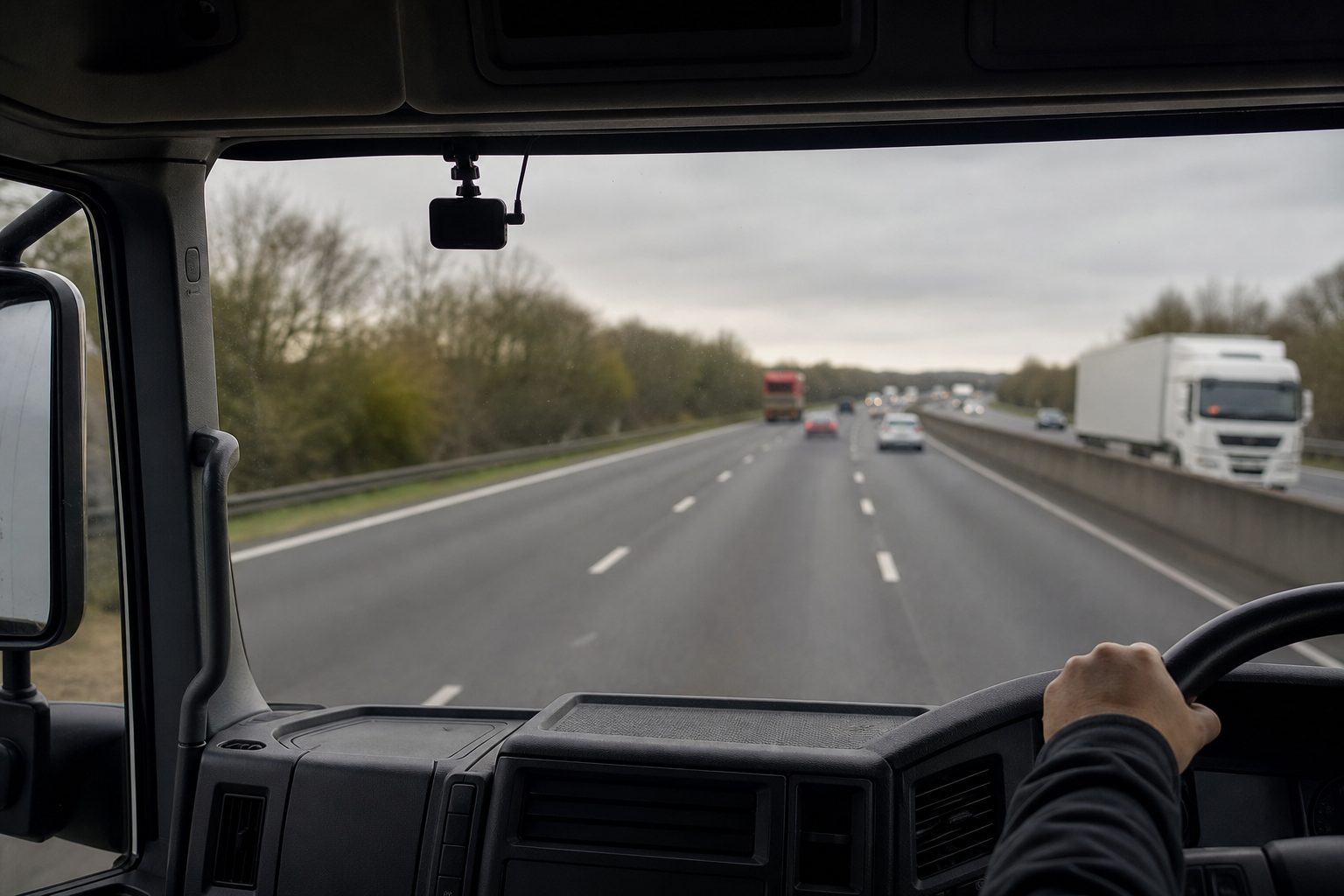
Something has just happened on your route 42 coach. A passenger reports an incident at the front of the vehicle. Your driver’s account is one version of events. The third party’s version — already submitted to insurers — is something different entirely. Without live access to your fleet cameras, your investigation starts hours after the event and relies on whoever physically reaches the DVR first.
Live view for coach and PSV operators changes that equation. It gives fleet managers and transport managers the ability to stream camera footage from any vehicle in the fleet in real time — from a web portal or mobile app — without waiting for the coach to return to depot. When something happens on route, you find out at the same time as the driver, not after the shift ends.
This guide covers how live view works in practice, what it can and cannot do, and the specific scenarios where PSV operators see the clearest return on their investment.
Most live view systems operate over 4G mobile data. A SIM-enabled MDVR (mobile digital video recorder) fitted to the vehicle maintains a continuous data connection whenever the vehicle is in service. When a manager selects a vehicle from the live view dashboard, the platform streams footage from one or more onboard cameras to their screen — typically within a few seconds of the request.
GPS position data runs alongside the footage in real time, so you see exactly where the vehicle is and what each camera angle is showing simultaneously. That synchronisation between location and video is one of the details operators consistently say changes how they work — it turns raw footage into context.
Footage is also recorded continuously to the MDVR’s local storage (SD card or hard drive), so there is always a secure local backup regardless of whether the live stream is active or whether connectivity is interrupted mid-route.
Multiple camera channels can be viewed simultaneously — front-facing, rear, nearside, offside, internal passenger saloon, and driver-facing. Most platforms allow switching between cameras or viewing two or four feeds at once, and they let you jump from the live stream back to recorded footage from any earlier point in the same journey.
Beyond simply watching, a live view platform typically gives fleet managers the ability to:
The combination of live access and event-triggered alerts means the system is doing two things at once: giving you the ability to respond proactively, and creating an automatic evidence record of anything significant that happens in service.
Before live view, most coach operators had no real-time visibility of their fleet once vehicles left the depot. A vehicle could be off-route, a driver could be involved in a collision, or a passenger complaint could be brewing — and the operator would hear about it when the coach came home.
When we talk to fleet managers about why they moved to live view, three specific frustrations come up consistently:
Third-party claims arrive before the operator has seen the footage. By the time an incident report lands on the transport manager’s desk, the other party’s version of events has already been submitted to insurers. First Notification of Loss — the initial report to your insurer — is far more powerful when you are the first to provide evidence, not the last.
Depot footage downloads are slow and context-free. Pulling clips from a DVR at the end of a shift is time-consuming, and without GPS data showing where the vehicle was at a specific moment, identifying the right clip is genuinely difficult under pressure.
The control room is flying blind during route issues. Without live view, controllers depend entirely on the driver calling in. With it, the control room can see what the driver is dealing with, make decisions about rerouteing or replacement vehicles, and manage passenger communications with accurate information.
Fraudulent and inflated claims against coach operators are a recognised industry problem. Slip-and-fall incidents on vehicles, third parties disputing fault in road collisions, passengers exaggerating injuries — without timestamped video evidence, defending these cases is expensive and unreliable.
With live view and on-demand footage retrieval, operators can access clear video evidence within minutes of a claim being made. Operators using connected camera systems have documented fraudulent claims worth tens of thousands of pounds being defeated using footage retrieved remotely within hours of an incident — evidence that would have taken days to compile through traditional depot downloads.
Insurers are increasingly recognising this. Operators who can demonstrate live-connected systems, structured incident response processes, and consistent evidence retrieval records present materially lower risk profiles at renewal. That translates directly to how insurers price the policy.
Most live view systems are integrated with automatic event detection. When a g-force threshold is crossed — a sharp braking event, a significant impact — the MDVR triggers an automatic upload of the surrounding 30–60 seconds of footage from all active camera channels directly to the cloud platform.
The fleet manager receives a notification on their phone or desktop. They open the platform, review the auto-uploaded clip, switch to the live stream from that vehicle if it is still active, and can see GPS position overlaid on the footage — all before the driver has necessarily had time to call the control room.
In cases involving potential personal injury claims, that speed matters. Being able to submit contemporaneous video evidence within the first hour of an incident fundamentally changes the dynamic with the third party’s insurer. It also significantly reduces the time your transport manager spends reconstructing timelines from memory and driver accounts days after the event.
Live view delivers value across all PSV operations, but the return on investment is clearest in specific scenarios:
Contract coach and school transport operators carry vulnerable passengers on fixed schedules. Any incident involving a child or young person requires rapid, reliable documentation. Live view gives operators an immediate, independent record without depending on driver accounts or passenger statements.
Open-market express and tour coaches operate for hours away from their depot. Real-time visibility gives controllers the ability to make operational decisions — rerouteing, replacement vehicles, passenger communications — based on what is actually happening, not what they are told is happening.
Urban minibus and dial-a-ride operators face high passenger turnover, frequent stops, and elevated exposure to slip-and-trip claims. Camera coverage with live access significantly reduces settlement pressure on borderline cases.
FORS-registered fleets working towards Silver or Gold accreditation are expected to demonstrate robust incident management processes. Live view with documented evidence retrieval supports that requirement directly and provides auditable proof of system use.
Live view depends on mobile data coverage. On major road networks and in urban areas, 4G signal is generally reliable enough for stable streaming. Rural routes and areas with known network black spots can experience interruptions to the live feed.
The practical implication is that live view works most reliably as an on-demand tool rather than as a permanent real-time monitor of all vehicles at once. Fleet managers typically activate it in response to a triggered alert, a driver call, or an incoming complaint — not as a continuous background monitor across the entire fleet.
The local MDVR recording is the foundation. Live view layers real-time access on top of that foundation — it does not replace local storage. For routes where connectivity is unpredictable, the auto-upload of event-triggered clips ensures that critical footage still reaches the platform even if a continuous live stream was not maintained throughout the journey.
Any live view system involving driver-facing cameras operates within the requirements of UK GDPR and ICO guidance on workplace monitoring. The key obligations for PSV operators are straightforward but worth stating clearly: drivers must be informed that cameras are fitted, that footage may be viewed live, and the specific purposes for which it may be accessed. A Data Protection Impact Assessment (DPIA) is recommended before deploying driver-facing camera systems.
Driver trust is also a practical operational issue. A question that comes up regularly from fleet managers is how to introduce live view without creating friction with drivers. The experience of operators who have done it well points consistently to the same answer: be specific about when and why live view is used.
The operational reality is that live view is rarely activated for monitoring routine driving. It is triggered by incidents, alerts, or specific operational needs. Setting that expectation clearly at driver induction — and keeping to it — removes most of the friction. Drivers who understand that live view is a response tool rather than a surveillance tool are far less resistant to it.
Systems that display an in-cab notification when live view is active generally attract less resistance than those that do not. This is also worth considering from a GDPR proportionality standpoint — the least intrusive means of achieving a legitimate purpose is the standard the ICO applies.
The live stream depends on signal availability, but local MDVR recording continues uninterrupted regardless of connectivity. Event-triggered clips are queued for upload and transmitted when signal is restored. For rural routes, local storage remains the primary evidence source; live view provides real-time access where signal allows.
Most platforms support viewing up to four camera channels simultaneously from a single vehicle, with the ability to switch between vehicles in the fleet. Simultaneous monitoring of multiple vehicles is available on enterprise-tier configurations.
This depends on how the platform is configured. Some systems display an in-cab notification; others do not. For UK GDPR compliance, operators should ensure their written camera usage policy explicitly covers live view access and that drivers have been informed at induction.
Yes. All leading live view platforms include iOS and Android apps alongside browser-based desktop access. Alert notifications, footage playback, and GPS tracking are accessible from a smartphone.
Local MDVR recording continues without interruption. The vehicle’s onboard storage captures everything. Event-triggered clips upload automatically when connectivity is restored, and full footage can be reviewed on return to depot if needed.
Compatibility is determined by the MDVR or recorder, not the individual cameras. Backwatch’s Live View platform is compatible with the AHD and IP camera types used across standard PSV installations. Contact the team to confirm compatibility with existing hardware before committing to a system.
Local storage duration depends on the number of active cameras and the storage capacity fitted — typically 30 to 60 days under standard configurations. Cloud-uploaded event clips are retained on the live view platform depending on the subscription tier; footage needed long-term should be exported and archived.
FORS does not mandate live view specifically, but it expects documented incident management processes and evidence of safety system use. A live view-capable system with structured incident response and audit-trail footage retrieval directly supports FORS Bronze, Silver, and Gold requirements.
A step-by-step checklist for coach and PSV operators before deploying a live view camera system — covering UK GDPR compliance, driver communication, and system setup.
Tell us what vehicles you run and what you need — we will come back with a recommendation and a price. Prefer to talk? Call 01656 721871.
Related guides: Live View for Delivery and Last-Mile Fleets · Best Practices for Remote Monitoring Operators: A Complete Fleet Guide
4 August 2026
Monday to Friday:
8.30am-5.30pm