
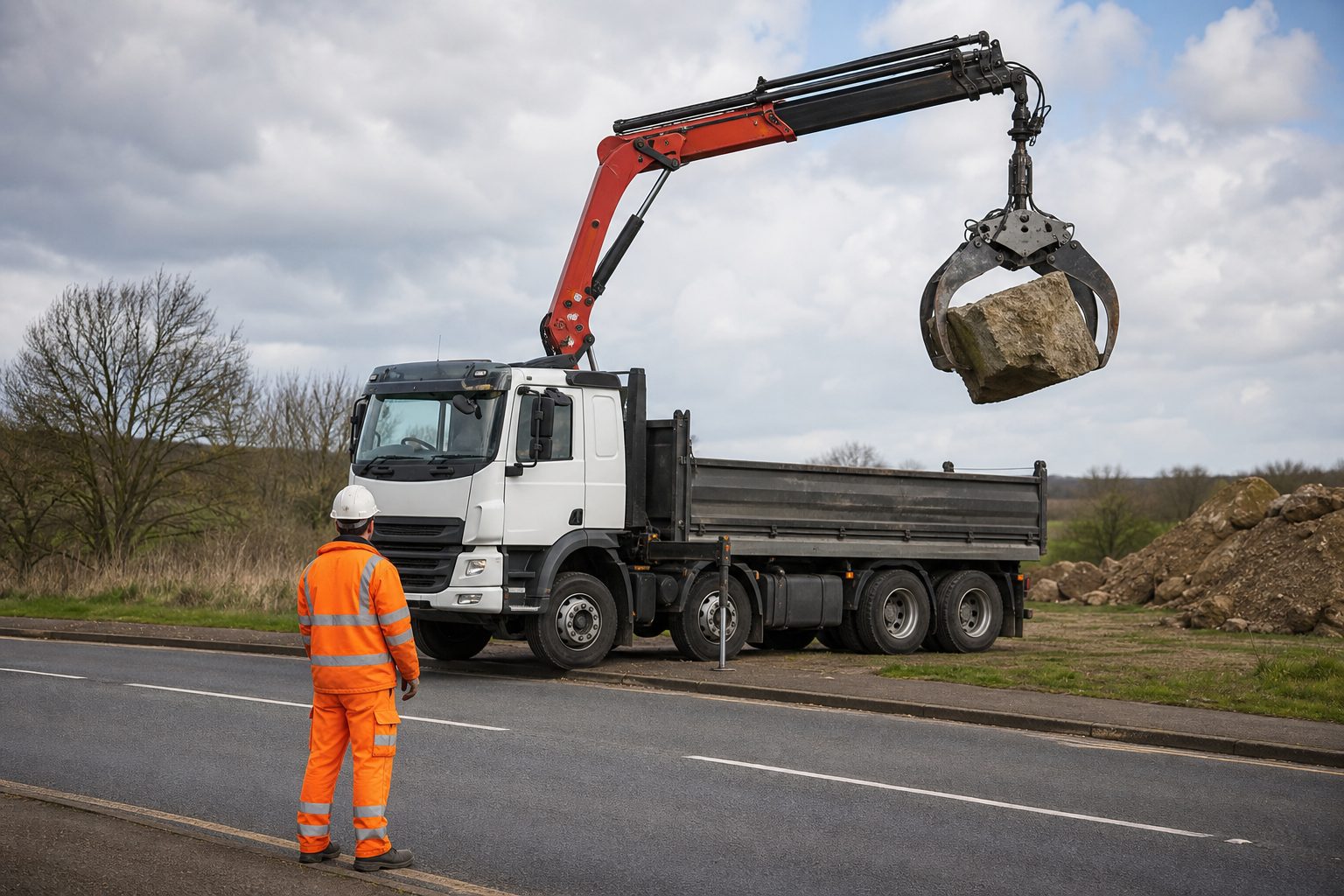
Construction fleet operators navigating the compliance landscape face the same question from different directions: what does a vehicle actually need to access a CLOCS-adopting site, satisfy a FORS Silver audit, and operate legally in Greater London? The answer involves three overlapping frameworks — CLOCS, FORS Silver, and DVS — that address related but distinct requirements. Understanding which standard mandates which equipment, and where compliance with one framework satisfies another, is the starting point for building a fleet that meets all three without duplicating specifications unnecessarily.
CLOCS v5 (effective March 2025) requires construction fleet vehicles to meet a vehicle safety standard that mirrors FORS Silver. It applies to road-going vehicles operating to and from CLOCS-adopting sites — major construction projects, HS2, and an expanding range of principal contractor supply chains. CLOCS is a contractual requirement, not a statutory one: vehicles that do not meet CLOCS are denied entry to CLOCS-adopting sites, but face no legal penalty on non-CLOCS roads. The number of sites adopting CLOCS is growing, so the commercial consequence of non-compliance grows with it.
FORS Silver (FORS v7, effective January 2025) is the recognised documentary baseline for CLOCS site access. A vehicle included on a current FORS Silver certificate has, by definition, met the equipment and management standard that CLOCS requires. For fleet operators seeking to demonstrate compliance to multiple principal contractors through a single audit process, FORS Silver is the most efficient route.
DVS PSS (Direct Vision Standard Progressive Safe System) applies to HGVs over 12 tonnes operating in Greater London. Most construction vehicles fall within this scope. The PSS is a legal requirement, enforced by Transport for London with a £550 penalty charge per entry into the charging zone. DVS PSS compliance largely overlaps with FORS Silver — nearside detection, MOIS, camera monitoring system, left-turn warning — but does not include a rear camera, which FORS Silver requires for rigid vehicles over 7.5 tonnes.
The mandatory camera equipment for a rigid vehicle over 7.5 tonnes at FORS Silver v7 is: nearside camera with in-cab display and rear camera. MOIS front detection is not mandatory at FORS Silver — BSIS nearside detection is the required sensor element — though fitting MOIS as a matter of course is recommended. For vehicles over 12 tonnes operating in Greater London, the DVS PSS camera monitoring system is an additional requirement — though in practice the PSS camera configuration is largely satisfied by the same nearside and rear cameras required for FORS Silver.
Two questions come up consistently in construction fleet specification discussions. First, does a DVS PSS satisfy the FORS Silver camera requirement? The answer is partial: the PSS includes the nearside camera monitoring system and MOIS, but FORS Silver for rigid vehicles over 7.5 tonnes also requires a rear camera, which DVS does not mandate. Operators fitting PSS for London operations should confirm their rear camera is separately included in the specification. Second, does FORS Silver camera compliance satisfy CLOCS? Yes — FORS Silver v7 is the equipment baseline that CLOCS v5 mirrors.
The FORS Silver v7 sensor requirements for rigid vehicles over 7.5 tonnes are: nearside proximity sensor with audible alert, left-turn audible warning with night mute, and reversing alarm. MOIS front detection is not mandatory but is recommended as a matter of course. For construction vehicles specifically, the application of these sensors requires calibration for the construction operating environment — the FORS v7 false alert compliance definition applies: sensors that trigger from roadside furniture, the vehicle’s own bodywork, or normal operating conditions are non-compliant.
For tipper lorries, g-sensors should be calibrated to exclude tipping cycle events. For all construction vehicles operating in confined site environments, proximity sensor detection ranges should be adjusted to reflect the site environment rather than road freight defaults. Walk-test calibration at the adjusted thresholds must be documented — the calibration record is the audit evidence for both FORS Silver and CLOCS compliance.
A point that comes up consistently in construction fleet audits is whether sensors that were correctly calibrated at installation remain calibrated after vehicle body modifications. A hopper body change, a sub-frame extension, or a grab arm fitment changes the geometry around the sensor mounting points. Recalibration after any body modification that affects sensor geometry is the standard that both FORS audit and CLOCS site gate compliance require.
The Health and Safety at Work Act 1974 requires employers to take all reasonably practicable steps to protect employees and the public from foreseeable risks. For construction fleet operations, the HSE has identified specific foreseeable risks: reversing contacts, pedestrian and banksman incidents, and in-site proximity hazards. An employer who does not have camera and sensor systems addressing these identified hazards is potentially failing the “reasonably practicable” standard.
The HSE does not mandate specific camera configurations. What it does is identify the hazard types and the risk reduction measures that address them. In the event of a serious incident resulting in HSE investigation, the absence of systems that address the identified hazards will be scrutinised against the question of whether the employer took all reasonably practicable steps. A fleet that meets FORS Silver v7 and has documented its sensor calibration, footage review processes, and driver coaching programmes is demonstrating those steps.
Meeting construction safety standards is not only about fitting the correct equipment — it is about being able to demonstrate that the equipment was fitted, is calibrated correctly, and is being used actively for safety management. The documentation that satisfies FORS Silver audit, CLOCS site gate checks, and HSE investigation requests is the same documentation set:
Equipment schedules showing camera and sensor configuration per vehicle, with registration numbers. Walk-test calibration records for proximity sensors, dated and showing the tested detection distances. MDVR footage retention policy showing minimum retention periods and incident-triggered preservation protocols. Driver coaching records linking identified events (from footage review) to documented coaching actions. FORS Silver certificate, current, with vehicle registration list.
A fleet that has fitted the correct equipment but cannot produce these documents at audit or investigation is in a weaker position than a fleet whose documentation demonstrates active compliance management. The equipment is the necessary condition; the documentation is the sufficient one.
For CLOCS-adopting site access specifically, the site gate check is typically a visual inspection of the vehicle combined with confirmation that the fleet’s FORS Silver certificate includes the vehicle registration. The documentation does not need to be presented at the gate — it needs to be held by the fleet operator and available on request. The certificate is the gate document; the calibration records and coaching documentation are the audit documents that support the certificate.
A vehicle must meet the FORS Silver v7 equipment standard to access a CLOCS-adopting site: nearside camera with in-cab display, rear camera (rigid >7.5t), nearside proximity sensor, left-turn audible warning, and reversing alarm. FORS Silver accreditation is the recognised documentary baseline — a vehicle on a current FORS Silver certificate has demonstrated this standard.
Not entirely — the relationship is the other way around. DVS PSS covers most of the FORS Silver equipment standard (nearside detection, MOIS, camera monitoring system, left-turn warning), but PSS does not include a rear camera. FORS Silver requires a rear camera for rigid vehicles over 7.5 tonnes. Operators fitting PSS for London operations should add a rear camera to meet the full FORS Silver standard.
The HSE does not mandate specific camera configurations. It identifies reversing, pedestrian proximity, and banksman interactions as foreseeable risks in construction fleet operations, and requires employers to take all reasonably practicable steps to address them. Camera and sensor systems that address these identified hazards — with documented calibration and active use for safety management — are the evidence that “reasonably practicable” steps were taken.
FORS v7 (January 2025) did not make MOIS mandatory at Silver level — BSIS nearside detection remains the required sensor element, with MOIS recommended as good practice. It also explicitly defined false alert non-compliance: sensors that trigger from roadside furniture, the vehicle’s own bodywork, or normal operating conditions constitute a compliance failure at audit. For construction vehicles, this directly addresses the sensor calibration problem of road-calibrated systems generating continuous false alerts on site.
FORS Silver audit requires: current equipment schedules per vehicle, walk-test calibration records for proximity sensors, MDVR footage retention policy, driver coaching records with footage references, and evidence of active safety management (event review, incident investigation records). The equipment must be fitted; the documentation demonstrates it is being used correctly and consistently.
Download this free checklist to apply the guidance in this article to your fleet.
Tell us what vehicles you run and what you need — we will come back with a recommendation and a price. Prefer to talk? Call 01656 721871.
Related guides: Preventing Site Incidents With Real-Time Monitoring · Camera Requirements for Construction Fleets
4 August 2026
Monday to Friday:
8.30am-5.30pm