
Waste collection vehicles operate in some of the most difficult environments any commercial vehicle encounters. Narrow residential streets. Parked cars on both sides. Loading crews working directly alongside and behind the truck while it moves. Children. Cyclists. And a driver whose forward view is clear while virtually everything to the sides and rear is obscured by the body of a large, noisy vehicle.
The result is a category of vehicle with some of the highest rates of third-party incidents and personal injury claims in the commercial fleet sector. Getting camera placement right for waste collection vehicles means understanding this specific operating environment — not applying generic fleet camera guidance to a refuse truck.
This guide covers the camera positions that matter, why each one earns its place, and how the right system fits together for UK waste operators. For a full overview of vehicle camera systems compatible with waste fleets, Backwatch supplies equipment rated for the demands of refuse and recycling operations.
Most fleet camera guidance is written with delivery vehicles or HGVs in mind. Waste collection vehicles are fundamentally different in three ways.
First, the crew. A refuse vehicle typically has workers on foot alongside and behind it throughout the collection round. Those crew members appear and disappear around the vehicle constantly — stepping off to collect bins, re-boarding at the hopper, working alongside the near side in residential areas. A camera system that only covers the road environment ahead misses the most common source of serious incidents entirely.
Second, the operating speed and proximity. Refuse vehicles spend most of their working day travelling at 5–15 mph in tight residential streets, stopping every 30–50 metres, with parked vehicles on both sides and the public on the pavement. The risk profile is not about high-speed motorway incidents — it is about slow-speed contact with vehicles, property, and people at very close quarters.
Third, the body type matters. A rear-loading refuse collection vehicle (RCV) has completely different camera requirements from a front loader, a side-loading vehicle, or a roll-off skip truck. What works for one body type may leave significant blind spots on another.
The forward-facing camera is the baseline for any waste fleet camera system. Mounted at the top of the windscreen or cab roof, it captures the road ahead, junction approaches, and any contact with vehicles, pedestrians, or infrastructure in the front arc.
For waste vehicles operating in residential areas, a wide-angle front camera — 120° to 140° horizontal field of view — is preferable to a narrow-lens dashcam. This brings the nearside pavement and the offside kerb into frame even at low speed, capturing pedestrians who step into the road at collection points.
A question that regularly comes up when speccing waste fleet cameras: does the front camera need night vision? Most residential collection rounds run during daylight. For early morning collections, pre-dawn starts, or winter operations, infrared capability on the front camera is worth including — it captures the detail that a standard camera loses in low ambient light at kerb-level.
This is the single most operationally critical camera position on a rear-loading or side-loading refuse vehicle, and the one most likely to be absent on older or under-specified systems.
The nearside side camera — mounted on the nearside body, angled to cover the zone from the cab door to the rear of the vehicle — exists primarily to monitor the area where loading crew work. When a loader steps off the vehicle to collect a bin, they enter a zone the driver cannot see at all. If the vehicle moves before the loader is clear, the result can be catastrophic.
Beyond crew safety, the nearside camera resolves the most common category of third-party damage claim against refuse fleets: contact with parked vehicles in residential streets. In tight roads, the nearside of a refuse vehicle passes within inches of parked cars. When a claim is made for a door mirror, alloy wheel, or side panel, nearside camera footage is either the defence or the admission — but without it, the claim is resolved in the claimant’s favour by default.
Fleet operators tell us this is the camera position that pays for itself fastest. The first time it resolves a disputed claim — or confirms one that needed paying — the cost of the system becomes secondary.
The offside (right-hand side) camera covers the zone alongside the vehicle when pulling out from a collection point into traffic, and protects against door mirror contact and side-swipe incidents on the offside.
For waste vehicles operating on routes with significant on-street parking or collecting from busy commercial premises, the offside camera also captures incidents in loading bays and tight access points where the offside of the vehicle approaches walls, fences, or gates.
On side-loading vehicles, the offside camera serves an additional purpose: monitoring the lift arm operation and the area alongside the body during the lifting cycle. A pedestrian or cyclist passing on the offside during an automated side-loading cycle is in a dangerous position — the offside camera is the driver’s only means of seeing them.
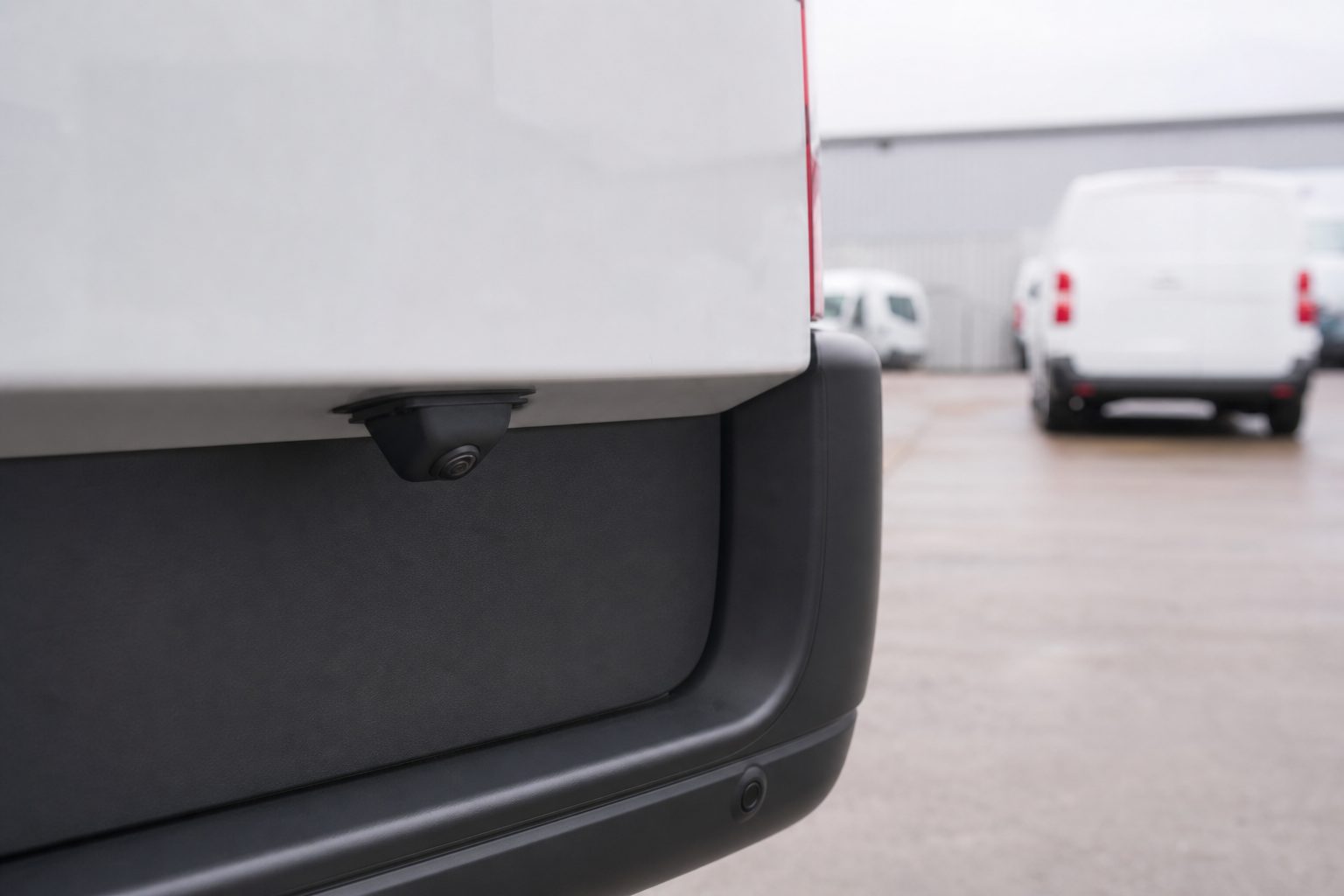
The rear camera covers reversing, the zone immediately behind the vehicle when stationary at the hopper, and any contact with vehicles or objects to the rear.
For rear-loading RCVs, position the camera high on the rear body, angled to cover the full vehicle width and the hopper area. This serves two functions: reversing safety and monitoring loading crew activity at the hopper. Incidents involving crew caught in the hopper mechanism or struck by the packer blade have occurred when the driver was not aware of a loader’s position — rear camera coverage is a direct mitigation for this risk.
On roll-off skip trucks, a rear camera covering the skip bay during loading and unloading captures the most incident-prone phase of the vehicle’s operation. False claims for damage to customers’ driveways, gates, or walls during skip delivery and collection are common — rear camera footage is consistently the most useful evidence in resolving them.
Specific to rear-loading and front-loading vehicles, a hopper-mounted camera provides a direct view of the loading process: bins being tipped, the hopper filling, and the area immediately around the rear or front of the vehicle during loading operations.
For automated side loaders, a camera covering the lift arm and the bin engagement point serves a similar function. Missed collections, bin damage claims, and contamination disputes can all be resolved with footage from this position — without it, the driver’s account of what happened at the bin is the only record.
Hopper cameras also reduce the need for loading crew to physically check the hopper between loads. On busy routes where a crew member would otherwise step off and walk around the vehicle to confirm the hopper is clear, a camera feed to the in-cab monitor removes the need for that exposure.
A driver-facing camera inside the cab captures driver behaviour, alertness, and the cab environment during operation. Its inclusion on waste vehicles is increasingly common for compliance purposes and for resolving incidents where the driver’s state or actions are disputed.
We hear this concern from fleet managers regularly: driver-facing cameras create friction with experienced crews who view them as surveillance rather than protection. The distinction matters in how they are introduced. When the camera footage is used to defend drivers against unfounded complaints — and experienced operators know it works both ways — acceptance tends to follow. The camera protects the driver as well as the business.
For vehicles operating under local authority contract terms, driver-facing cameras may be a contractual requirement rather than a choice.
The positions above apply to all waste collection vehicles in principle, but the priority and mounting details differ by body type.
Rear-loading RCV: Nearside crew camera and rear hopper camera are the two non-negotiable positions. Front and offside cameras are also recommended. Minimum: 4 cameras, typical: 6.
Front-loading vehicle: Front camera covering the fork/lift mechanism, nearside and offside side cameras. Rear camera for reversing into bays. Minimum: 4 cameras, typical: 5–6.
Side-loading vehicle: Nearside camera covering the lift arm zone is critical. Front, offside, rear also recommended. Minimum: 4 cameras, typical: 5–7.
Roll-off skip truck: Rear camera covering the skip bay is the priority. Front and side cameras complete the coverage. Minimum: 3 cameras, typical: 4–5.
Camera systems on waste vehicles intersect with several compliance frameworks. FORS Silver requires camera evidence capability and documented incident investigation procedures. FORS Gold requires the same camera specification as Silver; the additional Gold requirement is a published case study rather than extra monitoring technology. Local authority waste contracts increasingly specify camera coverage, particularly for vehicles operating in urban areas or handling food waste and clinical waste streams.
The Health and Safety at Work Act and associated PUWER regulations create a duty to manage the foreseeable risks of loading crew working alongside and behind the vehicle. A documented camera system, combined with working-near-vehicles training and operating procedures, forms part of a defensible risk management framework.
GDPR applies to any footage that captures members of the public. A data retention policy, typically 28–31 days for operational footage, and visible signage on the vehicle are required. These are straightforward to implement and should not be a reason to delay installation.
A rear-loading RCV with a full camera specification will typically have 5–7 cameras: front-facing, nearside, offside, rear/hopper, and in-cab. Simpler configurations with 4 cameras are viable but usually leave the offside or in-cab positions uncovered. The right number depends on vehicle body type and the specific risk profile of the collection routes.
Yes — this is consistently the most commercially tangible benefit operators report. Third-party damage claims against waste vehicles are common and frequently disputed. Nearside and rear camera footage typically either resolves the claim within days or prevents it from progressing to a formal dispute.
Yes. Refuse vehicles operate in wet, dusty, and dirty environments. External cameras should be rated to at least IP67, and IP69K is preferable for hopper-area cameras that may be exposed to high-pressure wash-down. Consumer-grade cameras will not survive the operating environment of a refuse vehicle.
A hopper camera is positioned to cover the loading aperture at the rear or front of the vehicle during the tipping cycle. It is particularly valuable on rear-loading RCVs and front loaders, providing footage of the loading operation and the area immediately around the vehicle during this phase. Side-loading vehicles and roll-off trucks have equivalent positions covering the lift arm or skip bay.
There is no blanket statutory requirement, but FORS accreditation, local authority contracts, and Transport for London’s Direct Vision Standard create effective requirements for many operators. Given the incident rates associated with refuse collection, camera systems are increasingly expected as standard practice by insurers, clients, and regulators.
An MDVR (Mobile Digital Video Recorder) consolidates 4–16 camera feeds onto a single recording unit in the cab. Connected MDVRs transmit footage via 4G to a remote server, allowing fleet managers to access footage from any vehicle without waiting for the truck to return to depot. For waste fleets with early-morning starts and tight operational windows, this significantly reduces the time between an incident and footage review.
Yes — forward-facing and hopper cameras are routinely used for service verification, documenting that a collection was made at a specific address and that the bin was tipped into the hopper. Some waste fleet software platforms integrate camera feeds with GPS and route data to generate automated service completion records, which are useful for resolving missed-collection complaints.
Cameras on refuse vehicles operating in public spaces are covered by GDPR as they will capture members of the public. Requirements include: clear signage on the vehicle indicating that CCTV is in operation, a documented data retention policy (28–31 days is standard), restricted access to footage, and a completed privacy impact assessment. The ICO’s guidance on vehicle CCTV is the primary reference document for UK operators.
A printable checklist for fleet operators to verify camera coverage on refuse and recycling vehicles before they enter service.
Tell us what vehicles you run and what you need — we will come back with a recommendation and a price. Prefer to talk? Call 01656 721871.
Related guides: Best Camera Placement for Coaches and PSV · How to Clean and Maintain Your HGV Cameras
4 August 2026
Monday to Friday:
8.30am-5.30pm