
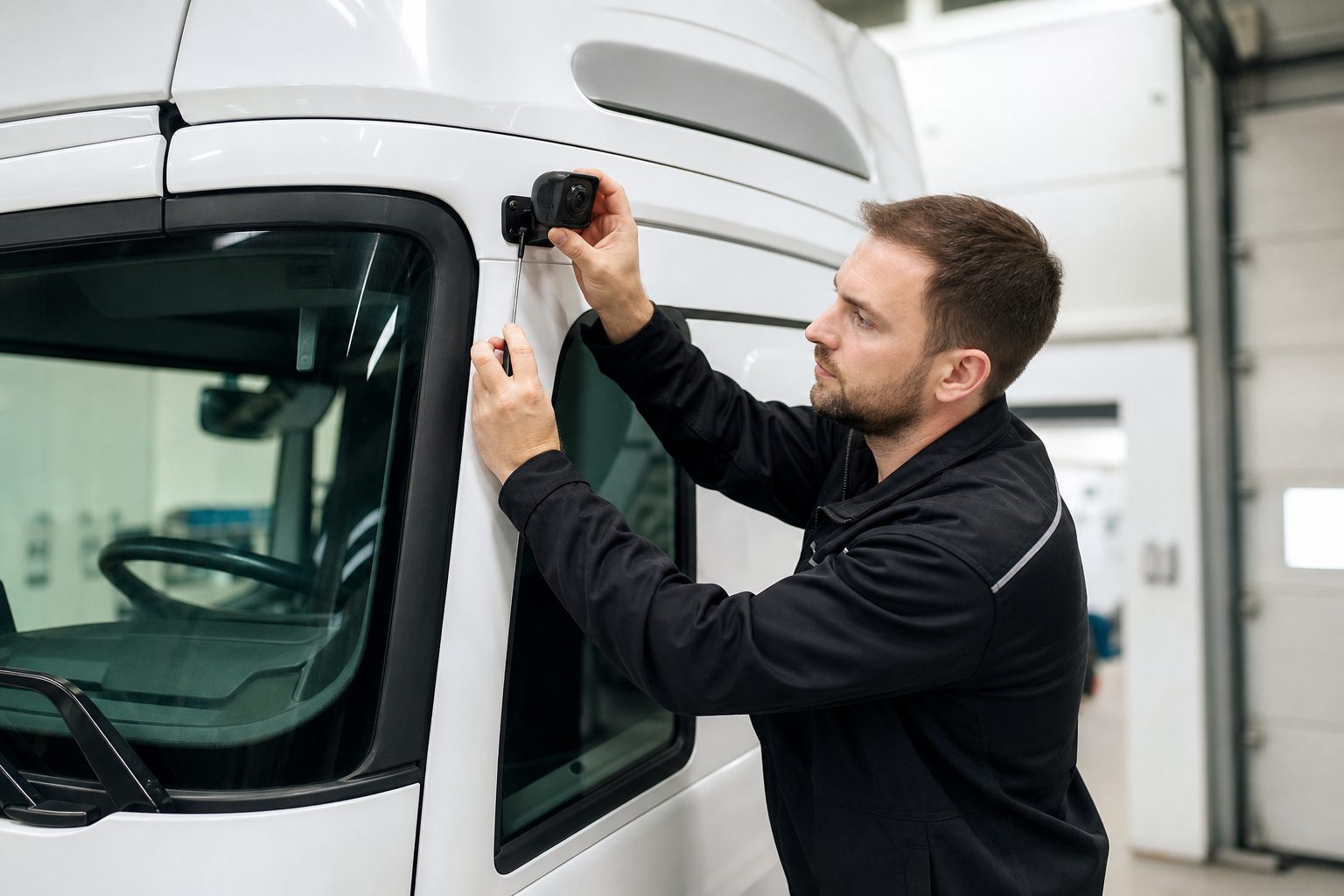
Vehicle safety equipment that works as separate components — a camera from one supplier, a sensor from another, an MDVR from a third — creates a system where the failure modes are at the integration points. The camera footage that is supposed to appear on the in-cab monitor does not show up because the video output standard does not match. The BSIS sensor that should activate on the left indicator activates all the time because the wiring was not configured for the vehicle’s indicator circuit. The MDVR that should record all channels records only two because the installer did not set up the camera inputs correctly.
Backwatch designs fleet safety systems as integrated packages — camera, sensor, MDVR, monitor, and portal access — specified together, installed by engineers who understand how the components interact, and supported as a single system rather than as separate hardware purchases.
An integrated fleet safety system from Backwatch is not a bundle of products shipped in the same box. Integration means:
The Backwatch fleet safety system has four components that work together:
Vehicle cameras provide the visual coverage of the zones the driver cannot see directly: nearside blind spot (CMS for DVS PSS), rear reversing zone, front MOIS zone, and additional positions for the specific vehicle type. All cameras are IP69K rated, minimum 1080p HD, with low-light capability for night operations. Cameras are specified by position and field of view — not as a generic product applied to every position on every vehicle.
Proximity sensors provide automated object detection in the blind zones that cameras cover visually. Radar-based BSIS sensors for nearside and rear zones, UNECE Regulation 151-compliant for DVS PSS purposes. Two-zone programmable detection — warning zone and alert zone — configured for each vehicle’s body profile with exclusion zones to eliminate false alerts from the vehicle’s own structure.
MDVR (Mobile Digital Video Recorder) records and stores footage from all camera channels. SSD storage for vibration resistance, minimum 4-channel (expandable to 8 or more for vehicles requiring comprehensive coverage), with G-sensor event recording and GPS position embedding. The MDVR is the hub of the system — all camera feeds, sensor event logs, and GPS data flow through it.
Live view portal provides fleet managers with remote access to the complete system: live camera feeds from any vehicle, footage retrieval by vehicle and time window, GPS position tracking, G-sensor and sensor event logs, and system health monitoring for camera and sensor connectivity. Portal access is browser-based — no specialist software required — with role-based user management for different team members.
Every Backwatch system installation is documented against the compliance requirements it is designed to meet:
Fleet operators receive a complete installation record set for each vehicle — not just a delivery note. These records are what FORS auditors, DVSA traffic examiners, and HSE inspectors examine when assessing whether a fleet’s compliance claims are substantiated by evidence.
Backwatch treats the installation as the beginning of the support relationship, not the end of the sale. The ongoing support includes:
Yes. Many fleet operators come to Backwatch with a mix of older vehicles with partial camera fitment — a single dashcam, an original-equipment reversing camera, or an older MDVR that does not support the channel count needed for full compliance. Backwatch can assess the existing installation, identify which components are suitable for integration into a new system and which need replacing, and provide a retrofitting specification that brings the vehicle to the required compliance standard without unnecessary full replacement where existing components are serviceable.
For a new installation on a vehicle with no existing camera or sensor equipment: 3–5 hours per vehicle depending on the vehicle type and the number of components being installed. For a PSS installation on a standard HGV (CMS, BSIS, MOIS, 4-channel MDVR, monitor): typically 4 hours. For a refuse vehicle with full coverage including bin lift sensors and hopper camera: 5–6 hours. Installations are scheduled around the fleet’s operational requirements to minimise vehicle downtime. For large fleets, a programme approach with multiple installation teams working concurrently reduces the overall programme duration.
After the warranty period, component replacement is available at commercial rates. Backwatch maintains parts availability for the products it supplies for a minimum of 10 years from the product’s last production date — fleet operators should not face a situation where a failed component cannot be sourced because the product has been discontinued. Maintenance contracts are available for fleets that want a fixed-cost support arrangement beyond the warranty period — covering scheduled maintenance visits, priority response to system faults, and portal access continuation.
Yes. Portal training is included as part of every new installation — the fleet manager and any designated portal users receive a demonstration of the system covering: footage retrieval, event log review, GPS tracking, system health monitoring, and user management. For larger fleets with multiple portal users at different locations, remote training sessions can be provided for users who were not present at the installation demonstration. Training materials are available through the portal itself for new users added after initial installation.
Yes. The portal generates fleet reports showing vehicle-level compliance status — which vehicles have camera and sensor systems installed, system health status, and event log summaries. These reports provide the auditable evidence that FORS requires for Bronze, Silver, and Gold accreditation. Daily walkaround check records (the specific records that FORS auditors examine) are the operator’s own records — Backwatch’s portal data supplements but does not replace the operator’s internal check records. The portal’s event logs can corroborate that systems were functioning on specific dates where the walkaround records show cameras were checked and found operational.
Download this free checklist to apply the guidance in this article to your fleet.
Tell us what vehicles you run and what you need — we will come back with a recommendation and a price. Prefer to talk? Call 01656 721871.
Related guides: Why Fleets Choose Backwatch Safety Products · How Backwatch Integrates Cameras, Sensors and MDVR Into One System
4 August 2026
Monday to Friday:
8.30am-5.30pm