A collision is not an event — it is a sequence. Something happens before: a driver who is distracted, a following distance that has been too short for the last ten minutes, a risky overtake on a difficult stretch of road. Something happens after: an impact, a near-miss, a vehicle stopped in an unsafe position. The intervention opportunity exists in the middle — after the risk has become identifiable and before the outcome has become fixed.
Remote fleet monitoring creates intervention opportunities at two points in that sequence. The first is the AI camera alert — an in-cab signal to the driver while the risky behaviour is still in progress. The second is the human intervention — a transport manager or remote operator who sees the live feed, identifies a risk, and contacts the driver directly. Both mechanisms work. The second is slower but more flexible, and it can address situations that automated alerts are not configured to catch.
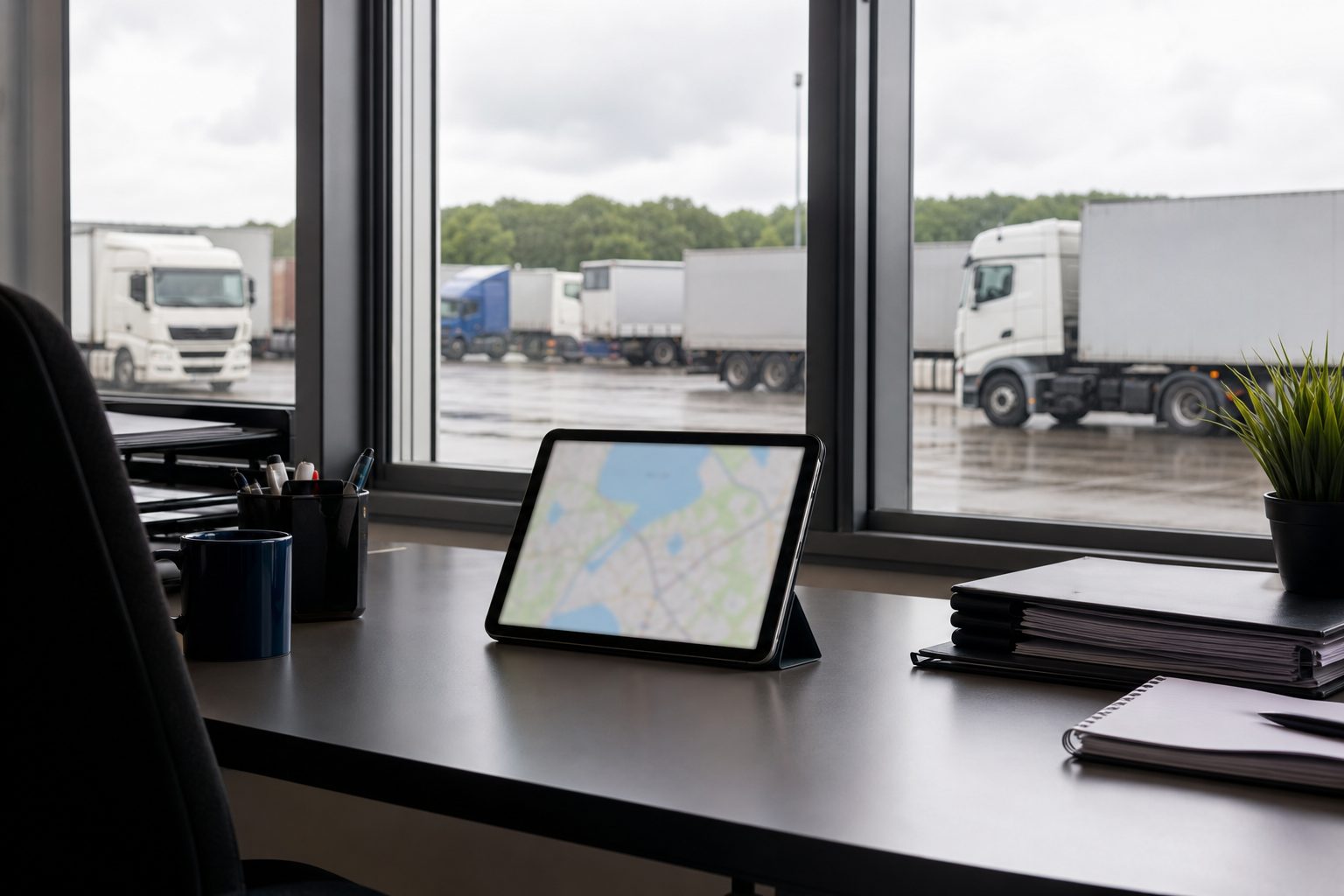
A remote operator monitoring a fleet — whether that is a transport manager watching the platform during a shift or a dedicated monitoring centre watching multiple fleets simultaneously — has access to the same information. The fleet map shows every vehicle’s current position, speed, and direction. G-sensor events are flagged as they occur. AI camera alerts surface in the platform within seconds of detection. And on any individual vehicle, a live camera feed can be opened in seconds, showing what the driver is currently experiencing.
The combination of these feeds is what makes remote intervention possible. A speed alert on a particular vehicle draws attention to that vehicle on the map. Opening the live feed shows the road conditions that produced the speed — heavy traffic requiring frequent braking, an overtaking manoeuvre that has not resolved cleanly, or a driver who appears distracted. The remote operator has the context to decide whether this warrants a call, and what the call should address.
This is different from an automated alert, which responds to a threshold. An automated harsh braking alert fires when the G-sensor exceeds a configured deceleration threshold. A remote operator watching the live feed can identify the following distance that is going to produce a harsh braking event before the event occurs, and contact the driver before the threshold is met.
The typical intervention workflow for a remote operator responding to a live monitoring concern follows a consistent pattern:
Alert identification: A G-sensor event, AI camera alert, or anomalous vehicle behaviour draws the operator’s attention to a specific vehicle. The operator opens the live camera feed to assess the current situation.
Assessment: The operator views the live feed for 15–30 seconds to understand what is happening. Is the driver actively at risk, or has the situation resolved? Is the concern the driver’s behaviour, the road conditions, or the vehicle state? The assessment determines whether intervention is needed and what form it should take.
Contact: The operator calls the driver directly. The call is brief and specific: “I can see you on the camera. Your following distance is too short — back off from the vehicle ahead.” Or: “I can see you are braking hard repeatedly. What are the road conditions like?” The specificity matters. A vague call about safe driving is easy to dismiss. A call that demonstrates the operator can see exactly what the driver is doing commands attention.
Confirmation: The operator remains on the live feed briefly after the call to confirm the driver has adjusted their behaviour. If the risky behaviour continues, the call escalates. If the driver has corrected, the intervention is logged and the operator moves to the next vehicle.
A question that comes up regularly when fleet managers are evaluating live monitoring capability is whether the human call adds value over automated in-cab alerts. The research suggests it does, in specific circumstances.
Automated in-cab alerts are effective for immediate, reflexive behaviour correction — a lane departure alert that fires as a driver drifts, a fatigue alert that sounds at the first head drop. The driver responds to the signal before they have consciously processed it. But for sustained risky behaviour — following too closely for an extended period, progressive speed creep on a motorway — the alert fires repeatedly and drivers habituate to it. The alert loses its effectiveness precisely when the risk is most persistent.
A human call cannot be habituated to in the same way. It is unexpected. It is specific. It demonstrates that the operator is watching right now. A driver who has been ignoring an in-cab alert for three alerts in a row will respond differently to a phone call that says “I can see your dashcam right now and you are driving too close to the vehicle in front.” Fleet managers who have made these calls describe the response as immediate and consistent — drivers correct their behaviour, and they correct it permanently for the rest of that shift.
The accountability effect is also different for a human call. An automated alert is impersonal — the system fired, the driver knows it fired, they know the manager might review the footage later. A direct call from someone who is actively watching creates a different level of accountability. The driver knows the behaviour has been observed in real time by a person who has made a conscious decision to call. That is a more powerful accountability signal than an algorithm threshold.
Remote intervention can be performed by an in-house transport manager using the fleet’s own connected MDVR platform, or by a dedicated fleet monitoring centre that watches the fleet continuously and contacts drivers when concerning behaviour is identified.
In-house transport managers have contextual knowledge that a monitoring centre does not. They know which routes are challenging at which times of day. They know which drivers are new or returning from absence. They know whether a vehicle is on a time-sensitive delivery and whether the risk behaviour might be related to schedule pressure. This context makes their intervention calls more nuanced and more likely to be received constructively.
Monitoring centres provide coverage at times when in-house management is not available — overnight, at weekends, during the early-morning shift start when drivers are on the road before the office opens. For fleets with out-of-hours operations, the monitoring centre model extends the intervention capability across the full operating window rather than just the management shift.
The two models are not mutually exclusive. Many fleet operators use in-house monitoring for core hours and route the live platform alerts to a monitoring centre during out-of-hours periods. The connected MDVR platform enables either model — the system does not change, only the person watching the screen.
Every live intervention creates a documentation record. The G-sensor event that triggered the operator’s attention is logged in the platform with timestamp and position. The live view session is recorded against the vehicle and time. The driver call is a fixed point in time that, combined with the platform record, creates an evidential narrative: the risk was identified, the operator intervened, the driver corrected their behaviour.
This documentation has value in multiple contexts. For driver coaching, it provides the specific moment to discuss rather than a vague reference to past behaviour. For insurance purposes, it demonstrates that the fleet operator is actively managing driver behaviour rather than passively recording it. For regulatory compliance, it is a record of the safety management process in practice — not just a statement of policy, but evidence of policy being enacted.
Yes, through two mechanisms. AI camera alerts fire while a risky behaviour is still in progress, giving the driver time to correct. Human operator calls address sustained risky behaviours that automated alerts may not resolve — particularly following distance, speed creep, and distraction patterns. Fleets with active monitoring programmes typically report meaningful reductions in collision rates in the first year of deployment.
From identifying an anomaly on the fleet map to having a live view open: typically under 30 seconds. From live view to driver call: another 30 seconds. The total time from “something looks wrong” to the driver receiving a call is typically under two minutes. For risks that are developing gradually — closing following distance, progressive speed creep — this is more than adequate to intervene before the threshold event occurs.
Drivers should be informed at briefing that the vehicle can be monitored via live view and that this is used for safety and welfare purposes. UK GDPR requires employees to be informed about monitoring systems. Practically, the knowledge that live monitoring exists — and that it is used for active intervention — contributes to the accountability effect that improves driver behaviour across the fleet, not just during monitored sessions.
Step-by-step protocol for remote operators: alert identification, live view assessment, intervention call, and post-call confirmation — complete with logging guidance.
Tell us what vehicles you run and what you need — we will come back with a recommendation and a price. Prefer to talk? Call 01656 721871.
Related guides: Real-Time GPS Tracking: How It Works · Live View for Waste Collection Fleets
4 August 2026
Monday to Friday:
8.30am-5.30pm