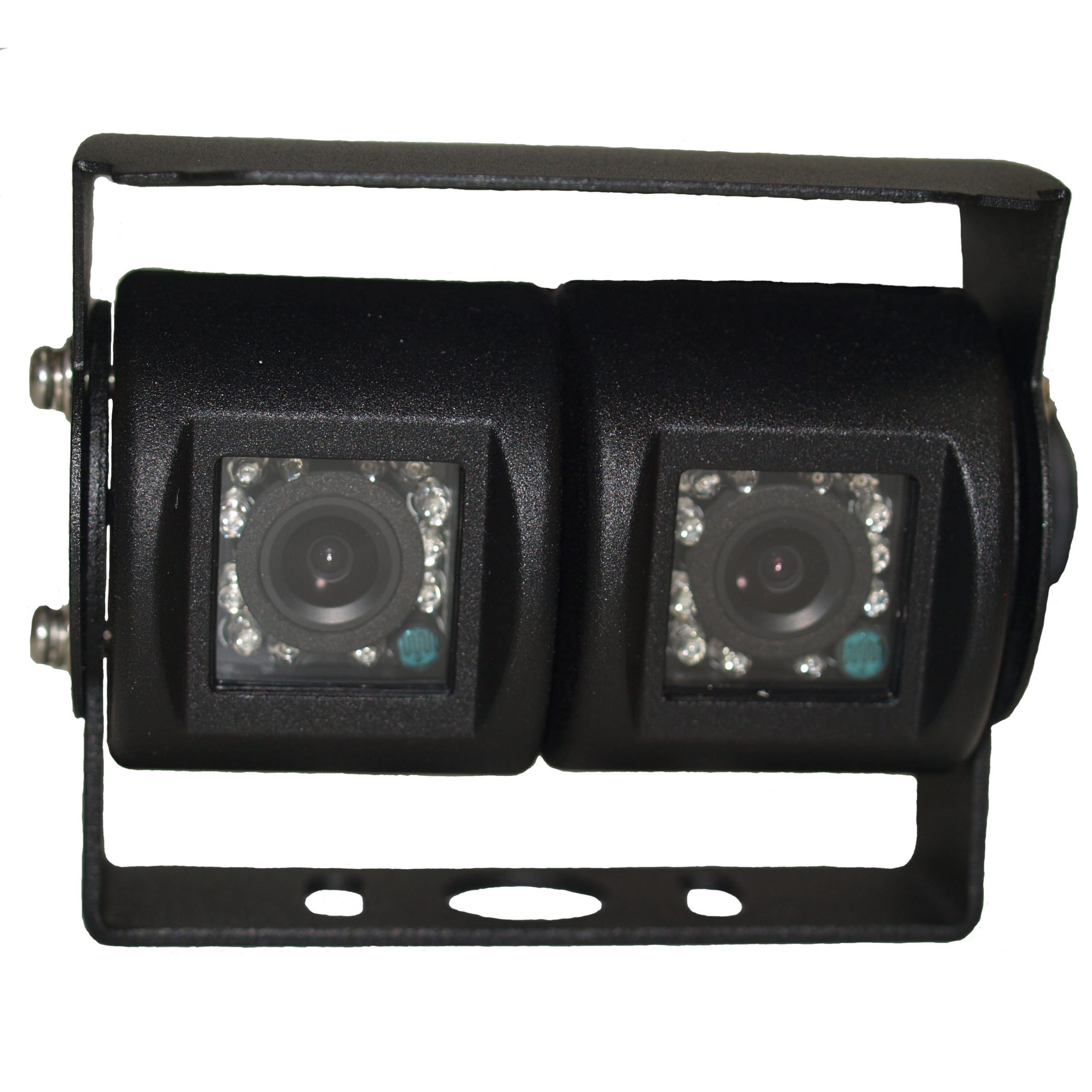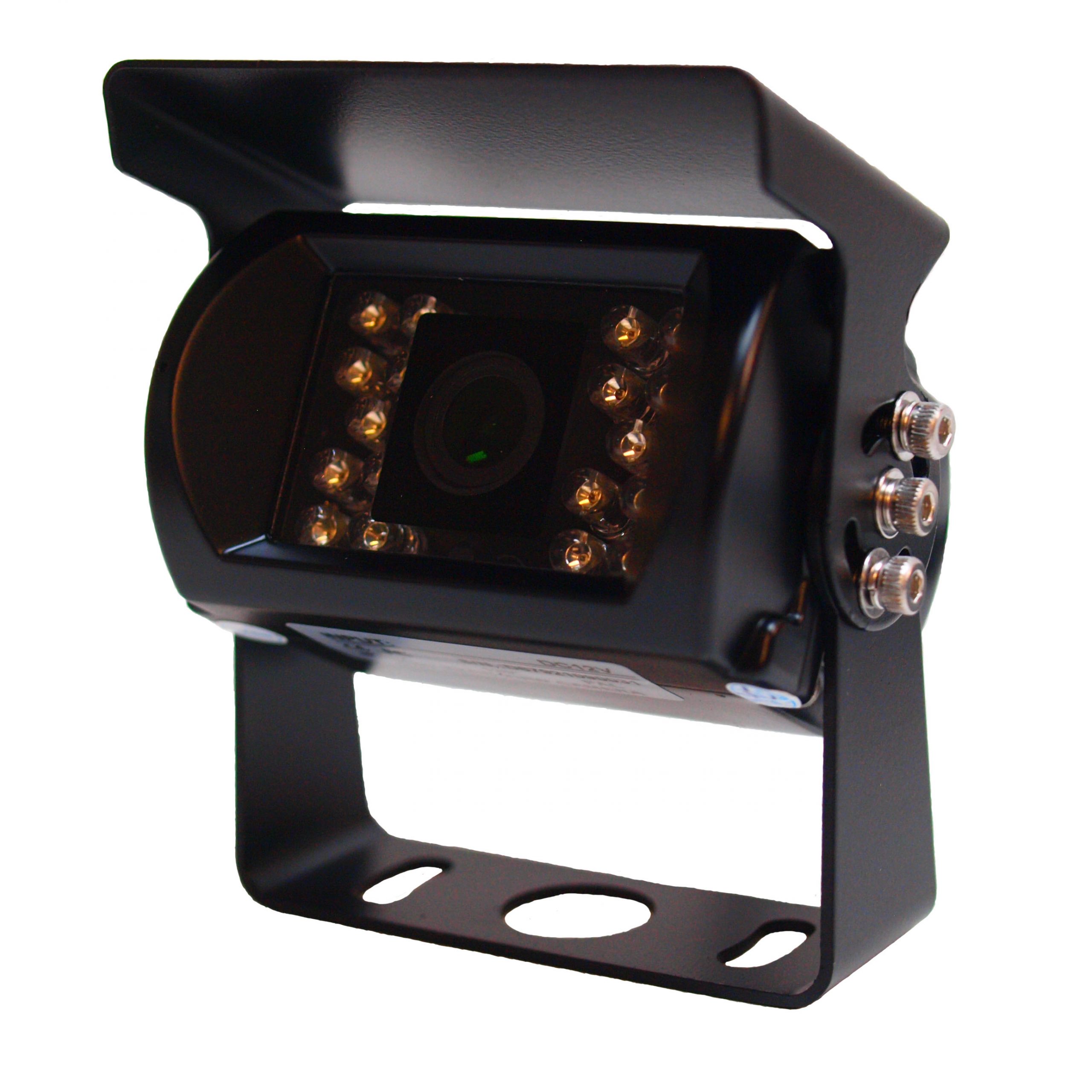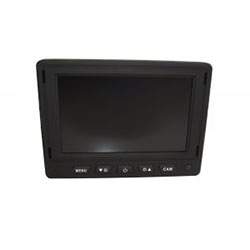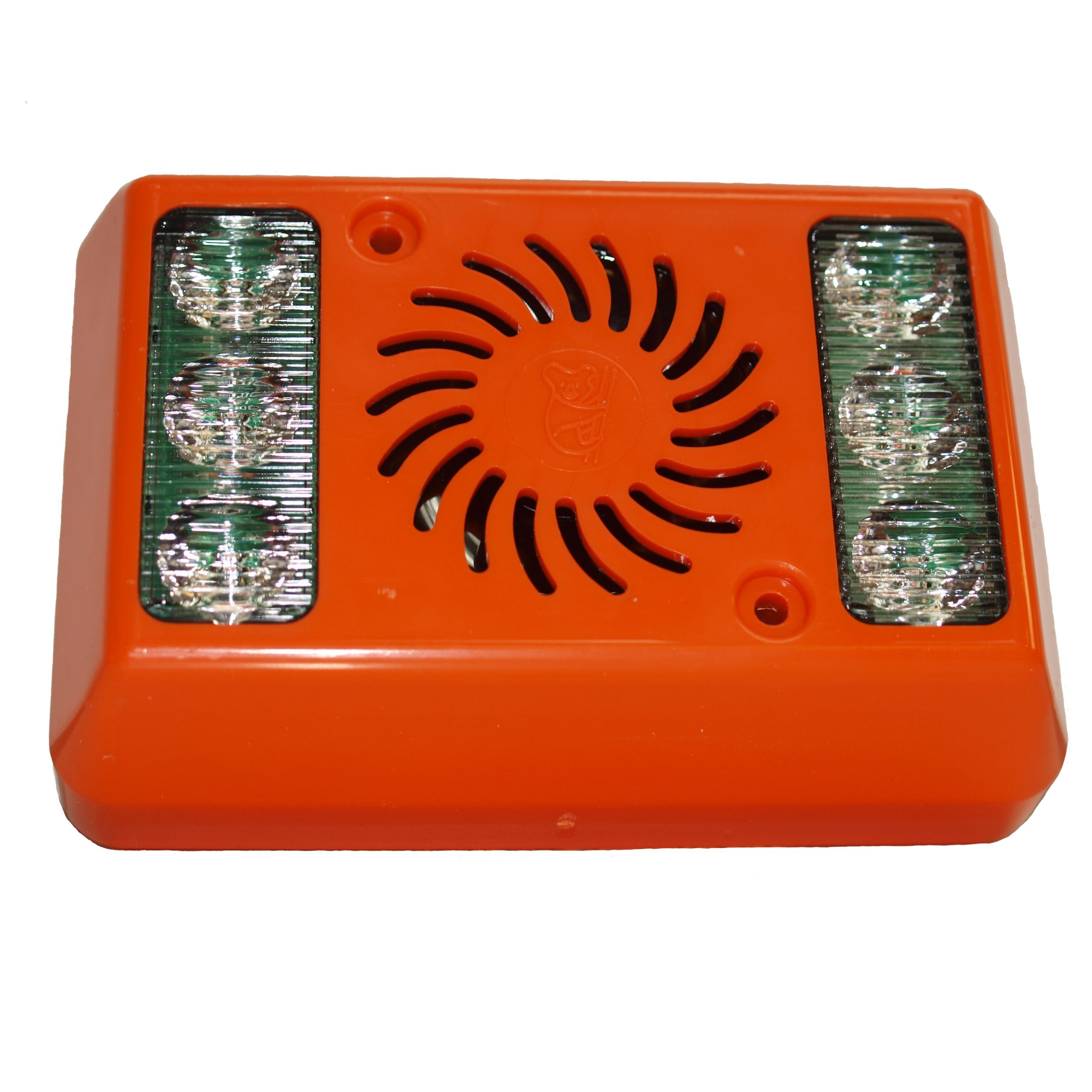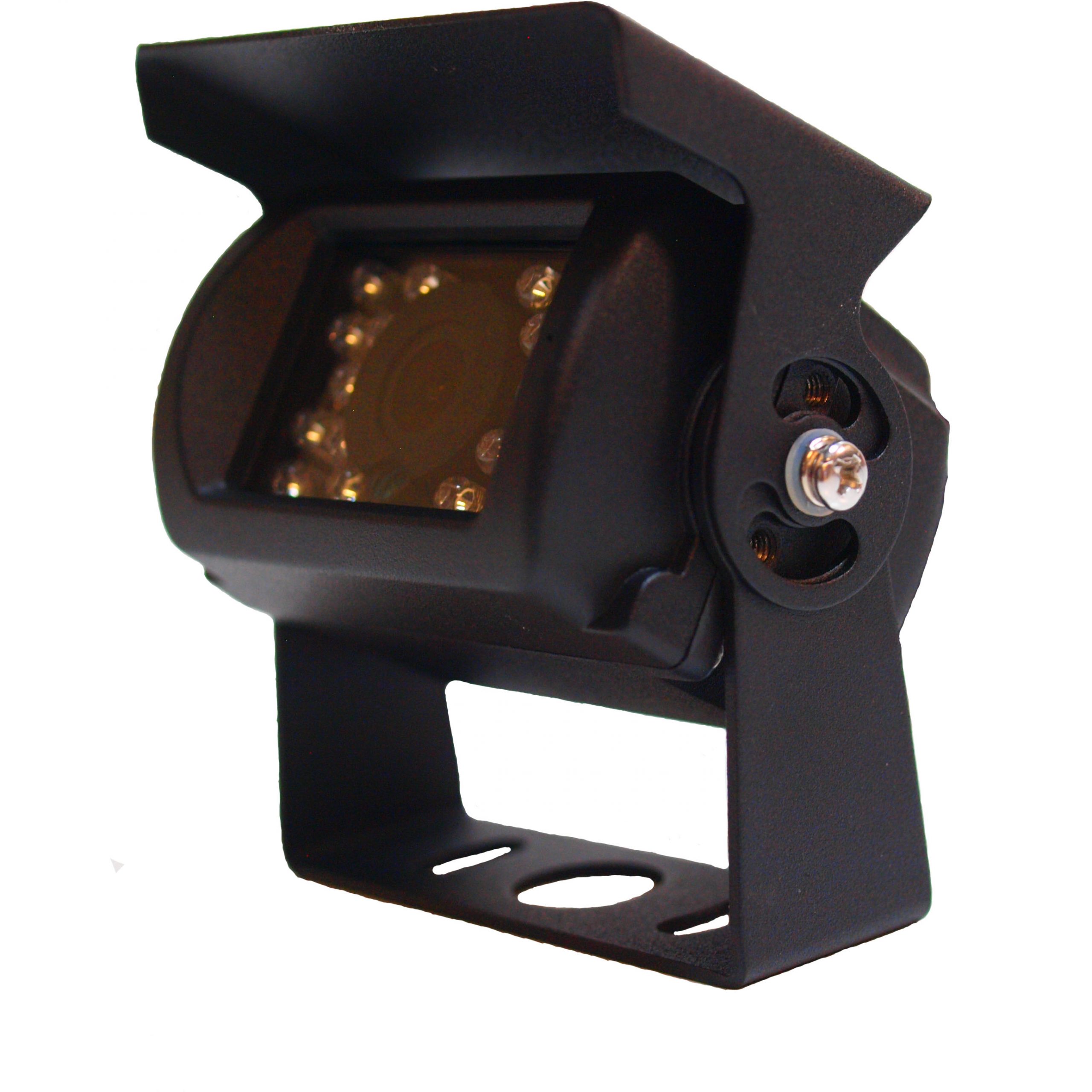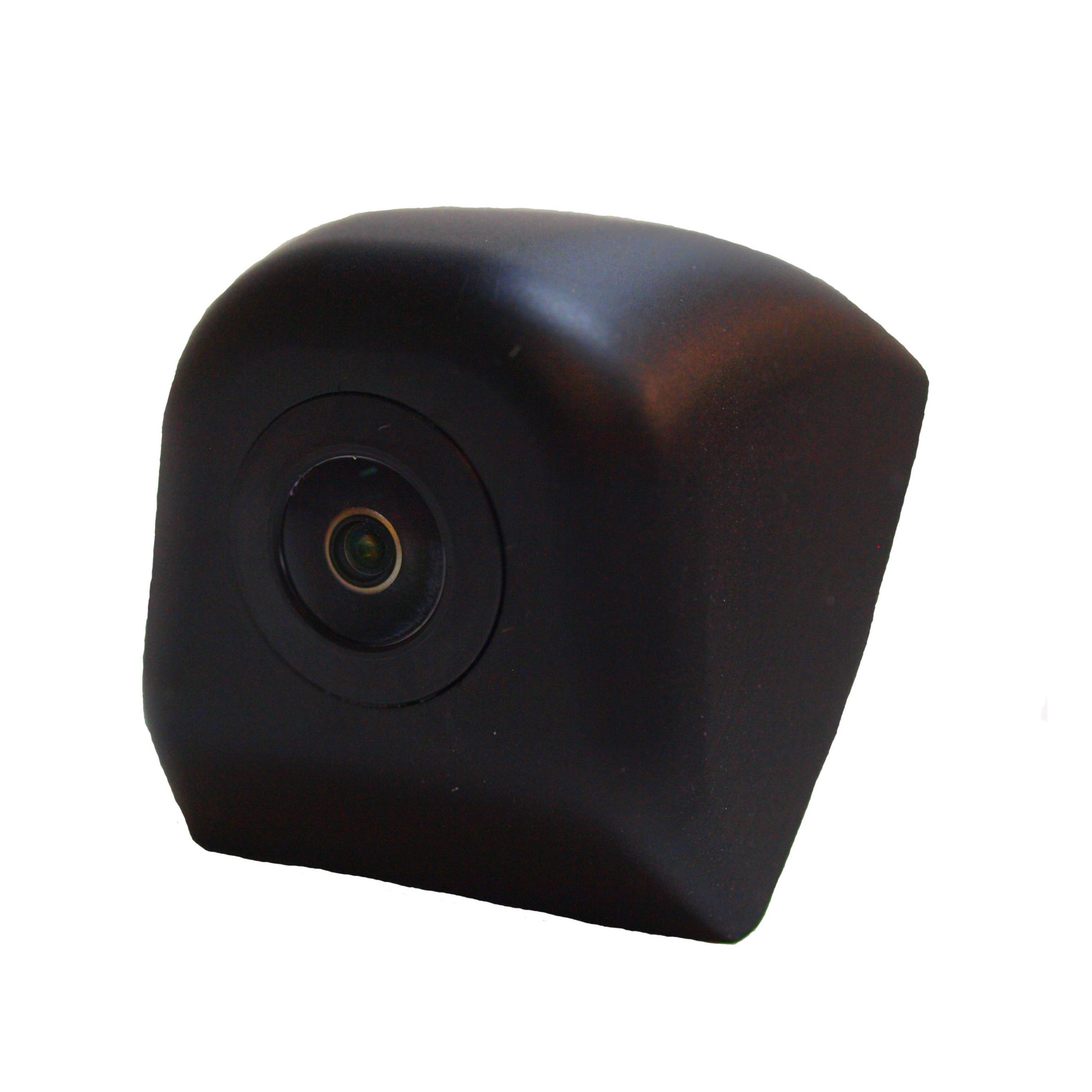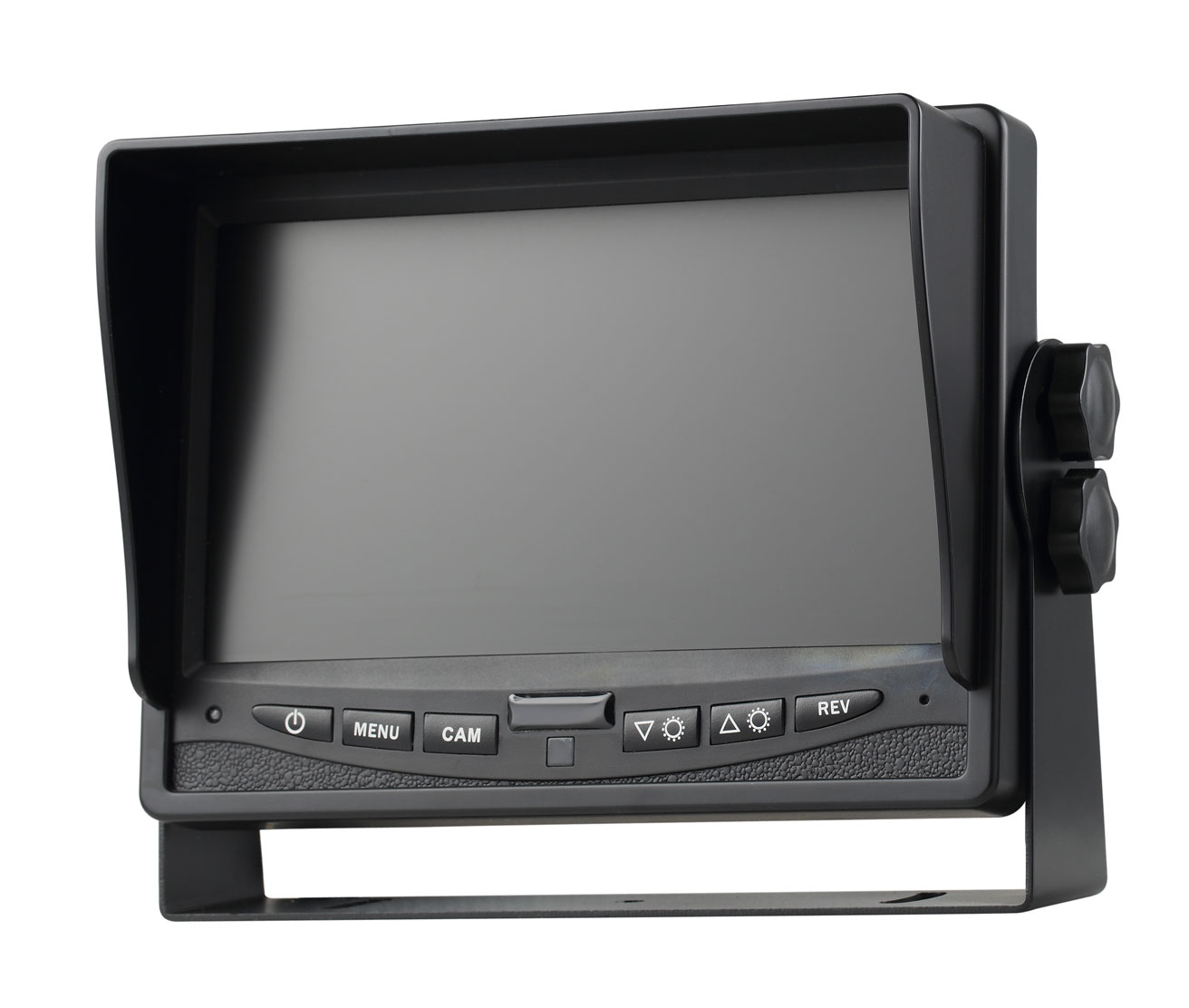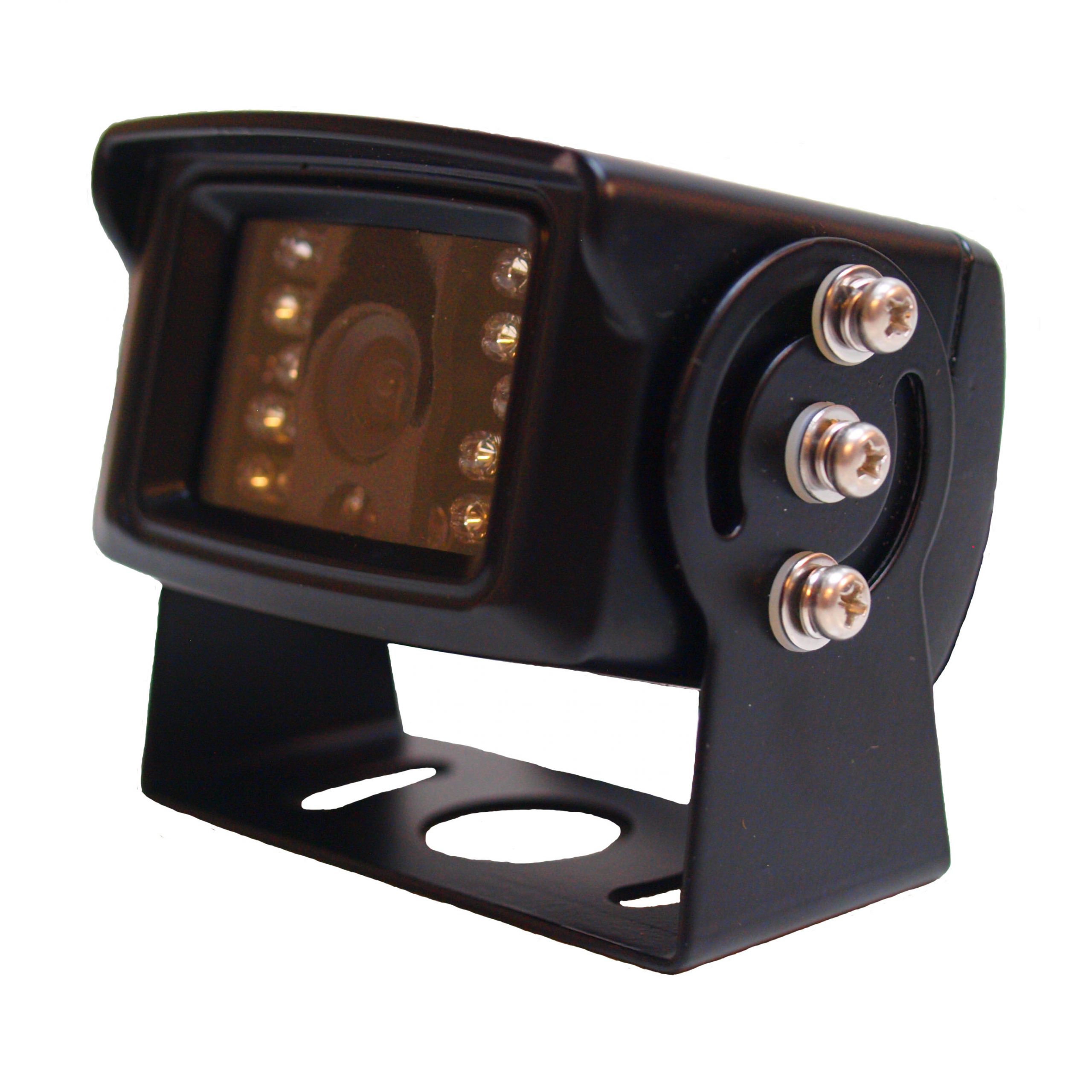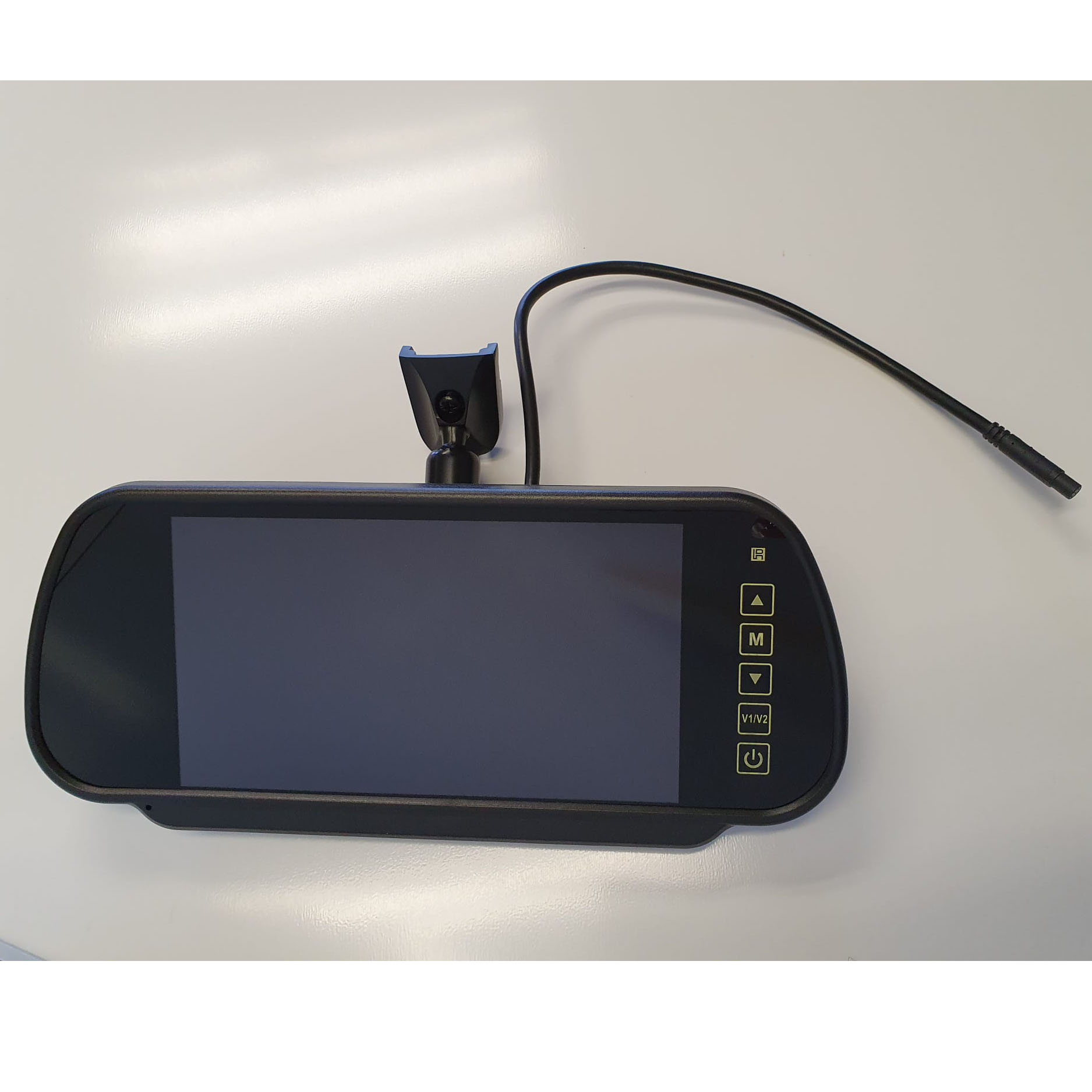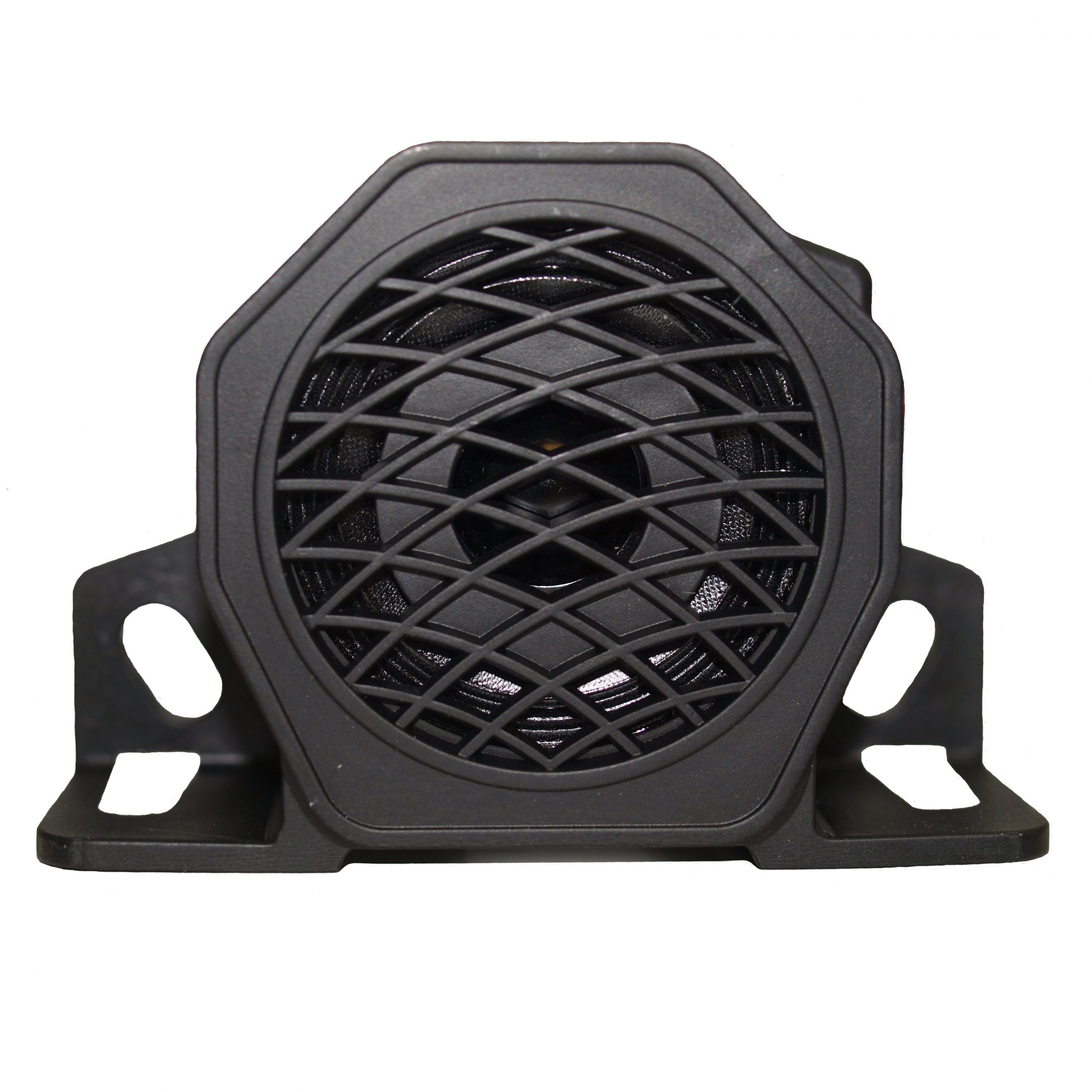
One of the most common causes of fatal struck-by incidents on UK construction sites and refuse routes is a worker struck by a reversing vehicle whose driver could not see them in any mirror. The hazard is well-established and well-documented; so is the engineering control. A camera covering the rear blind zone, a monitor placed in the driver’s natural sightline, and an external audible warning that alerts anyone behind the vehicle — together they can help reduce reversing-related incidents dramatically compared with mirror-only operation.
Backwatch supplies reversing camera kits as ready-to-fit packages — rear camera, in-cab monitor, and reversing alarm specified to satisfy FORS Silver, WISH WASTE-04, and the engineering control expectations of HSE workplace transport guidance. Kits are scaled to the vehicle: HGV kits with 7–10 inch monitors and white-sound alarms; van kits with compact monitors; plant kits with off-road IP69K and shock-rated specifications. Kits are 12/24V compatible (the cameras themselves are 12V), suitable for HGV and LGV MDVR or monitor installations.
Three failure modes are common when reversing camera systems are assembled component-by-component:
For rigid HGVs, tippers, refuse vehicles, and articulated tractors. Specified to FORS Silver, FORS Gold, and CLOCS requirements for reversing camera and audible warning.
Installation time: ~3 hours per vehicle.
For vans, panel vans, light commercial vehicles, and small fleet operations. Compact form factor; not FORS Silver compliant on its own (vehicle weight typically below threshold) but aligned with HSE engineering control expectations.
Installation time: ~2 hours per vehicle.
For dump trucks, loading shovels, agricultural machinery, and off-road industrial plant. IP69K and vibration-rated for harsh operating environments.
Installation time: ~4 hours per vehicle.
| Component | HGV kit | Van/light kit | Plant/off-road kit |
|---|---|---|---|
| Camera | MS750 (or BW688/662/CW087) | MS311 | MS750 + vibration mount |
| Monitor | BW708AHD 7″ (7–10″ options) | BW518 compact / BW708AHD 7″ | BW918 9″ |
| Alarm | EA5050 white-sound | EA5050 / standard | EA5050 white-sound |
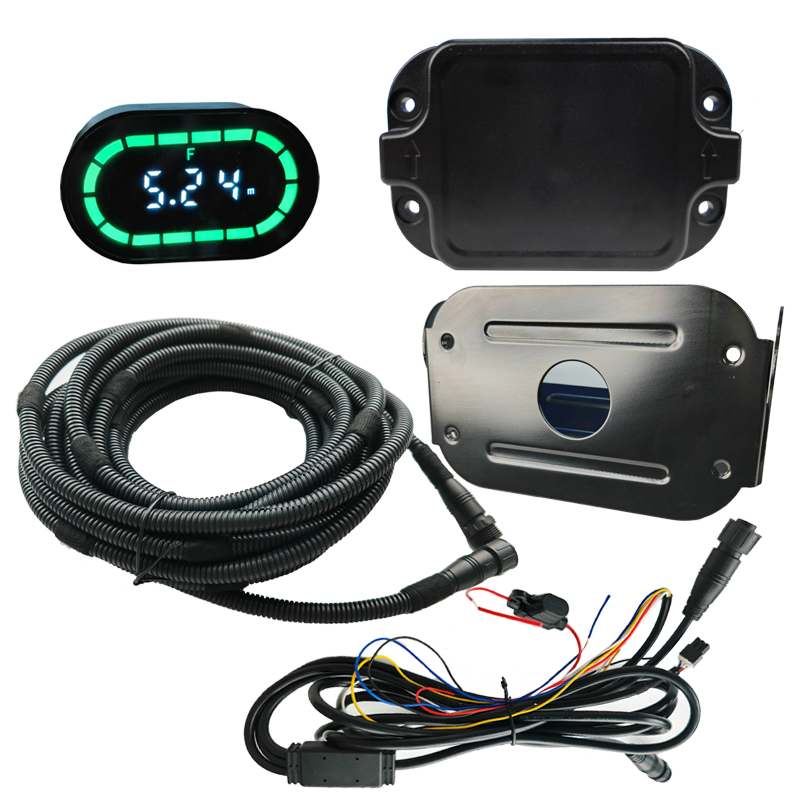
| Optional sensor | BWFR77GHZ radar | — | BWFR77GHZ radar |
| FORS Silver+ compliant | ✓ | Below threshold | Off-scope |
| WISH WASTE-04 (refuse) | ✓ | — | — |
| Installation time | 3hr | 2hr | 4hr |
| Framework | Reversing camera | Monitor size | Reversing alarm |
|---|---|---|---|
| FORS Bronze | Optional | — | Optional |
| FORS Silver | Mandatory — side camera on all HGVs; rear camera on rigids over 7.5T (not artics) | 7″ minimum | Mandatory |
| FORS Gold | Same specification as Silver (Gold members must also publish a case study) | 7″ minimum | Same as Silver |
| CLOCS | References FORS Silver | 7″ min | Mandatory |
| WISH WASTE-04 | Mandatory | Anti-glare 7″+ | White-sound recommended |
| HSE workplace transport | Engineering control where risk assessed | — | Engineering control |
For FORS Silver+ accreditation, yes — both are mandatory regardless of camera coverage. The functional reason: a camera relies on the driver looking at the monitor at the right moment; a reversing alarm alerts the worker outside the vehicle who is the actual person at risk. The two controls address different failure modes — the camera can’t help when the driver isn’t looking; the alarm can’t help if the worker has hearing protection or doesn’t recognise the alarm. Together they cover both modes.
FORS Silver requires the reversing camera; the proximity sensor is supplementary. The camera shows the operating zone to the driver (and, where linked to an MDVR, provides the visual record used in incident investigation); the sensor provides automated detection that alerts when an object is detected without requiring the driver to interpret the camera feed. For FORS, the camera is the mandatory component; the sensor is a useful add-on for close-range detection. Ultrasonic sensors remain available, but Backwatch is increasingly specifying 77GHz radar (BWFR77GHZ) in their place — radar costs more but is significantly more configurable in detection zones and range.
Backwatch cameras and alarms carry a 2-year warranty as standard, and typically last 5 years plus in normal fleet operation. The most common failure modes are connector corrosion (in pressure-washed environments) and lens contamination from dust or salt. IP69K-rated equipment used in environments matching that protection rating (pressure-washed daily, high-vibration) can last well beyond the warranty period; equipment fitted in environments outside its specified rating tends to fail earlier.
Yes. Older vehicles (10+ years) typically require additional installation time for cable routing through cab structures that have no existing camera-system conduit, but the equipment specification is the same as for newer vehicles. The mounting positions are bracket-based or adhesive-mounted; no body modification is required. Backwatch retrofits routinely on vehicles of any age — the per-vehicle time is the variable, not the equipment.
The principal differences are monitor size (7″ minimum for FORS vs. compact for basic) and the inclusion of the audible left-turn warning (FORS-mandatory; not part of a basic reversing-only kit). The component cost difference is moderate; the value difference can be significant — a basic kit can address the operational reversing risk but doesn’t satisfy FORS audit requirements. For fleets pursuing FORS Silver+, the additional cost of a compliant kit can be recovered through the contract access that accreditation enables.
IP69K-rated cameras handle water and dust ingress; performance in heavy rain or snow depends on lens cleanliness rather than the housing rating. Lens contamination from rain spray or snow build-up can obscure the view temporarily — manual lens wipes are part of the daily walkaround check on outdoor fleet operations. For continuous-darkness operations (night gritting, early morning refuse), low-light camera variants with infrared illumination provide visibility that standard daytime cameras don’t.
Tell us what vehicles you run and what you need — we will come back with a recommendation and a price. Prefer to talk? Call 01656 721871.
17 July 2026
Monday to Friday:
8.30am-5.30pm