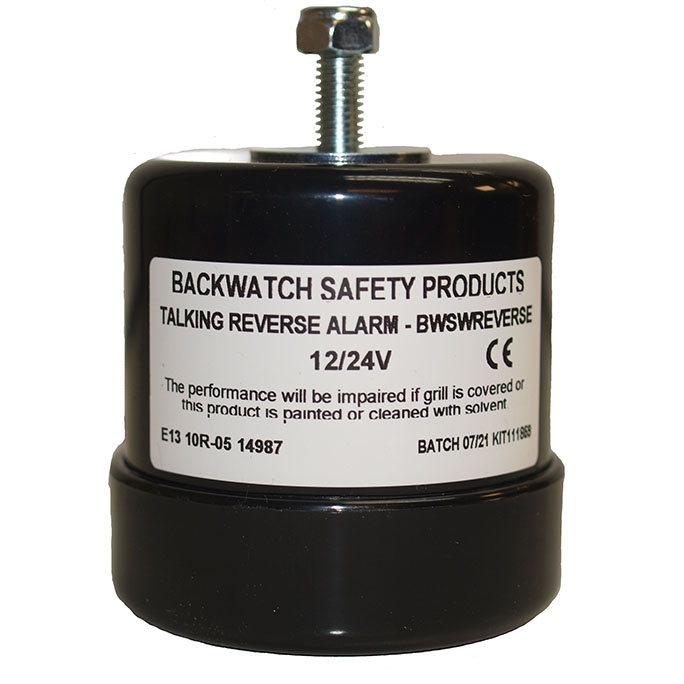
An audible warning is the safety control of last resort. Cameras and sensors alert the driver inside the cab; an external audible warning alerts the people outside the vehicle who are most at risk. White-sound reversing alarms, indicator-activated left-turn warnings, and ambient-adapting volume systems address the specific incident patterns where camera and sensor systems alone are insufficient — pedestrians and cyclists who don’t know the vehicle is about to move, or about to turn into them.
Backwatch supplies reversing alarms and left-turn warnings for FORS Silver, FORS Gold, DVS PSS, and CLOCS-compliant fleet operations. White-sound technology where the regulatory or community-impact context requires it; ambient-adapting volume where the alarm must work without becoming a noise nuisance.
Three regulatory and operational factors drive audible warning specification:
| Alarm | Type | Activation | Volume | Best for |
|---|---|---|---|---|
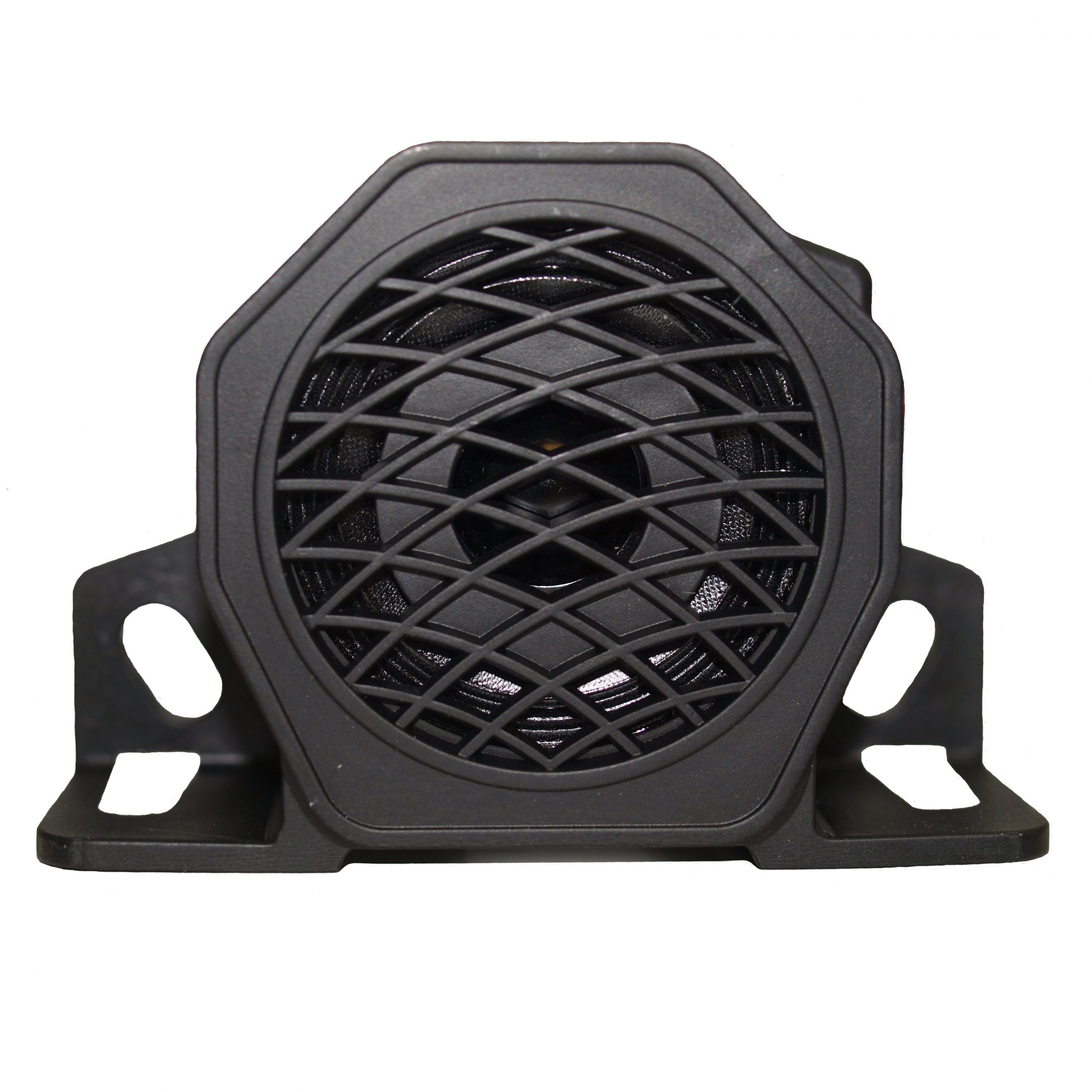
| EA5050 Eco Alarm | White-sound reversing | Reverse gear | Ambient-adapting | Refuse, urban delivery, residential routes |
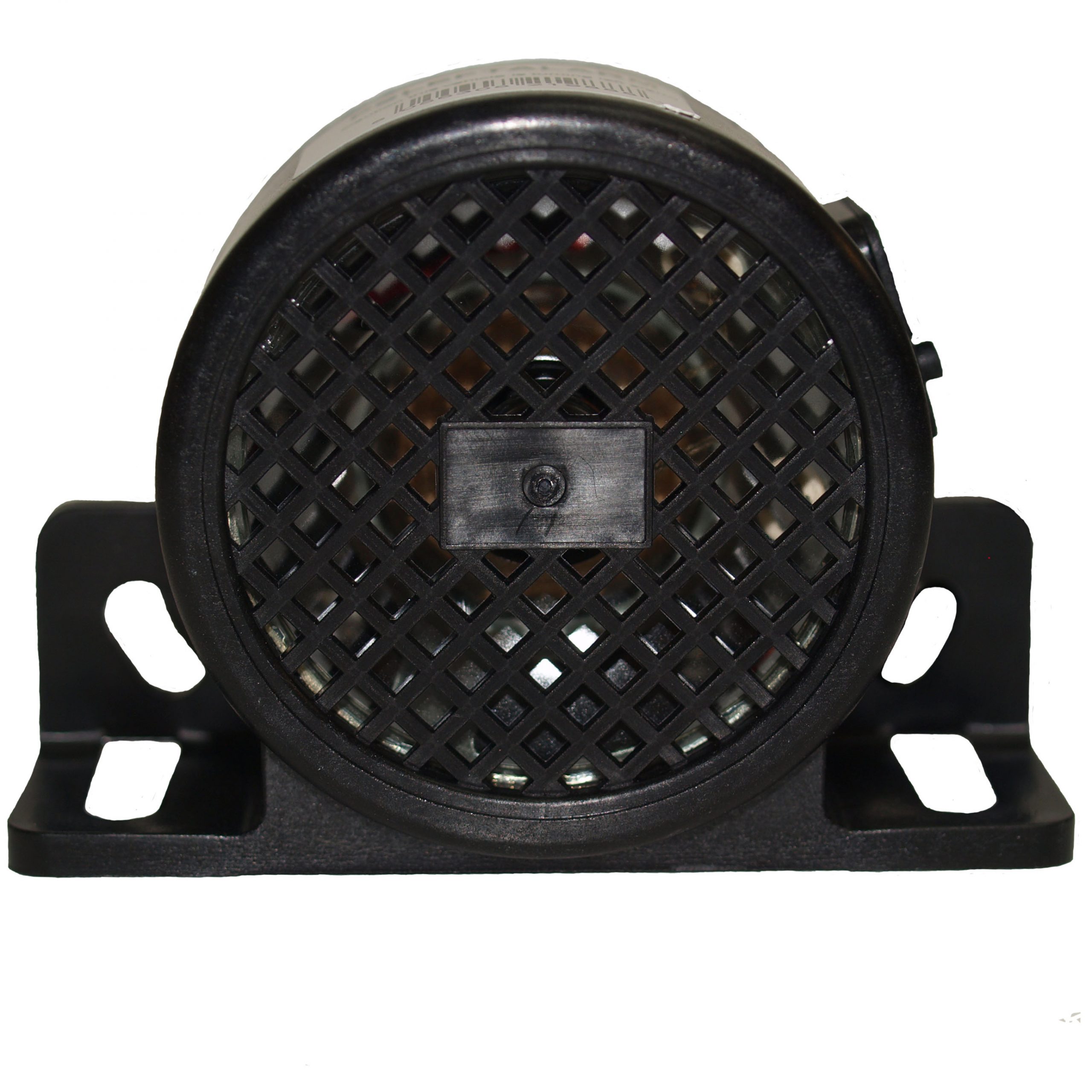
| BWenhanced ALM | Enhanced reversing alarm | Reverse gear | High-volume | Construction, quarry, depot operations |
| BWalb Bespoke Alarm | Custom-spec alarm | Configurable | Custom | Specialist applications, contract-specific |
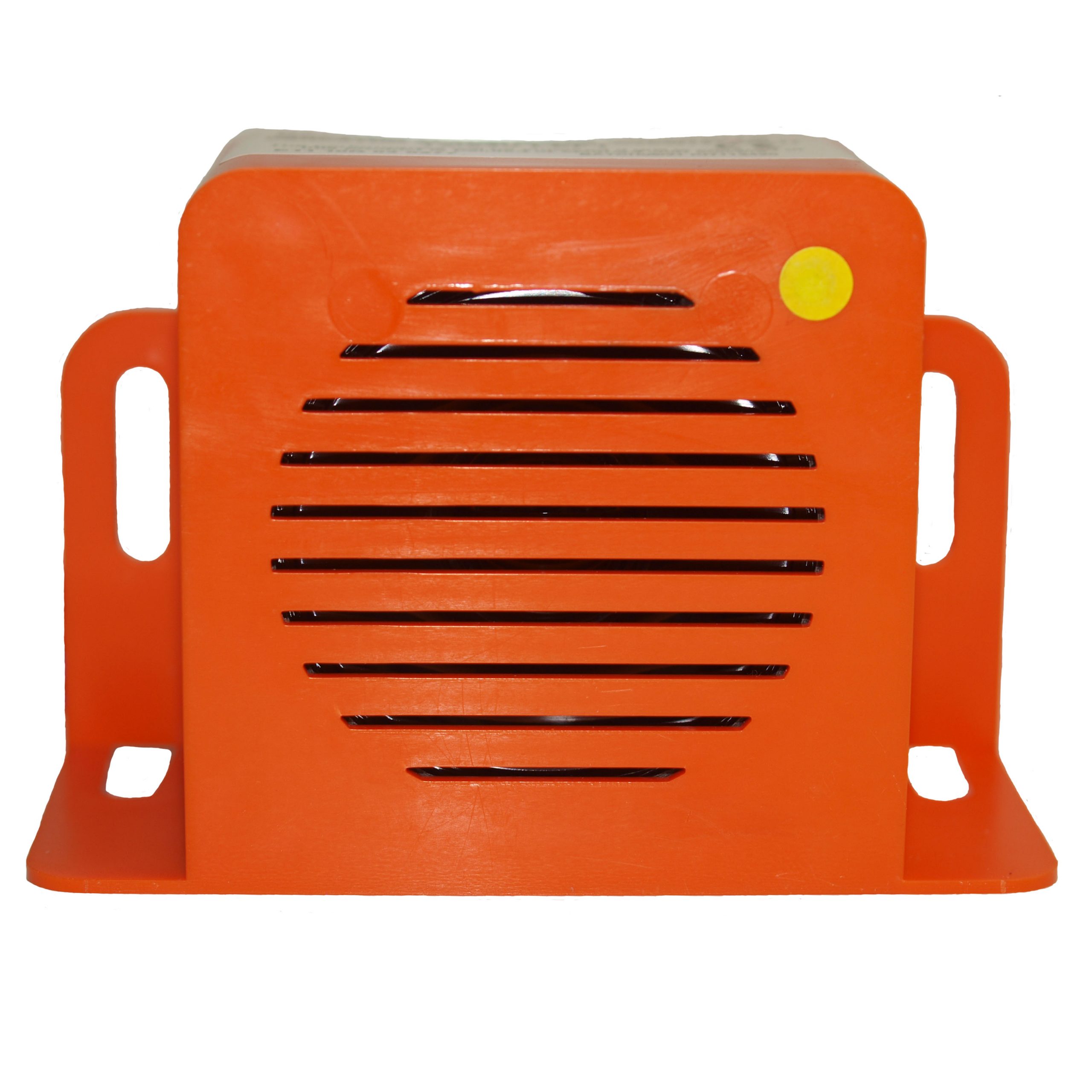
| LTAbgt Left Turn Alarm | Budget audible-only turn alarm | Left or right indicator | Configurable | FORS Silver+ budget option |
| LTAstd Warning Alarm | Standard audible-only left-turn alarm | Left indicator | Standard | FORS Silver+ standard fitment |
The EA5050 Eco Alarm is a white-sound reversing alarm — broadband acoustic emission that’s audible but doesn’t generate the “beeping” complaint that standard tonal alarms produce in residential areas. The volume adapts to ambient noise (louder in a depot, quieter on a quiet residential street at 6am) so the alarm is detectable without being intrusive. WISH WASTE-04 alignment for refuse fleets running residential collection rounds; preferred for urban delivery operations and council waste services.
The BWenhanced ALM is a higher-volume reversing alarm specified for environments where ambient noise is high and the alarm must penetrate (construction sites, quarry depots, large industrial yards). Standard volume calibration; not white-sound technology. Use where community impact isn’t the primary concern but the alarm must reliably alert workers in noisy environments.
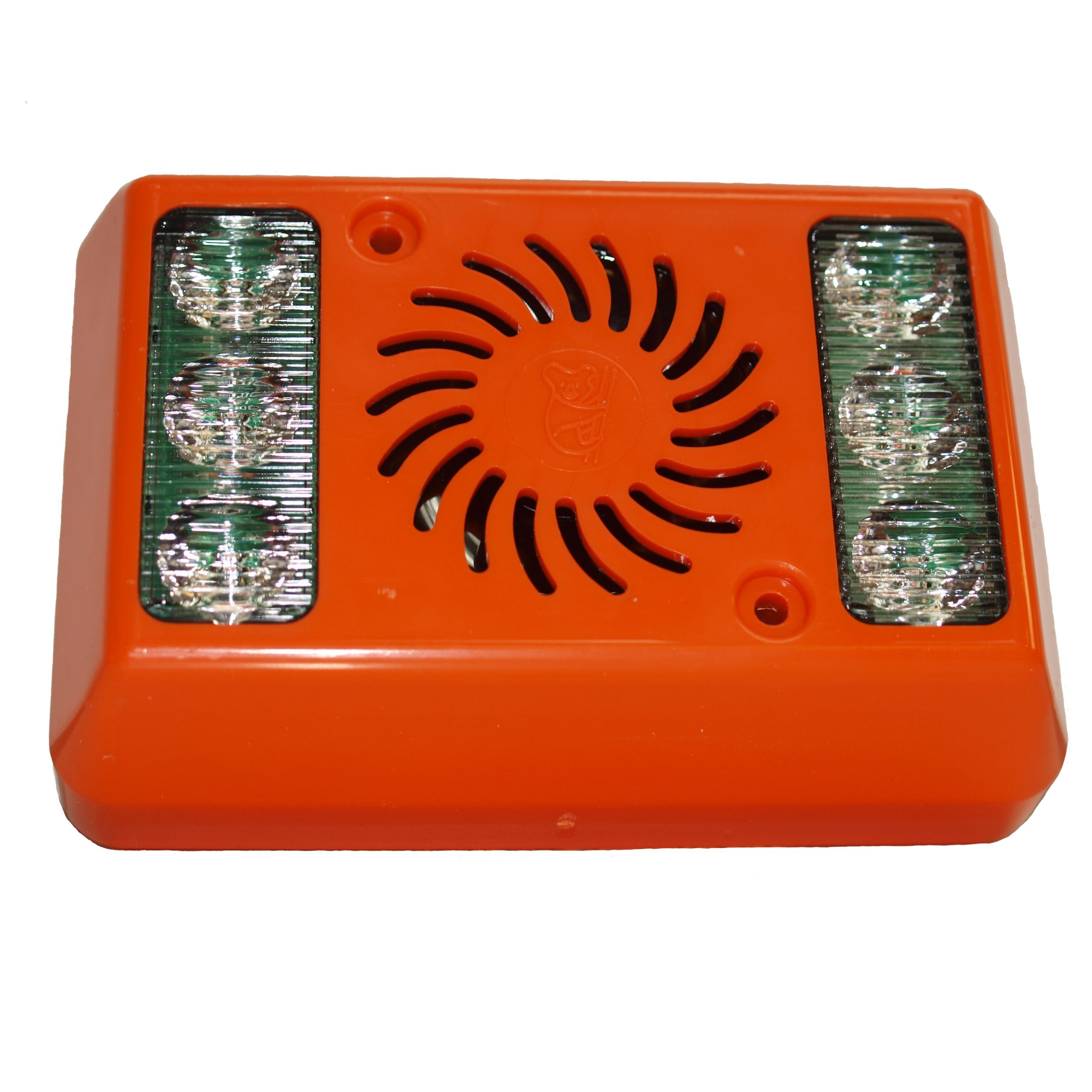
UK HGVs turn left across cyclist paths — the most common pattern of nearside cyclist fatalities. An external left-turn audible warning, activated by the left indicator, alerts cyclists and pedestrians that the vehicle is about to turn left. FORS Silver mandates this (the FORS Gold specification is the same). Both the LTAstd and LTAbgt are audible-only: the LTAstd is the standard fitment for FORS-compliant fleets, and the LTAbgt is the budget variant, which can be wired for left- or right-turn warning. The BWenhanced ALM adds LED pods for a visual warning alongside the audio.
The BWalb is configured for specific contract or fleet requirements — different acoustic patterns, custom activation logic, or volume profiles outside the standard range. Used where a major contract specifies a particular alarm specification (some HS2 site contracts have done this), or where the vehicle’s operating environment requires a non-standard configuration.
| Framework | Reversing alarm | Left-turn warning |
|---|---|---|
| DVS PSS | Best practice (not mandatory) | Best practice |
| FORS Bronze | Optional | Optional |
| FORS Silver | Mandatory | Mandatory |
| FORS Gold | Mandatory (same as Silver) | Mandatory (same as Silver) |
| CLOCS | References FORS Silver | References FORS Silver |
| WISH WASTE-04 | Mandatory + part of reversing procedure | Recommended |
White-sound is a broadband acoustic emission — sound across multiple frequencies simultaneously — rather than a single-tone “beep”. The acoustic effect is that white-sound is locally audible (you can hear it clearly within 10–15 metres of the vehicle) but doesn’t carry the same distance as a tonal alarm. This addresses the community impact issue: residents 100 metres away from a reversing refuse vehicle don’t hear a constant beeping in the early morning, but the cyclist and pedestrian immediately around the vehicle still receive a clear warning. White-sound technology was developed specifically for the trade-off between safety effectiveness and noise nuisance management.
Yes — both are mandatory for FORS Silver. The reversing alarm is required for any reverse manoeuvre; the left-turn warning is required to be active on left indicator activation. Both are external audible alerts (heard by people outside the vehicle), distinct from in-cab alerts (heard by the driver from sensor and camera systems). FORS auditors check both fitments at vehicle inspection. A vehicle with only one of the two alarms cannot be FORS Silver accredited.
No — they are separate functions with separate activation logic. The reversing alarm activates on reverse gear; the left-turn warning activates on left indicator. Most fleet installations use distinct alarm units (or a multi-function unit configured for both functions) wired to the appropriate vehicle circuit. Combined units exist but the wiring still requires separate trigger inputs from the reverse and indicator circuits.
Standard reversing alarms operate at 95–105 dB(A) at 1 metre. Ambient-adapting alarms (like the EA5050) auto-adjust between 87–105 dB(A) based on background noise, so they’re never quieter than a typical road environment but never louder than required for the situation. UK noise nuisance complaints typically arise from alarms at the upper end of the range operating in low-ambient environments (residential streets at night, quiet rural delivery sites). White-sound technology and ambient adaptation are the two main mitigations; both are used in the EA5050.
Most left-turn alarms have configurable volume and tone settings to suit the vehicle and operating environment. Tippers and refuse vehicles typically run at higher volumes than coaches or vans because the operating environment is noisier. Volume calibration is part of installation. The activation logic (left indicator) doesn’t change between vehicle types, but the wiring connection point varies — modern HGVs with multiplexed electrical systems may require an adapter to extract the indicator signal cleanly.
FORS Silver mandates left-turn warnings on all qualifying fleet HGVs. The only exceptions are vehicles operating exclusively in environments where left-turn cyclist risk doesn’t arise — for example, dedicated yard trucks that never leave the operating site. For any vehicle that operates on the public road network and may execute left turns alongside cyclists or pedestrians, the left-turn warning is part of FORS Silver compliance. Some specialist vehicles (e.g. military, certain emergency vehicles) have alternative compliance pathways, but standard commercial fleet operations don’t.
Usually yes. Reversing alarms typically connect to the reverse light circuit (12V or 24V) — replacement is a like-for-like swap at the existing wiring connection point. White-sound and ambient-adapting upgrades from standard alarms can be done at a single visit per vehicle. Left-turn warnings sometimes require a more involved replacement if the existing wiring goes through a non-standard adapter; Backwatch installation engineers assess the existing setup and replace as appropriate.
Tell us what vehicles you run and what you need — we will come back with a recommendation and a price. Prefer to talk? Call 01656 721871.
17 July 2026
Monday to Friday:
8.30am-5.30pm