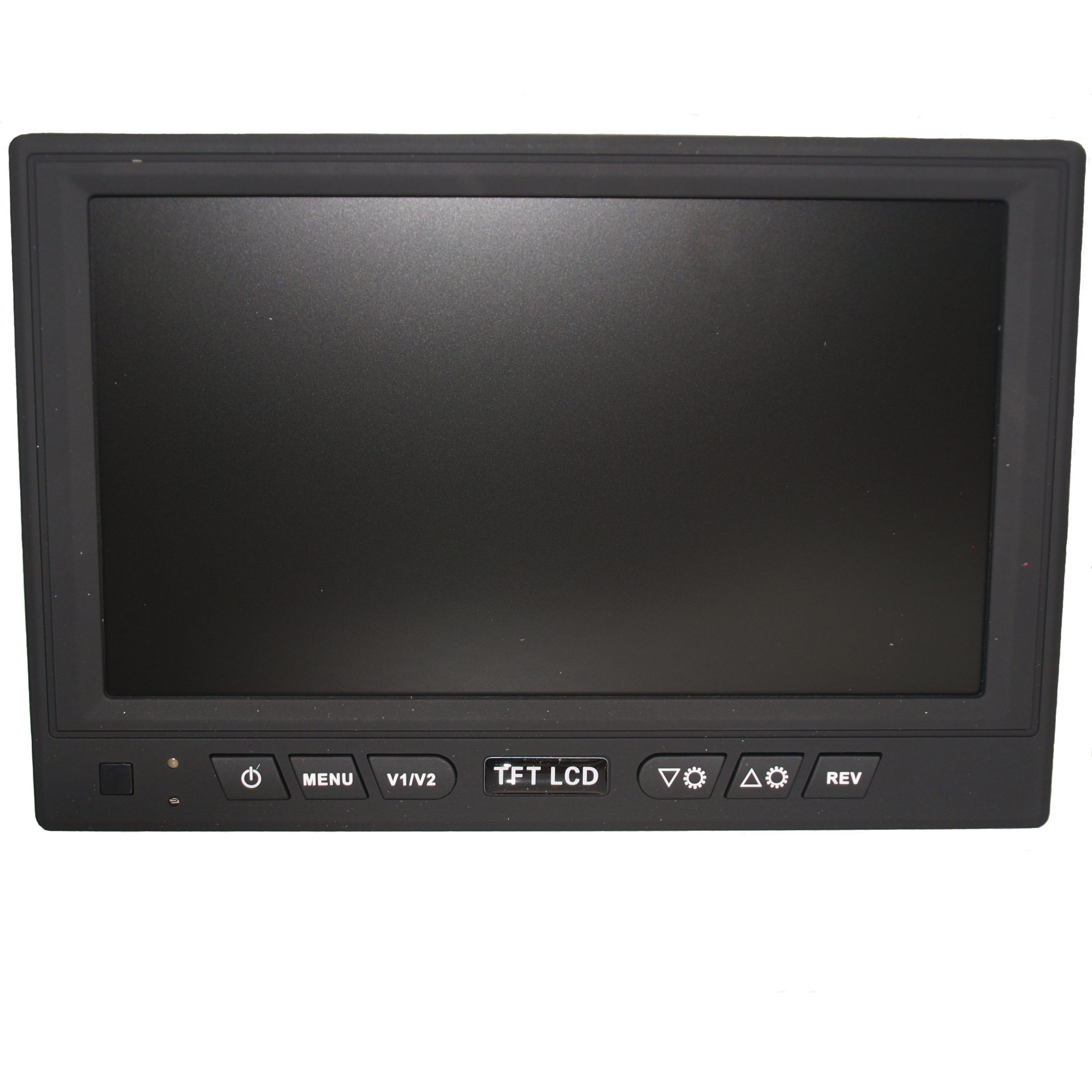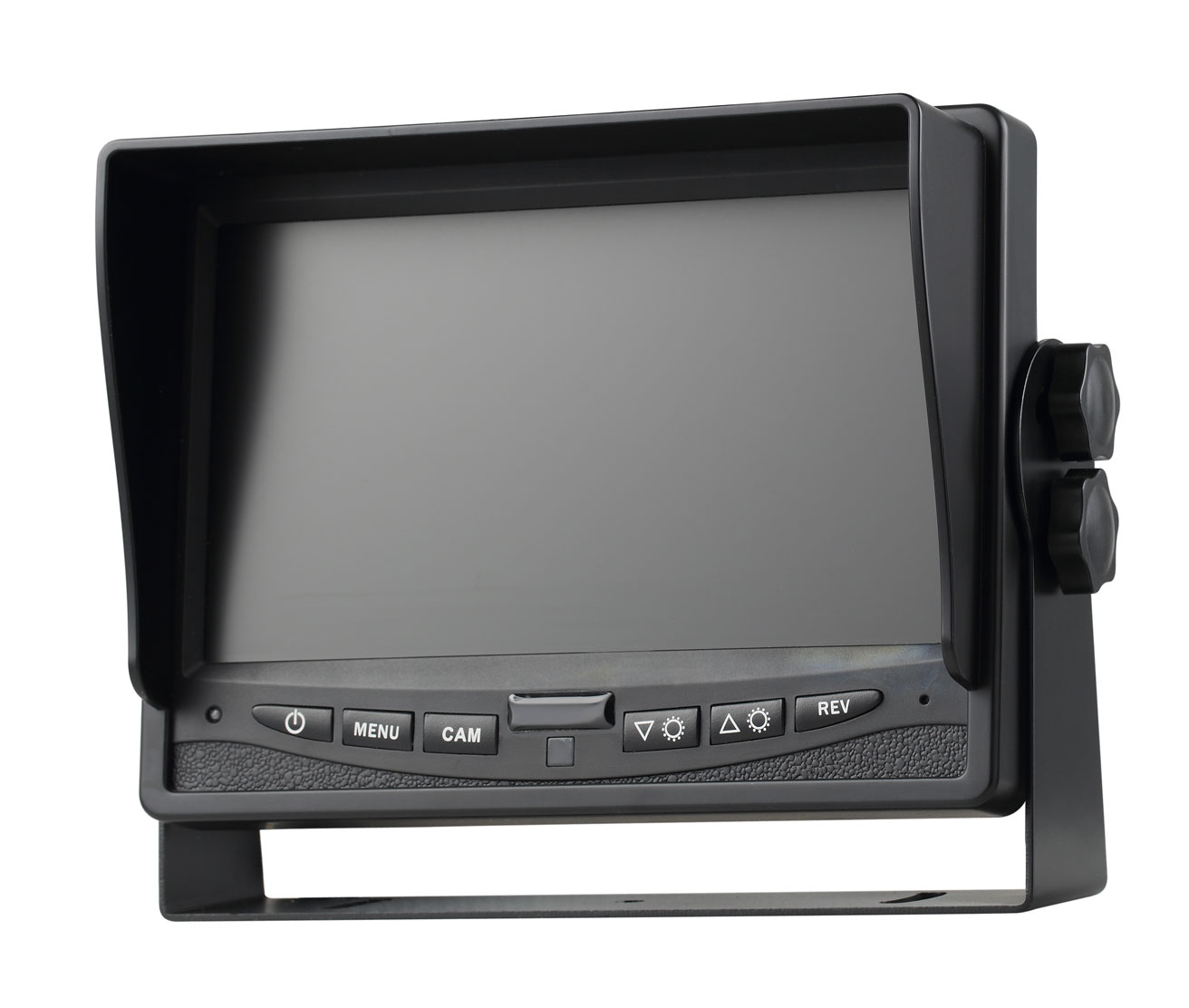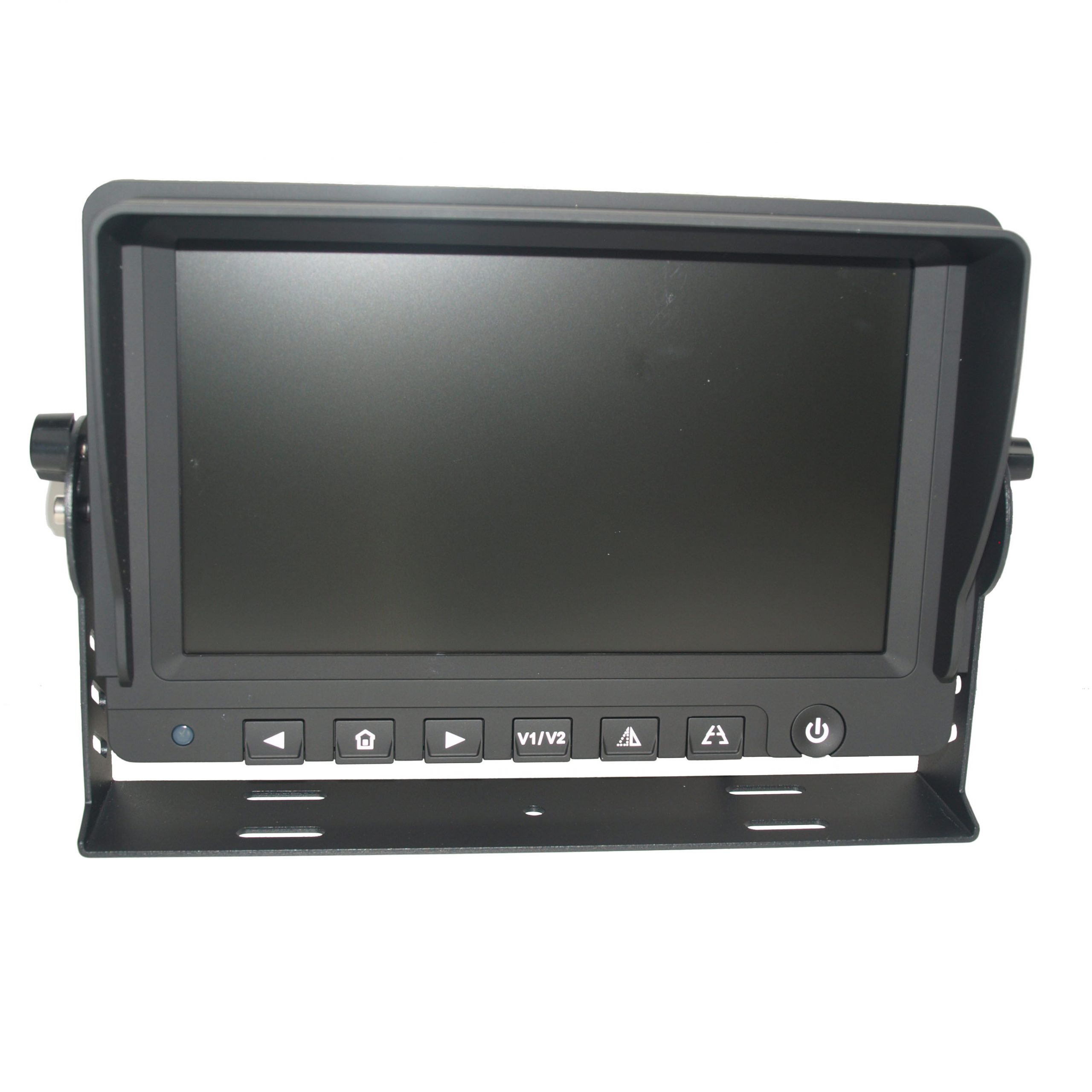
The in-cab monitor is the part of a fleet camera system the driver actually interacts with — and a monitor that blanks out in direct sunlight at 14:00 is the same as no monitor at all. WISH WASTE-04 specifically warns against this failure mode for refuse fleets. FORS Silver mandates a 7-inch minimum size for compliance. The driver’s natural sightline determines whether a feed gets used or ignored. Specifying the wrong monitor is a compliance gap and an operational gap at the same time.
Backwatch supplies monitors across three sizes (compact, 7-inch, 9-inch), three signal types (digital, AHD, wireless), and configurations including quad-view for multi-camera systems and CarPlay/Android Auto for hybrid monitor-MDVR units. Each monitor is high-brightness for sunlight readability and configured for the driver’s sightline at installation.
Three failure modes are common when monitors are specified by price rather than by use case:
| Monitor | Size | Inputs | Brightness | Special features |
|---|---|---|---|---|
| BW701 7″ Monitor | 7″ | 2 channel | High | Standard fleet monitor |
| BW706 Wireless 7″ | 7″ | 2 channel | High | Wireless input (trailer/articulated) |
| BW708AHD | 7″ | 2 channel AHD | High | AHD-compatible |
| BW718/Q 7″ | 7″ | 4 channel | High | Quad-view (4 cameras) |
| MS705/Q 7″ | 7″ | 4 channel | High | MS-series quad-view |
| BW918/918AHD 9″ | 9″ | 2 channel | High | Larger format (coach, large cab) |
| BW518 Monitor | Compact | 2 channel | High | Compact reversing camera kits |
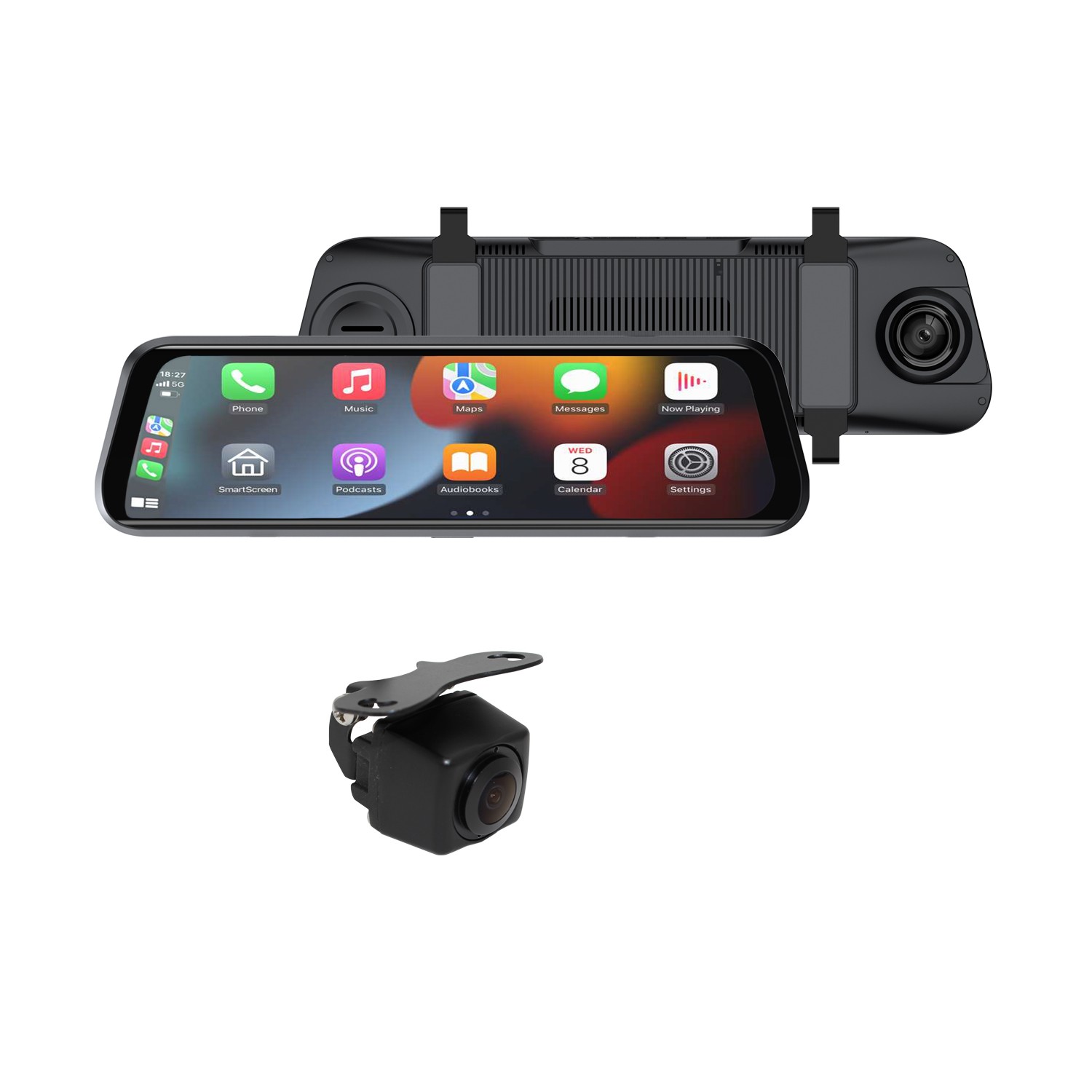
| BW4358 Smart Monitor | 9.6″ | Multiple + Bluetooth | High | Hybrid monitor + DVR with CarPlay/Android Auto |
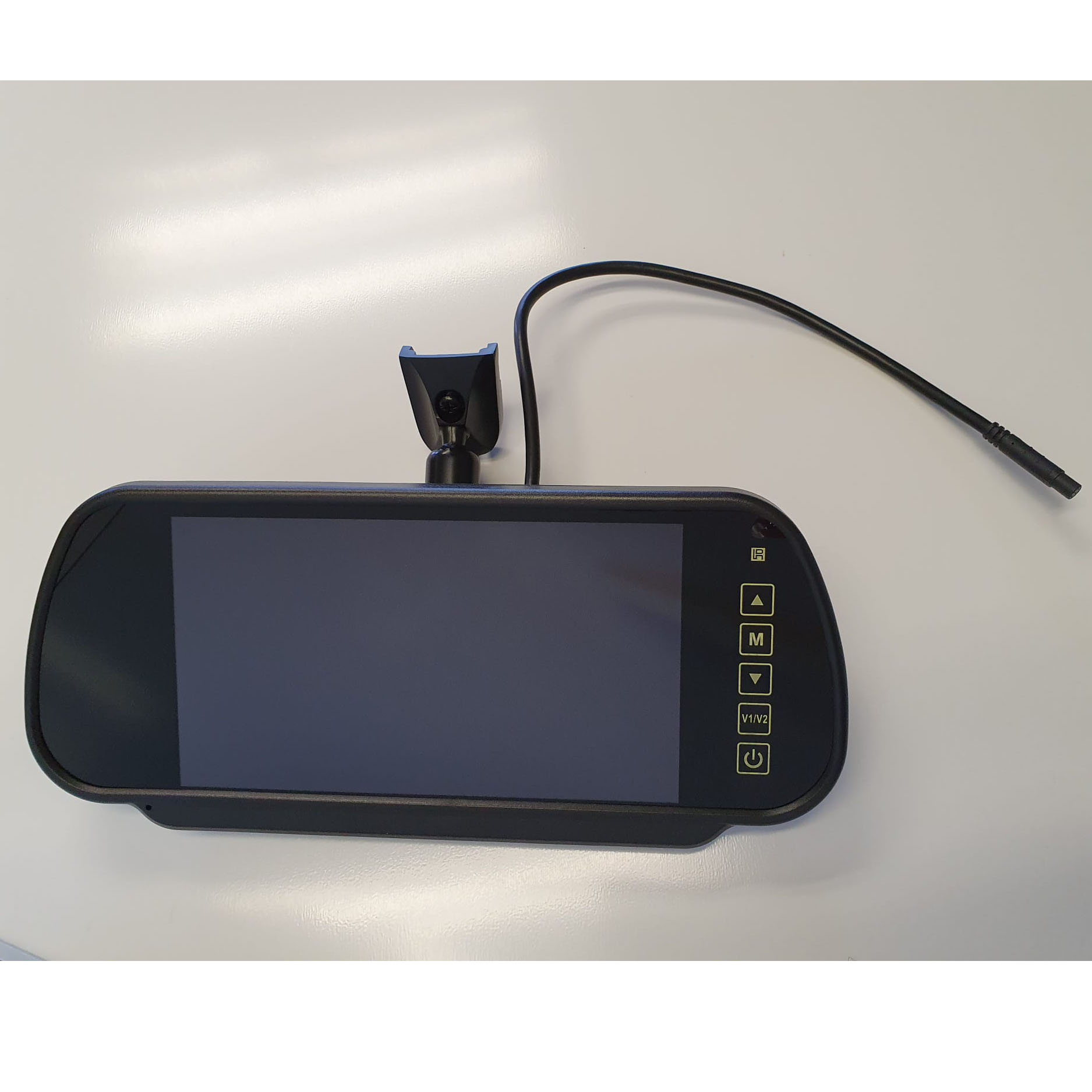
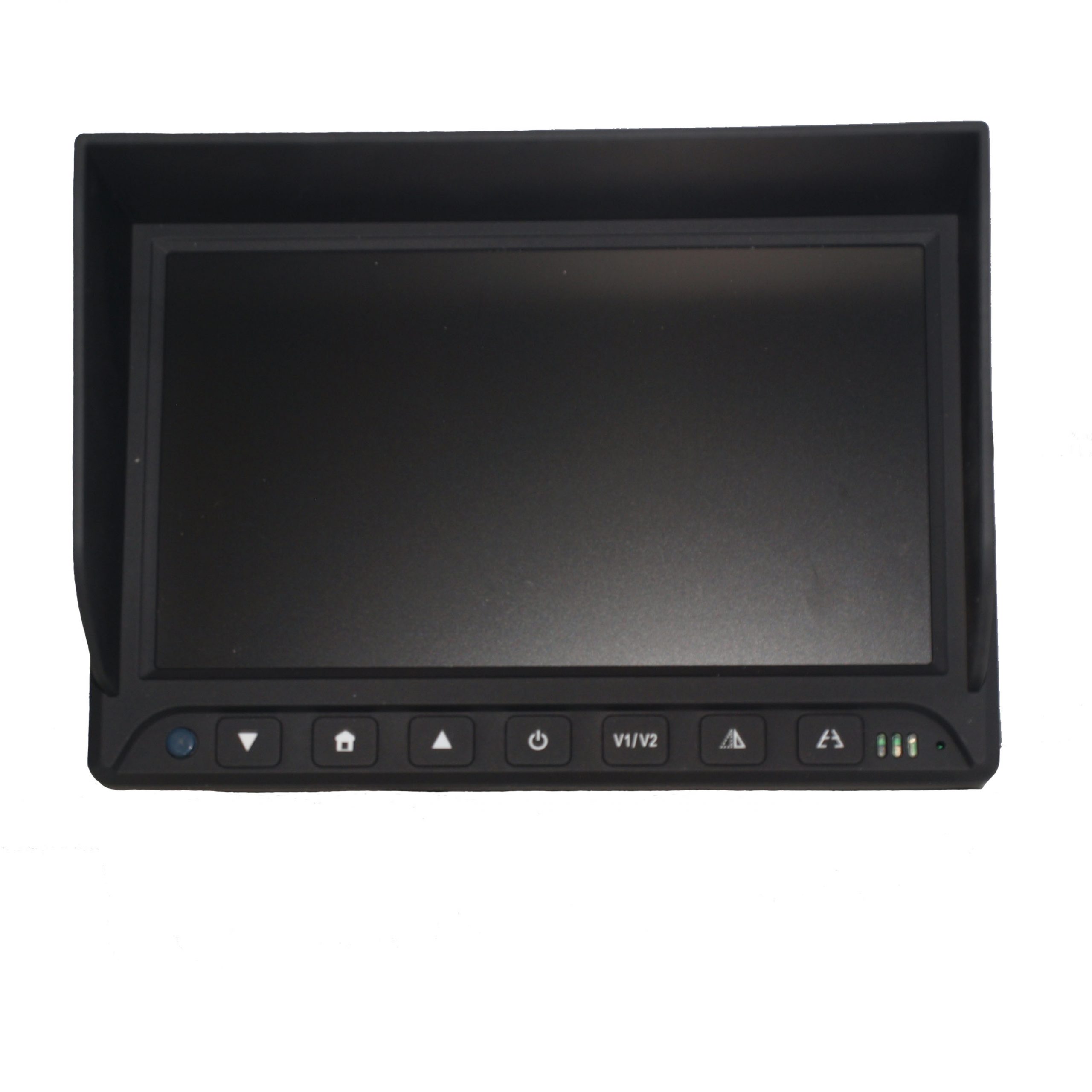
The BW701 is our standard fleet monitor — 7-inch, high-brightness, dual-channel input. Meets FORS Silver and Gold size requirement. Two camera inputs accept any combination (typically nearside + rear). Quad-view variants (BW718/Q, MS705/Q) display four feeds simultaneously for multi-camera systems.
The BW706 wireless 7-inch monitor pairs with the BWTX/RX wireless transmitter to receive trailer-mounted camera feeds without trailing cabling between trailer and tractor. Used on articulated logistics, refuse trailers, and any application where the camera-to-monitor distance makes wired connection impractical.
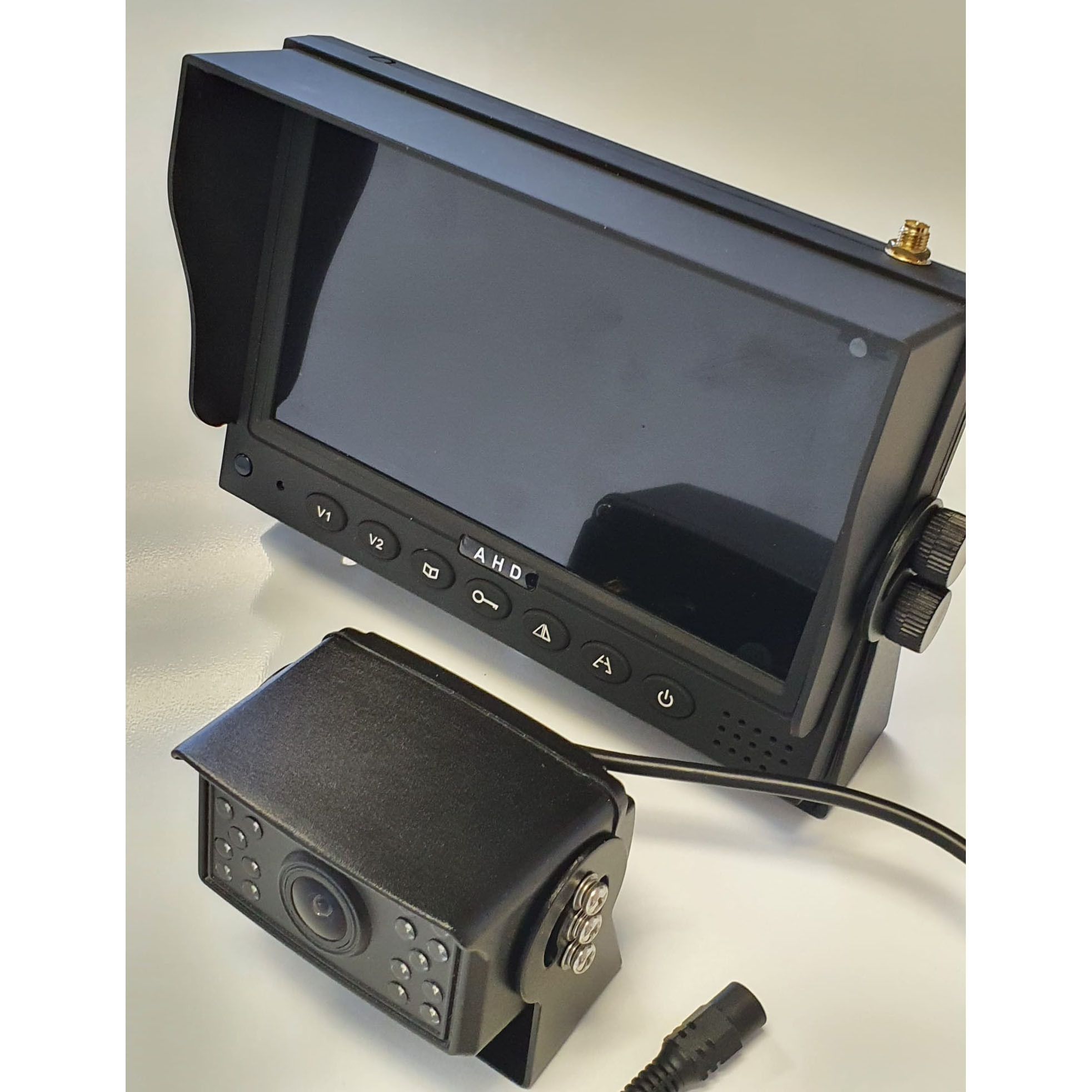
The BW708AHD accepts AHD signal inputs, allowing fleets standardised on AHD cameras (BW525AHD, MS311 AHD, MS750 AHD) to use AHD signal across the camera-to-monitor path. AHD has the advantage of long cable runs without signal degradation — relevant on articulated vehicles or coaches with long camera-to-monitor distances.
The BW918 / BW918AHD is the 9-inch variant — used where the cab space allows a larger display and the additional screen real estate is justified by the camera count. Common on coaches with multiple interior cameras, on large rigid HGVs with comprehensive camera coverage, and on quarry dump trucks where the operator’s sightline distance from the monitor is greater than in a standard cab.
The BW4358 Smart Monitor combines monitor and DVR functions in a single unit — 9.6-inch touchscreen with built-in CarPlay and Android Auto, Bluetooth connectivity, and HD video recording. Useful for vehicles where cab space doesn’t accommodate separate monitor and MDVR units (vans, light commercial), or as a primary monitor with smartphone integration for navigation and music alongside camera feeds.
The BW518 compact monitor is a smaller-format option for reversing camera kits in vans, light commercial, and applications where cab space is constrained. Single-channel reverse-only operation; not suitable for FORS Silver compliance (below 7-inch threshold).
| Framework | Monitor requirement | Backwatch range |
|---|---|---|
| DVS PSS | Live in-cab feed for nearside CMS | BW701, BW918, BW708AHD |
| FORS Bronze | None mandatory | All monitors compatible |
| FORS Silver | 7-inch minimum, anti-glare | BW701, BW706, BW708AHD, BW718/Q, MS705/Q, BW918, BW4358 |
| FORS Gold | 7-inch minimum (same as Silver) | Same specification as Silver |
| CLOCS | References FORS Silver | Same as Silver |
| WISH WASTE-04 | Anti-glare, no sunlight blanking | High-brightness 7-inch+ |
FORS Silver specifies 7-inch as the minimum because below this size, the camera feed becomes too small for the driver to read while maintaining eye-on-road priority. A 5-inch monitor showing a nearside camera feed at distance can’t be quickly scanned and interpreted; a 7-inch monitor showing the same feed enables the driver to assess the kerbside zone in a glance. The 7-inch threshold is an operational specification, not an arbitrary number — it correlates with the cognitive load of interpreting camera feeds at typical cab-to-monitor viewing distances.
“Anti-glare” combines two factors: high screen brightness (typically 600+ nits) and surface treatment to reduce reflections from cab windows and direct sunlight. WISH WASTE-04 specifically warns against monitors that “blank out in sunlight” because refuse vehicles operate during peak daylight hours and the camera feed must remain visible regardless of ambient light. A monitor with insufficient brightness becomes effectively unusable in summer sun, defeating the purpose of the camera system at exactly the time the system is most likely to be needed. Backwatch monitors are specified for high brightness; anti-glare shrouds are an option for installations in direct-sun positions.
Yes. Quad-view monitors (BW718/Q, MS705/Q) display four camera feeds simultaneously on a single 7-inch screen, with each quadrant assigned to one camera position. This removes the cabin clutter and cost of separate monitors. (The Backwatch 360° system is a separate standalone product with its own stitched display — it does not use quad-view monitors.) The trade-off is feed size — each quadrant on a 7-inch quad-view is approximately 3.5-inch equivalent — which is why driver coaching on the system is important during installation handover.
AHD (Analog HD) monitors accept AHD signal over standard coaxial cabling — typically 720p–1080p resolution at long cable runs without signal degradation. Digital monitors accept IP-based or proprietary digital signals, typically at higher resolution but with practical cable run limits (especially over single-cable connections). AHD is preferred for articulated vehicles, coaches, and long-cab applications where camera-to-monitor distance exceeds 5–10 metres. Digital is preferred for higher-resolution applications and where the camera count exceeds what AHD MDVR inputs support. Backwatch supplies AHD variants (BW708AHD, BW918AHD) and digital variants for fleet preference.
The BW4358 includes 2-channel video input that accepts standard CVBS or AHD signal — it can be used as the primary monitor for a 2-camera system (nearside + rear) and provides CarPlay/Android Auto for navigation/music alongside the camera feed. For 4+ camera systems, the BW4358 is typically used as a secondary monitor for the front-view camera and infotainment, with a separate quad-view monitor (BW718/Q) handling the safety-critical camera feeds. The choice depends on the vehicle’s camera count and the driver’s preference for separate-vs-integrated infotainment.
2-year warranty across the Backwatch monitor range — covering manufacturing defects under normal operating conditions. Operating conditions include the cab environment (temperature range, vibration profile, electrical supply quality). Monitors fitted in non-cab positions (external mounting, exposed to direct weather) are outside the warranty’s “normal operating conditions” because the monitors aren’t specified for that environment. The standard installation positions are inside the cab, where the warranty applies fully.
Two checks: physical size (must be 7-inch minimum diagonal) and brightness/visibility (must remain visible in direct sunlight without blanking). Take the vehicle outside on a sunny day; if the monitor’s camera feed is unreadable in direct light, it doesn’t meet WISH WASTE-04 best practice and is unlikely to satisfy a FORS audit on closer examination. Many older fleet vehicles have 5-inch or 6-inch monitors that pre-date FORS Silver requirements — these need replacement to achieve compliance, regardless of whether the rest of the camera system is acceptable.
Tell us what vehicles you run and what you need — we will come back with a recommendation and a price. Prefer to talk? Call 01656 721871.
17 July 2026
Monday to Friday:
8.30am-5.30pm